XRP Ledger Gets BTG Pactual Fund Records in Brazil
CSD BR is mirroring selected BTG Pactual funds on a public XRPL copy, while official registration and settlement stay in Brazil. The project is testing blockchain use inside regulated market infrastructure.
Key Takeaways
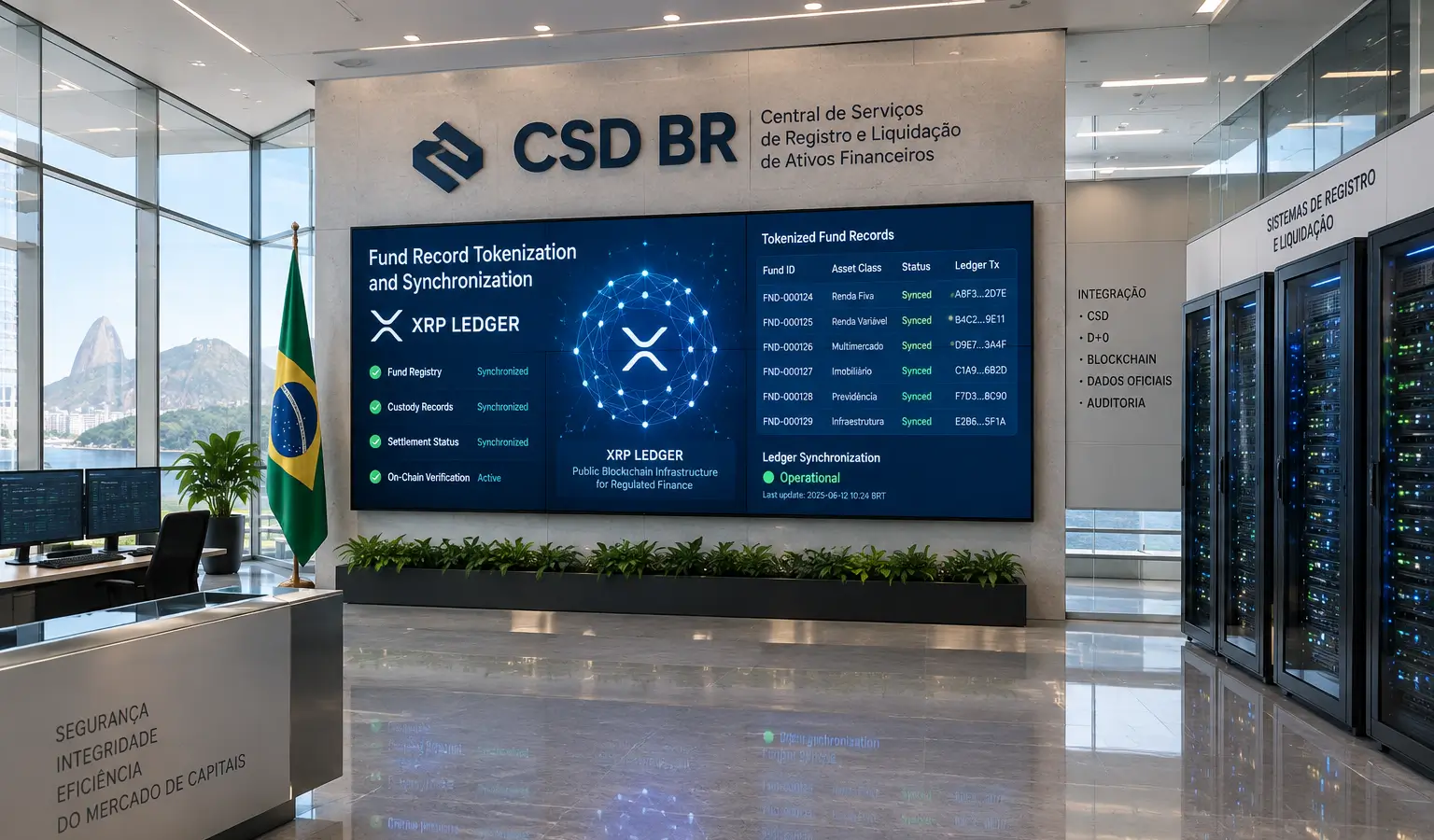
- CSD BR is putting BTG Pactual fund records on the XRP Ledger, while its own database remains the official source for registration, custody, and settlement.
- The fund interests are shown as tokens on XRPL, so approved banks and companies can compare them directly with the official records.
- CSD BR uses a public blockchain and can restrict participants, freeze assets, or reverse transactions within the applicable supervision and AML rules.
A Brazilian market player that manages more than 22 trillion reais in registered assets, about $4 trillion (€3.5 trillion), has started putting fund records from BTG Pactual on the XRP Ledger. The move covers selected mutual funds, while CSD BR continues to use its own database as the official source for registration, custody, and settlement.
What CSD BR Is Doing Exactly
CSD BR is a regulated entity in Brazil that works with registration, depository, and settlement services. In practice, a depository keeps track of who owns which securities, and banks regularly check their own books against it. That process is called reconciliation and is often slow and expensive, especially if a mismatch comes up that can delay a transaction.
Under the setup, CSD BR's existing database remains the source of truth. The assets themselves are therefore not moved to the XRP Ledger. Instead, the fund interests are also represented as tokens on XRPL, so approved banks and companies can compare that blockchain copy directly with the official records.
Why Use a Public Blockchain
What stands out is that CSD BR is not choosing a closed test environment, but a public blockchain. Anyone can see the token movements on the XRP Ledger, while CSD BR still decides who can hold and transfer the tokens.
The tokens use XRPL's Multi-Purpose Token standard, which is meant for financial assets where the issuer needs more control than with regular crypto like XRP. CSD BR can restrict participants, freeze assets, or reverse transactions when required by a regulator or court. The usual identity and anti-money-laundering checks still apply.
What This Means for European Readers
For European crypto and market watchers, this is especially relevant because it shows how public blockchains are being tested more often inside regulated financial infrastructure. CSD BR was founded in 2018 and is supervised by the Brazilian central bank and the securities watchdog, which gives the move extra weight. The project also goes beyond earlier pilots with test assets, because real fund records are being mirrored on a public network here.
The next step is not set yet, but the parties involved may later also look at direct asset issuance on the XRP Ledger. Brazilian real estate receivables and agricultural receivables are mentioned as possible candidates. For now, the focus is mainly on live mirroring of existing records, with CSD BR's official records still serving as the legal basis.
The broader trend around tokenized fund structures on XRPL also shows that asset managers and infrastructure providers are increasingly exploring the ledger for traditional financial products.