

XRP Ledger Looks to Cover Quantum Risk With New Wallet Keys
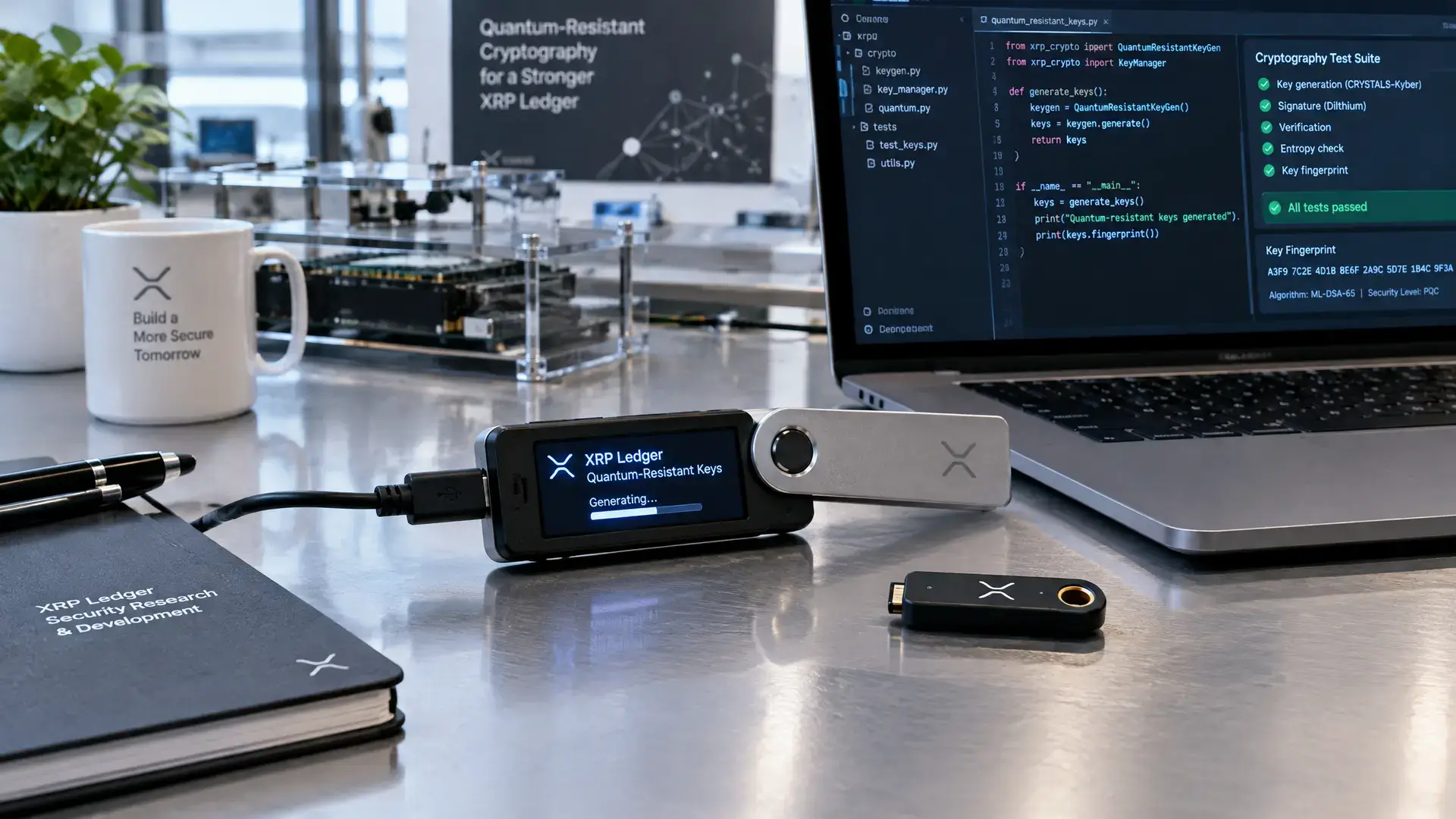
The new key is meant to protect XRP Ledger accounts from future quantum attacks without extra transaction costs. The change fits into the roadmap toward 2027 and 2028.
Key Takeaways
- XRP Ledger wants to protect accounts from quantum computers with a new quantum-resistant signing key alongside the old key.
- Users can disable the old key without paying extra fees, but the storage costs will fall on network operators.
- The change is part of the 2027 roadmap; Ripple is aiming for a full quantum transition in 2028.
XRP Ledger is working on a plan to better protect accounts from future quantum computers. Users would be able to add a quantum-resistant signing key and disable their old key without paying extra fees.
New Key Alongside the Old One
The proposal comes from the XRP Ledger Foundation's quantum study and is part of the 2027 protocol roadmap, which was updated on November 4. The core idea is simple: an owner first sets up a new key and then turns off the old one, so an attacker can no longer reach the account through that old route.
According to the Foundation, the threat is already built into the chain's current setup. Once an account signs a transaction, a public key becomes visible that the network software uses to verify approval. In theory, a powerful quantum computer could later derive the private key from that. That also applies to accounts that have ever sent a payment, including exchange wallets.
Costs and Technical Hurdles
The new key uses ML-DSA-44, a signature scheme that the U.S. standards body NIST approved in 2024 for protection against quantum attacks. The system is heavier than what XRP Ledger uses now, though. The key and signature together take up 3,732 bytes, compared with 105 bytes for a normal payment.
According to the Foundation, that adds about 3.6 KB per protected transaction. Including history and database overhead, the group estimates 5,331 bytes per protected payment, compared with a base of 1,704 bytes. Users do not pay an extra fee for that. Because XRP Ledger fees are burned, the extra storage costs will land on the operators running the network software.
The development is not finished yet. The builders are still working on things like a mismatch between the Python prototype version and the server and JavaScript versions, which can generate different keys from the same seed. Tests also still need to show how the network runs when all validators switch to the new signatures.
Why This Matters
The timing fits into a broader move across the industry. ESMA previously warned that quantum computing could become a direct threat to blockchain encryption, while other networks like Ethereum have also set deadlines for quantum-resistant transactions and validators. For European crypto users, this shows that security for wallets and accounts is not just a theoretical topic, but a technical issue that major networks are already working on.
Other projects are also looking for ways to better protect wallets and accounts from future attacks. For example, Monad is working on a wallet upgrade without a new address, letting users keep their existing account while the underlying security is updated.
The XRP Ledger roadmap sets aside $215,000 (€192,100) to $255,000 (€227,800) for review and auditing for this change, plus 640 hours of development. Across all 24 amendments on the roadmap, the budget rises from about $5 million (€4.5 million) to nearly $6 million (€5.4 million). Ripple is aiming for a full quantum transition in 2028, while the Foundation's migration study is scheduled for the first half of 2027.