DeFi
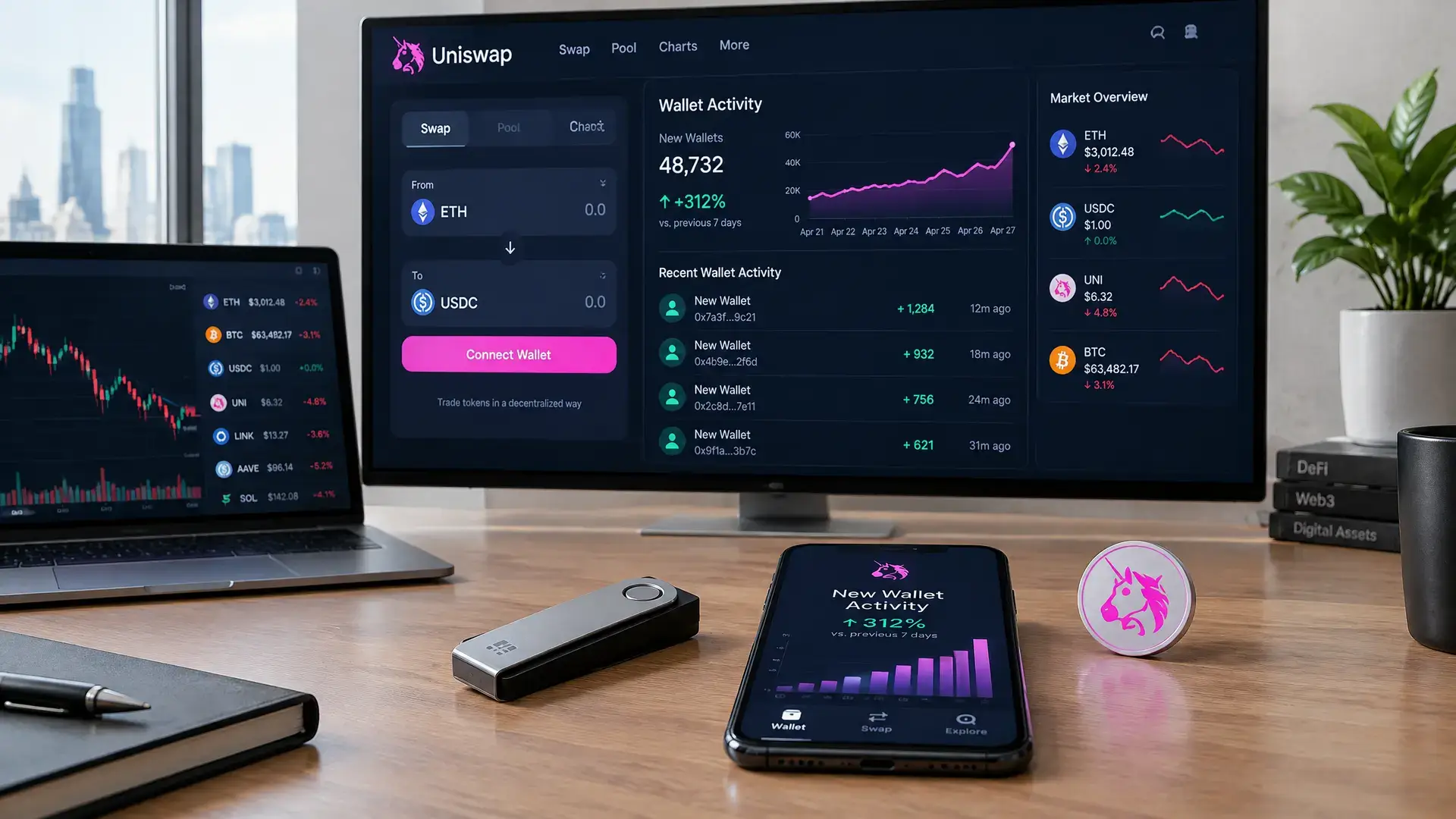
DeFi refers to financial services that use crypto, without a bank as an intermediary. The abbreviation stands for decentralized finance.
What is DeFi?
With DeFi, you can trade, borrow, lend, or save crypto through an app, for example. You usually need a crypto wallet and an internet connection.
These apps run on a blockchain: a digital system where data is recorded. The rules are carried out by smart contracts. These are pieces of code that automatically do what they’re programmed to do, without a bank having to manage them.
DeFi is not the same as crypto. Crypto is digital money, such as Bitcoin or Ethereum. DeFi refers to the apps and systems you can use to put crypto to work.
An example of DeFi
Say you want to lend crypto and earn interest. You deposit your crypto through a DeFi app, following the smart contract’s rules.
The code then automatically calculates the interest according to those rules. No bank manages the loan. This shows how DeFi aims to provide financial services without a central party.
Why is DeFi important in crypto?
DeFi shows that crypto can be used for more than just sending or holding crypto. It can also be used for services like trading, borrowing, and saving. That’s why news about DeFi often covers new apps, blockchains, or ways to use crypto.
You may also see reports about bugs or hacks involving DeFi apps. A flaw in a smart contract could be exploited. Transactions usually can’t be reversed, and there’s no central party to help if something goes wrong or there’s a hack.
News may also mention Total Value Locked (TVL). This is the total value of crypto that users have locked in DeFi apps. A high or low TVL doesn’t automatically mean a DeFi app is safe or that crypto will increase in value.