ADI Chain and Shipfinex Bring Shipping Finance Onchain
Shipfinex has already lined up 35 ships in Dubai, but the token issuance is still waiting on full approval from regulator VARA. ADI Chain wants to settle transactions with stablecoins and open shipping finance to institutional investors.
Key Takeaways
- ADI Chain and Shipfinex want to move about $680 billion in shipping finance onto the blockchain.
- Shipfinex identifies the vessels, while ADI Chain tokenizes the structures and wants to process payments with stablecoins.
- The partnership is not live yet. Shipfinex has only preliminary approval in Dubai and is initially focusing on institutional investors.
ADI Chain and Shipfinex are working to bring a slice of global shipping finance onto the blockchain. The companies say they are targeting a market worth about $680 billion, a sector that still relies heavily on banks, leasing arrangements, and export credit. For crypto, it is another example of tokenization moving past traditional financial assets and into real-world businesses with actual cash flow.
Ships as an Investment Vehicle
By some estimates, the commercial ships themselves are worth around $2 trillion (€1.7 trillion), but the financing behind them remains tightly controlled and relationship-based. That setup leaves smaller operators and alternative investors largely shut out, while a narrow group of shipping firms, banks, and specialist lenders continues to dominate the space.
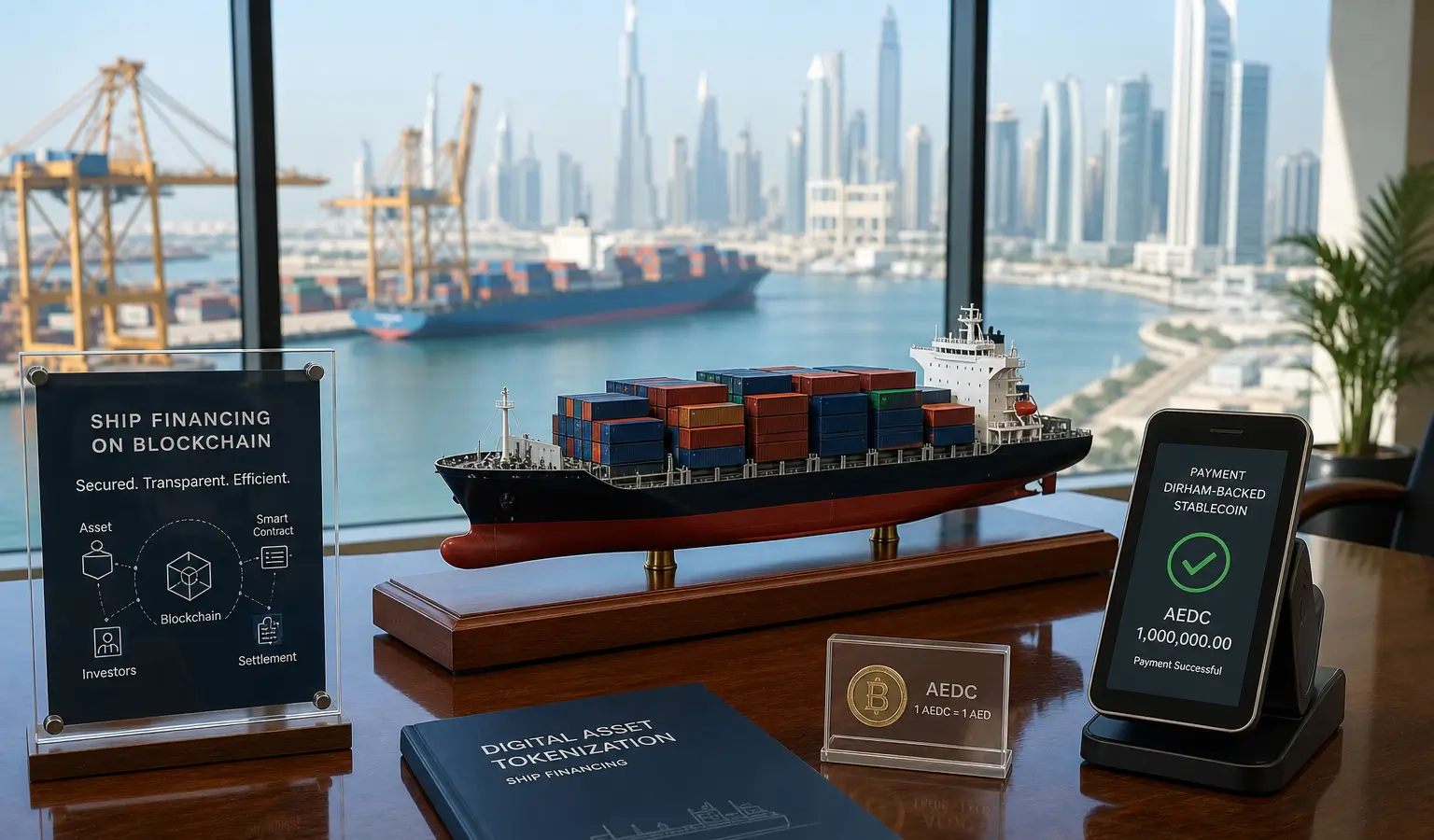
Dubai-based Shipfinex is responsible for selecting the ships, reviewing which vessels qualify, and deciding how each deal is structured. ADI Chain then converts those structures into blockchain tokens and wants to settle payments with stablecoins, allowing funds to move without a traditional bank transfer. At first, the companies are targeting qualified institutional participants, or large regulated institutional investors.
Regulation Is Still Not Settled
The project is not live yet. Shipfinex still lacks final approval to issue maritime asset tokens and currently only has In-Principle Approval from Dubai’s Virtual Assets Regulatory Authority, which is a preliminary green light rather than a full license.
The companies say roughly 35 ships are already lined up as tokenization candidates, with a combined value of about $500 million (€433 million). Each vessel will ultimately need to sit inside its own legal entity, so any issue tied to one ship should not automatically affect the others. In practice, a token could stand for a loan backed by the ship as collateral, a share of revenue from shipping contracts, or a broader economic claim on the vessel’s value, but not direct legal ownership of the ship itself.
Why This Matters
For European crypto readers, the main point is that projects like this show blockchain being tied more closely to real-world infrastructure, not just financial products such as government bonds or money market funds. Tokenized real-world assets are still mostly traded at the edges of the crypto market, but deals like this could push the conversation around liquidity, transparency, and institutional access further into the mainstream. ADI Chain also already has a dirham-backed stablecoin licensed by the UAE Central Bank, which makes the setup especially relevant for firms looking to combine settlement and regulation in one structure.