Fairmint Warns Tokenized Stocks Could Spark a Digital Paper Crisis
Fairmint CEO Joris Delanoue warns that fragmented ledgers and SPV structures could blur legal ownership around tokenized stocks, just as the market grows quickly.
Key Takeaways
- Fairmint CEO Joris Delanoue warns that tokenized stocks could lead to digital fragmentation of ownership records.
- He compares the situation to Wall Street’s paper crisis in the 1960s and points to risks around ownership, voting rights, and dividends.
- Fairmint is calling for open standards and interoperability, while the tokenized equities market grows quickly.
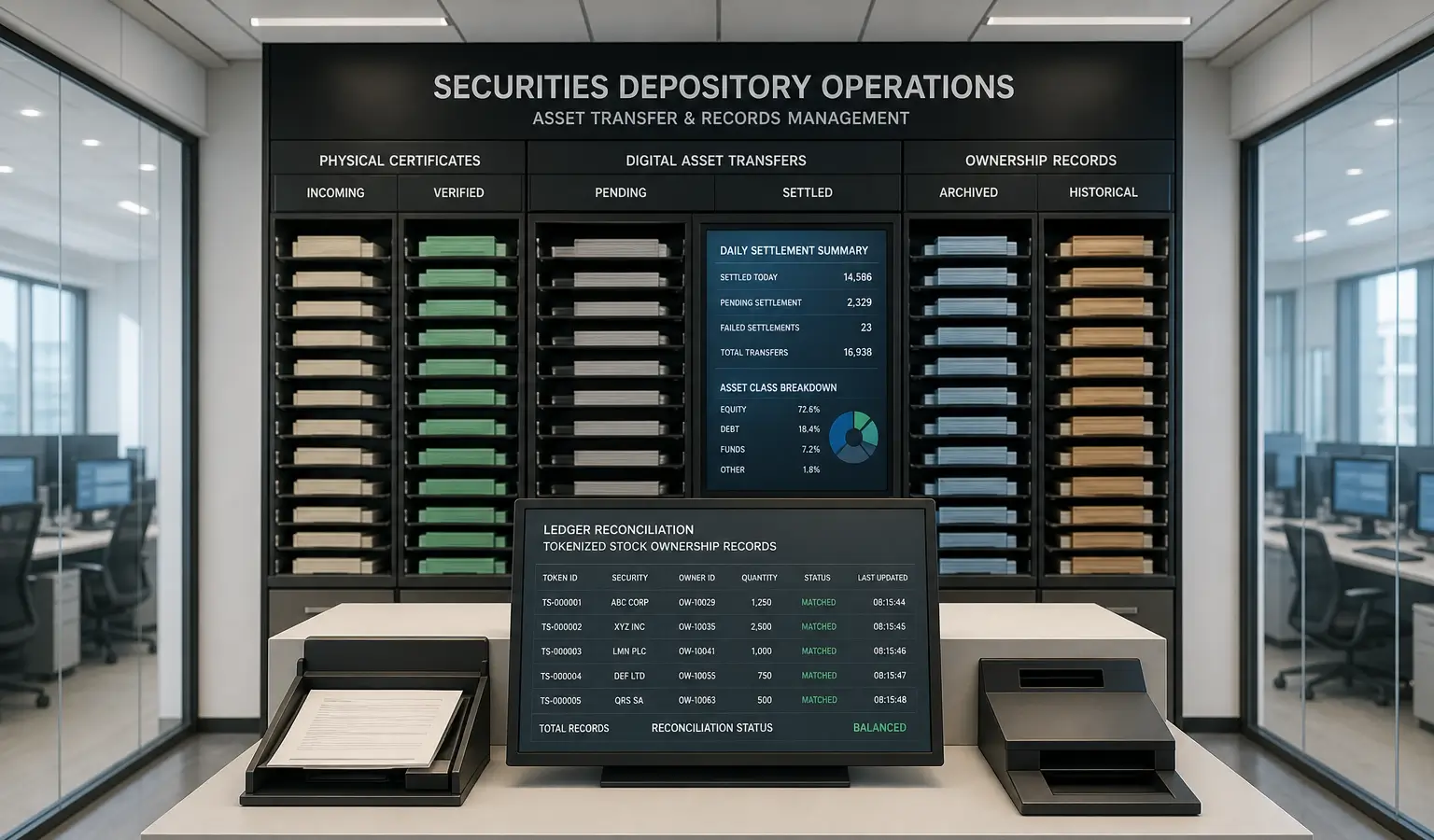
The rapid rise of tokenized stocks could, according to Fairmint CEO Joris Delanoue, end in a digital version of Wall Street’s paper crisis from the 1960s. His warning is that new systems for tokenized stock ownership records could once again become fragmented, right at a time when the market is growing fast.
Lessons From the 1960s
In the late 1960s, trading on Wall Street picked up so much that the settlement of paper stock certificates got bogged down. Back offices fell behind, certificates went missing, and settlement failures piled up. The New York Stock Exchange even closed on Wednesdays in 1968, for part of the year, so firms could catch up on the backlog.
That period later led to a redesign of the U.S. post-trade infrastructure, including central securities depositories and the creation of the Depository Trust Company. According to Delanoue, that is a useful lesson for today’s crypto market, where tokenized stocks are increasingly being offered as digital access to traditional shares. Here too, the same question comes up: how do you keep ownership and settlement from getting fragmented again? In that debate, the development of tokenized securities plays an important role, because it shows how existing market infrastructure can handle digital securities.
Where Things Could Go Wrong Now
Delanoue mainly warns about a mix of crypto exchanges, SPV structures, token wrappers, and separate ledgers. If those systems keep existing side by side, he says it could become unclear who legally owns the asset and who only has economic exposure. That matters for things like voting rights, dividend payments, and claims on assets if an issuer or SPV runs into trouble.
He stresses that a token is not automatically equity, but equity can be a token. That is why Fairmint is trying to record the shareholder register directly onchain as an SEC-registered transfer agent. The company says it has processed more than $1.6 billion (€1.4 billion) in equity natively onchain since 2019.
Meanwhile, the broader market is growing fast. The global market for tokenized equities has climbed to about $2 billion (€1.7 billion), up from less than $500 million (€427 million) at the end of the first quarter. That is still small next to more than $100 trillion (€85.5 trillion) in traditional stocks, but it does show that demand is rising.
Why This Matters for Europe
For European crypto investors, access to U.S. stocks is especially important. Delanoue says demand outside the U.S. is strong, especially among investors who want exposure to names like Apple, Microsoft, Nvidia, and Tesla through tokenized stocks. If the sector does not agree on shared standards, he says fragmentation could slow the wider rollout of these products.
That is why Fairmint is pushing for open standards between trading systems, issuers, broker-dealers, and transfer agents. The company has open-sourced its onchain securities standard. According to Delanoue, interoperability is the next big test for tokenized stocks, before the market fragments even further.