Anthony Welfare: XRPL Still Has to Prove Adoption
Welfare says XRPL’s speed and low costs are strengths, but points to liquidity, compliance, and interoperability as the real test. At the same time, XRP is getting extra visibility through the Nasdaq listing XRPN, which is drawing more attention from investors.
Key Takeaways
- Anthony Welfare says XRPL is technically strong, but adoption mainly depends on liquidity, custody, compliance, and interoperability.
- According to Welfare, institutions can use XRPL features without holding XRP itself, which makes adoption broader than just the token.
- XRP got extra visibility through Evernorth’s Nasdaq debut as XRPN, while the question of lasting demand remains open, according to Welfare.
The XRP Ledger has strong technical features, according to former Ripple CBDC advisor Anthony Welfare, but he says that is still no guarantee of broad adoption. He pointed out that institutions are testing the chain, and that a new Nasdaq listing has also brought XRP to the attention of stock investors.
Technology Is Not Enough
Welfare said on the AllinCrypto Podcast that XRPL is a good fit for payments and tokenization. In his view, the network’s speed, low costs, and built-in decentralized exchange make it useful for financial applications. Still, he said it is not just about technology. Liquidity, custody, compliance, and interoperability ultimately determine whether institutions will actually use the network.
He also stressed that XRP itself is different from the XRP Ledger. That means institutions can use ledger features without necessarily having to hold the token. That makes the adoption debate broader than just the price of XRP.
More Than Just Payments
Welfare outlined a broader role for XRPL in tokenization and auditable records, which AI agents can also rely on. In his view, private blockchains will probably keep growing first, after which some of that activity may later move onto public networks. He also said stablecoins can reduce payment friction and offer new ways to organize existing financial processes.
That broader use case fits with the way XRPL is already showing up in different institutional applications. The chain is being mentioned in connection with tokenized real-world assets, stablecoins, and DeFi platforms. The Bank for International Settlements even worked on a prototype with XRPL to verify official statistics, showing that the ledger is being looked at beyond traditional payments. New features for banks and stablecoins also show that the focus is increasingly shifting toward institutional use.
XRPN Puts XRP on the Market Map
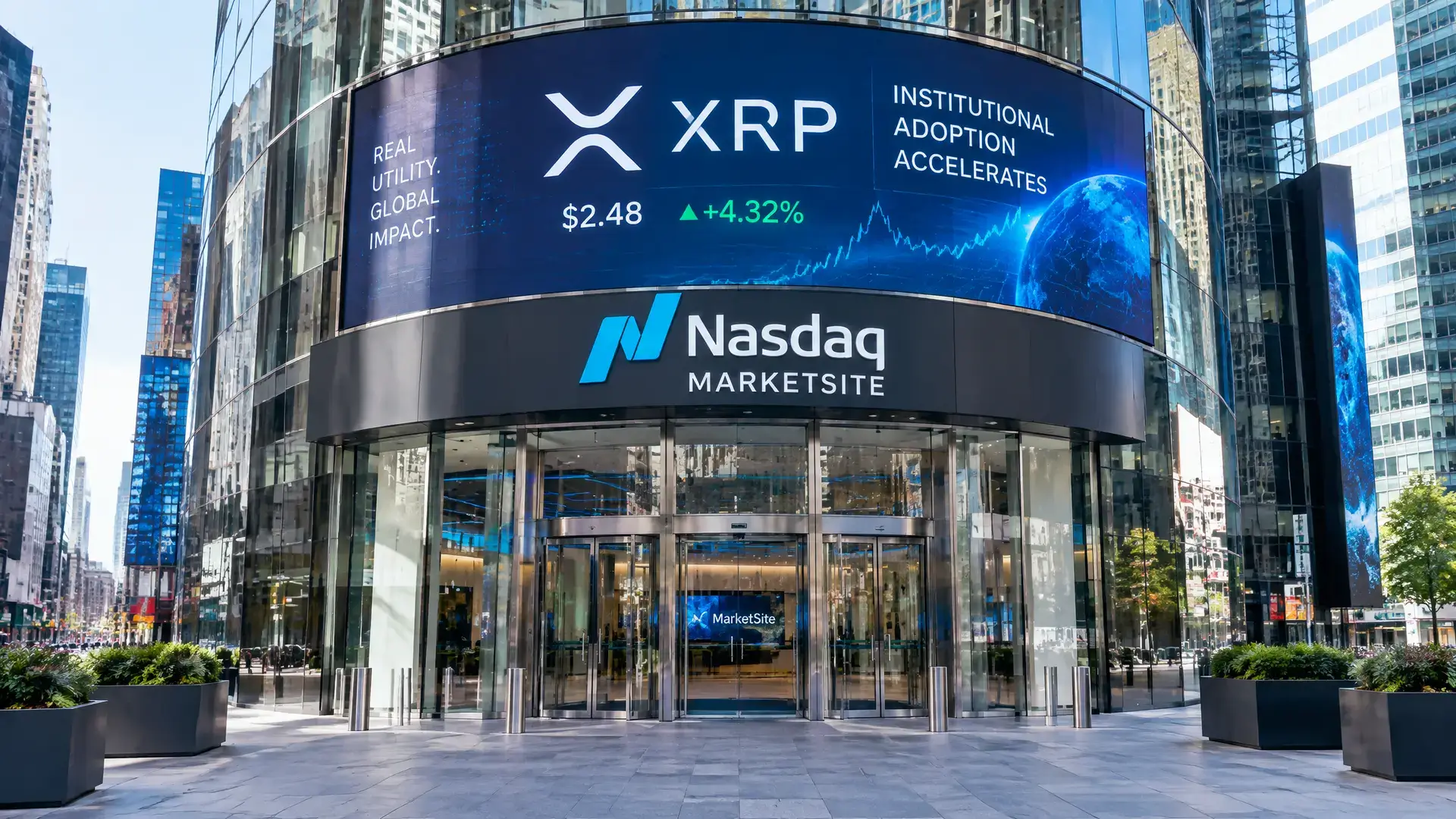
At the same time, XRP got extra visibility this week through Evernorth, a Ripple-backed vehicle with about 473 million XRP. The company debuted on Nasdaq under the ticker XRPN. The shares opened at $16.68 (€15), briefly climbed to $19.38 (€17), and closed Monday, October 12, at $16.91 (€15). On Wednesday, October 14, XRPN closed at $15.26 (€14), down 7.40%.
For European crypto readers, that matters because it shows how XRP is increasingly showing up in the market through multiple channels. Not just the token itself, but also publicly traded shares and institutional pilot projects are part of the story around adoption. Whether that eventually leads to lasting demand is still the open question, according to Welfare.