Bank of England Tests Digital Pound With Stablecoins and Polygon
The trial focuses on trade finance and shows how public CBDC infrastructure and private stablecoins can work together, with Polygon handling smart contracts and credit profiles.
Key Takeaways
- In phase 2 of Digital Pound Lab, the Bank of England is testing how stablecoins and a digital pound can work together in a single payment flow for trade finance.
- NOBO Finance, Dun & Bradstreet, and Polygon Labs are building a bankable profile for small and medium-sized businesses using wallet data, open finance, and company data.
- The trial also looks at invoice factoring with electronic bills of lading, where exporters get an advance in stablecoins and importers settle in digital pounds.
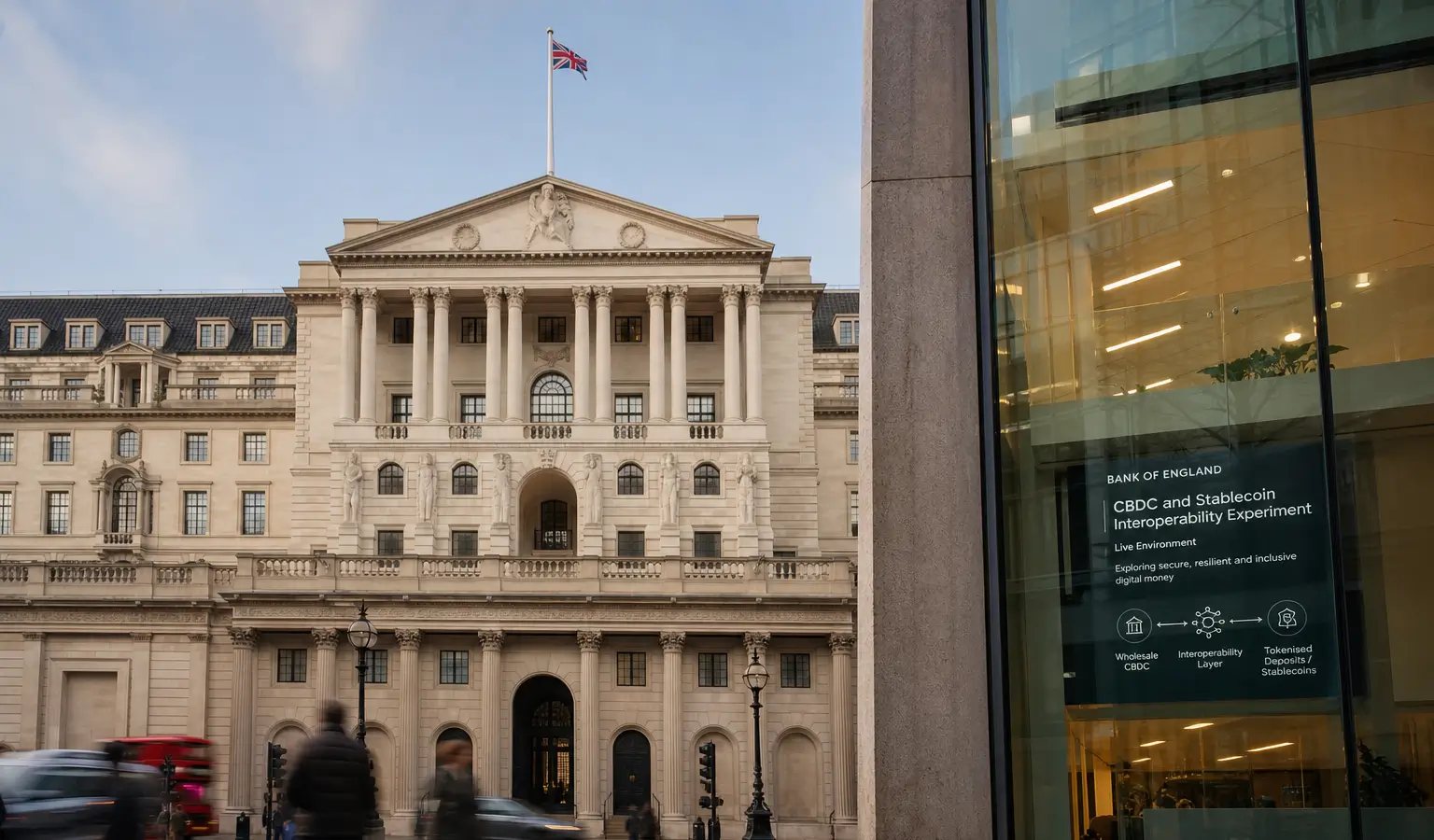
In phase 2 of its Digital Pound Lab, the Bank of England is testing how stablecoins and a digital pound can work together in a single payment flow for trade finance. In doing so, the central bank is taking another step in its research into how public and private forms of digital money can complement each other in cross-border payments.
New Phase for Digital Pound Lab
The U.K. central bank said Wednesday that the experiment is meant to show whether public stablecoin infrastructure and central bank money can coexist in one transaction process. The BOE has been studying this since 2024 with a CBDC and the distributed ledger technology that often serves as the foundation for blockchain applications.
The lab setup is intentionally experimental: no real customers or real funds are being used, and the test does not say anything about a decision to actually issue a digital pound. Still, it matters that the BOE is now broadening the setup from testing a few use cases to innovative applications that are meant to demonstrate new payment services.
Focus on Trade Finance
According to Otto Jacobsson, U.K. chapter lead at the Digital Assets Association, the biggest gains may be in trade finance. Small businesses there often run into delays in verification and financing, which makes it harder to prove creditworthiness and free up working capital.
In the new trial, NOBO Finance, Dun & Bradstreet, and Polygon Labs are working together on a so-called bankable profile for SMEs. This combines wallet transaction data, open finance information, and company data into a reusable credit assessment. Polygon provides smart contracts to record the verified outcome and manage permissions.
They are also experimenting with invoice factoring based on electronic bills of lading. In that scenario, an exporter gets an advance through stablecoin technology, while a U.K. importer settles the final payment in digital pounds.
Why This Matters
For European crypto and fintech watchers, the most interesting part is that a major central bank is testing stablecoins not just as a risk, but also as part of a broader payment infrastructure. The BOE already published a consultation in November 2025 on a regulatory framework for sterling-denominated systemic stablecoins, with an emphasis on financial stability and public trust.
The results of the lab phase will later this year feed into the joint assessment of the digital pound by the BOE and the U.K. Treasury. That makes the trial relevant beyond the United Kingdom, because the question of how different forms of digital money can technically and regulatorily interact is becoming more and more important.