Bernstein Warns of Selloff If Clarity Act Fails
Bernstein sees a rejection of the Clarity Act as a temporary setback for crypto, with extra focus on SEC and CFTC rules around token classification, DeFi, and stablecoins.
Key Takeaways
- Bernstein says a failed Clarity Act vote this year could add new pressure to the crypto market.
- The broker expects the SEC and CFTC to speed up rulemaking under President Trump through Project Crypto.
- If the bill slips, current stablecoin rules would stay in place and affect Coinbase and Circle, among others.
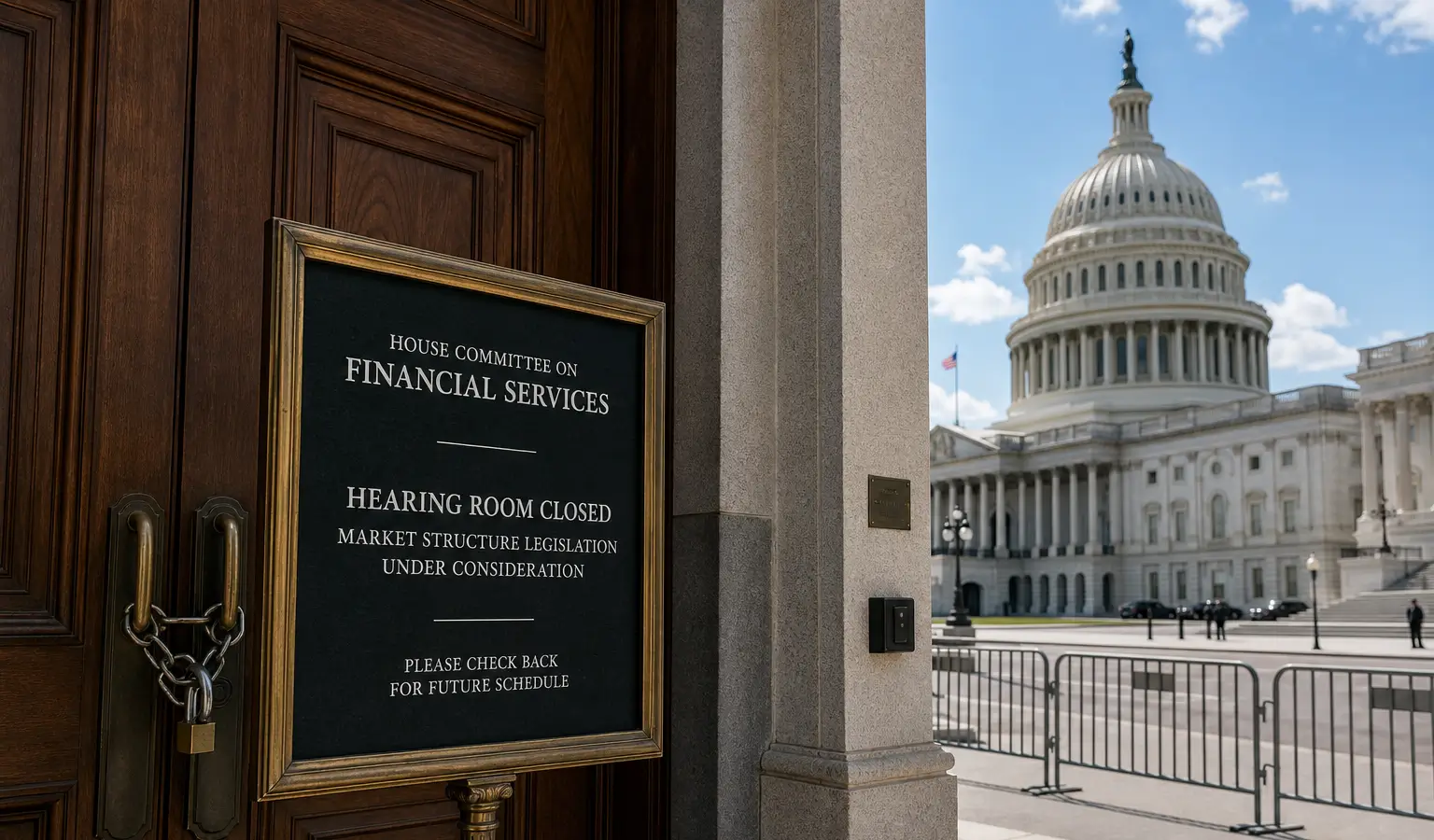
Wall Street broker Bernstein says a failure to pass the Clarity Act this year could put fresh pressure on the crypto market. Even so, the firm believes U.S. regulators would likely respond by moving faster on rules that give the industry more clarity.
Legislation Stalls
Bernstein says the chances of the bill getting through in 2026 are fading as the Senate runs short on time before recess. The broker notes that several of the more sensitive issues have already been worked out, including the rules around stablecoin yield, but that has not been enough to break the political logjam.
The Clarity Act is widely viewed as the key U.S. crypto market structure bill. It is designed to define the roles of the SEC and CFTC more clearly and draw a sharper line between securities and commodities. The House has already approved the measure, but it is still stuck in the Senate.
Regulators Could Speed Things Up
Bernstein expects investors would initially react negatively if the bill is rejected, but it sees that reaction as mostly short-lived. The analysts think the SEC and CFTC, working under President Donald Trump through Project Crypto, would likely push ahead faster on rules covering token classification, DeFi guidance, self-custody, and exemptions for token issuance.
That policy path also fits into a broader U.S. legislative push, with the GENIUS Act playing a role in the regulation of stablecoins and other digital assets. For European crypto readers, the main takeaway is that the U.S. is still moving toward a more unified framework, even if the Clarity Act does not make it across the finish line in time.
Impact on Publicly Traded Players
If the law is delayed, the current stablecoin rules would remain in place for public companies. Bernstein specifically points to Coinbase and Circle: Coinbase can continue earning yield on idle stablecoin balances, while Circle cannot do that directly as an issuer, though it can still share distribution revenue with partners.
The broker says a recovery in USDC growth would be the main catalyst for renewed strength in both stocks. JPMorgan also warned last week that weaker odds for the Clarity Act are a negative for crypto, since more delays could undercut one of the market’s biggest regulatory catalysts. In the same vein, JPMorgan Warns: Clarity Act Stalemate Is Dragging on Crypto said a delay in the law could also slow institutional adoption.