Binance Buys $100 Million in Circle Shares
The deal also includes a five-year distribution agreement around USDC, while Circle already operates in Europe under MiCA. Binance gets voting rights, but it cannot sell the shares for two years.
Key Takeaways
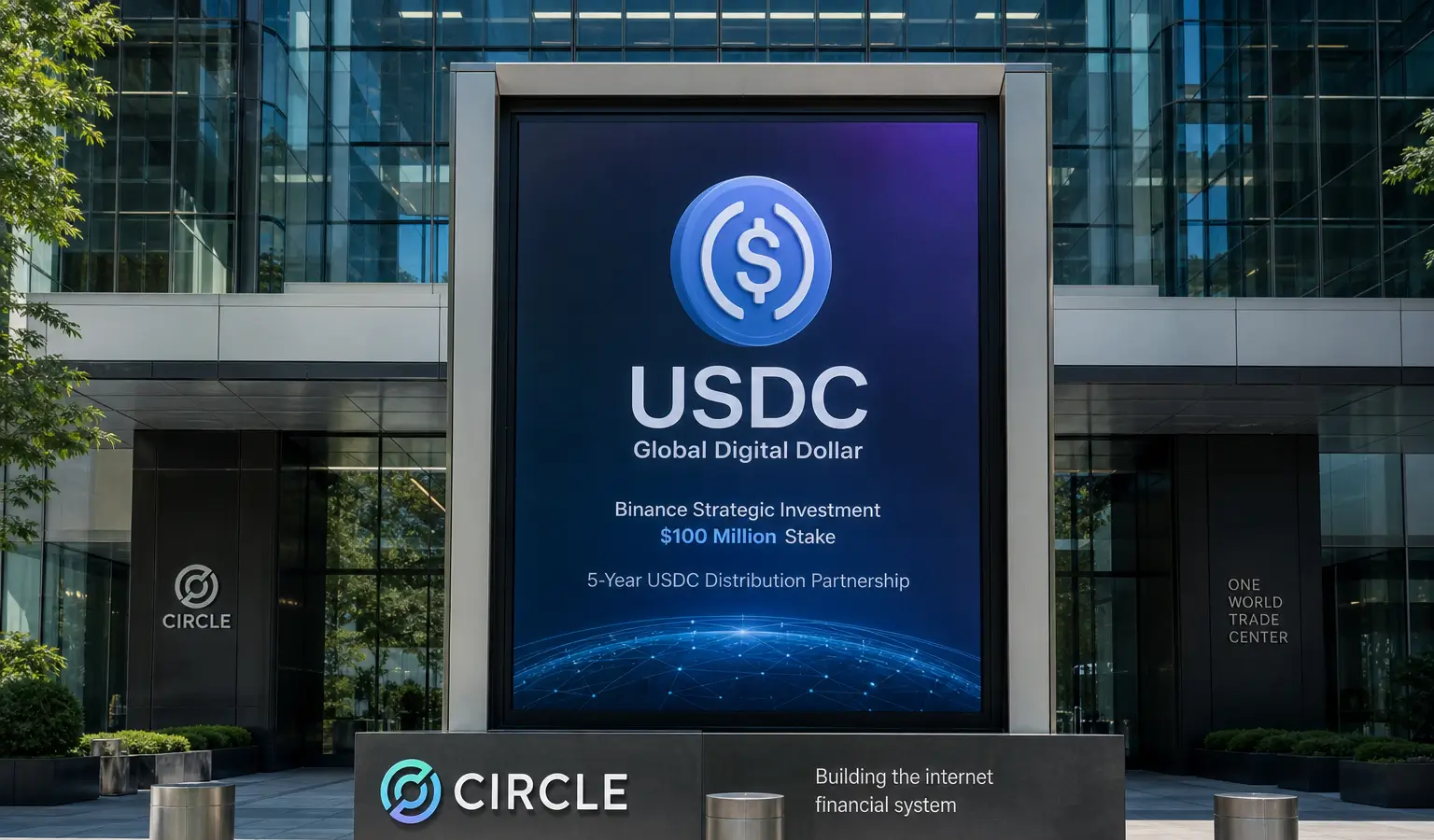
- Binance bought $100 million worth of shares in Circle Internet Group, the company behind the USDC stablecoin.
- The crypto exchange paid $80.84 per share and cannot sell the shares for two years.
- Circle and Binance also struck a five-year commercial deal to promote USDC through Circle’s wallet software.
Binance bought $100 million (€87 million) worth of shares in Circle Internet Group, the company behind the USDC stablecoin. The deal came to light through a filing Circle submitted to the U.S. SEC. Binance paid $80.84 (€70) per share, about 14% below Monday’s closing price.
Shares and Lock-Up
Circle issued 1,237,011 Class A shares to the crypto exchange. The shares were sold privately and therefore fell outside the normal SEC registration process. Binance cannot sell the shares for two years and also cannot do any hedging trades during that period to offset the position.
The lock-up can end earlier if Binance walks away from the commercial side of the deal, under conditions listed in the filing. Both sides can also end the agreement if certain events happen. Binance does keep full voting rights on the shares.
USDC Deal With More Than Just Shares
Along with the investment, Circle and Binance signed a commercial agreement for five years. Binance will promote USDC through Circle’s Modular Smart Contract Wallet, software that lets an app or exchange manage and move digital dollars on behalf of a user without that user having to manage private keys themselves. Circle will pay Binance a monthly incentive fee for that, calculated as a percentage of the USDC held in that wallet infrastructure. The exact percentage was not disclosed.
The timing stands out. Two days before the signing, the CLARITY Act stalled in the U.S. Senate, after which Circle shares fell 11% in one session. That bill is meant to clarify which U.S. regulator oversees which digital assets. Since then, the stock has partly recovered and closed Monday at $94.49 (€82). The broader debate over stablecoin rewards is also part of the picture: banks have long warned that those incentives could pull money out of savings accounts, as in the debate around stablecoin yield.
Why This Matters in Europe
For European crypto followers, the big point is that Circle already has a strong position in the EU with USDC. The company has a MiCA Electronic Money Token license, which makes USDC the largest fully authorized stablecoin in Europe. That makes the distribution deal with Binance not just a U.S. stock story, but also a sign that stablecoin distribution is becoming more important in regulated markets.
Meanwhile, the broader stablecoin market keeps growing fast. In the first half of 2026, USDC accounted for about 70% of adjusted stablecoin transaction volume, according to the provided context, while Tether’s USDT came in at 25%. In June, total volume hit a record $1.79 trillion (€1.6 trillion), with USDC accounting for $1.21 trillion (€1.1 trillion).
Circle makes most of its revenue from interest on reserves held for USDC. That makes distribution costs especially important, especially now that major banks are also working on their own stablecoin consortium to keep more of the interest income in-house. For Circle, the question is not just how much USDC is in circulation, but also what price it pays to distribute it.