Trump Wants to Hit the ICC Through Dollar Rails, Stablecoins Offer No Escape
Washington wants to hit the ICC through dollar payments; stablecoins and exchanges also fall under OFAC screening, which limits crypto workarounds.
Key Takeaways
- The Trump administration is preparing sanctions meant to block most transactions with the International Criminal Court.
- According to the article, dollar stablecoins do not offer an escape because issuers must be able to block, freeze, and screen transactions.
- The article says U.S. sanctions also affect European parties through dollar liquidity, banks, and regulated crypto exchanges.
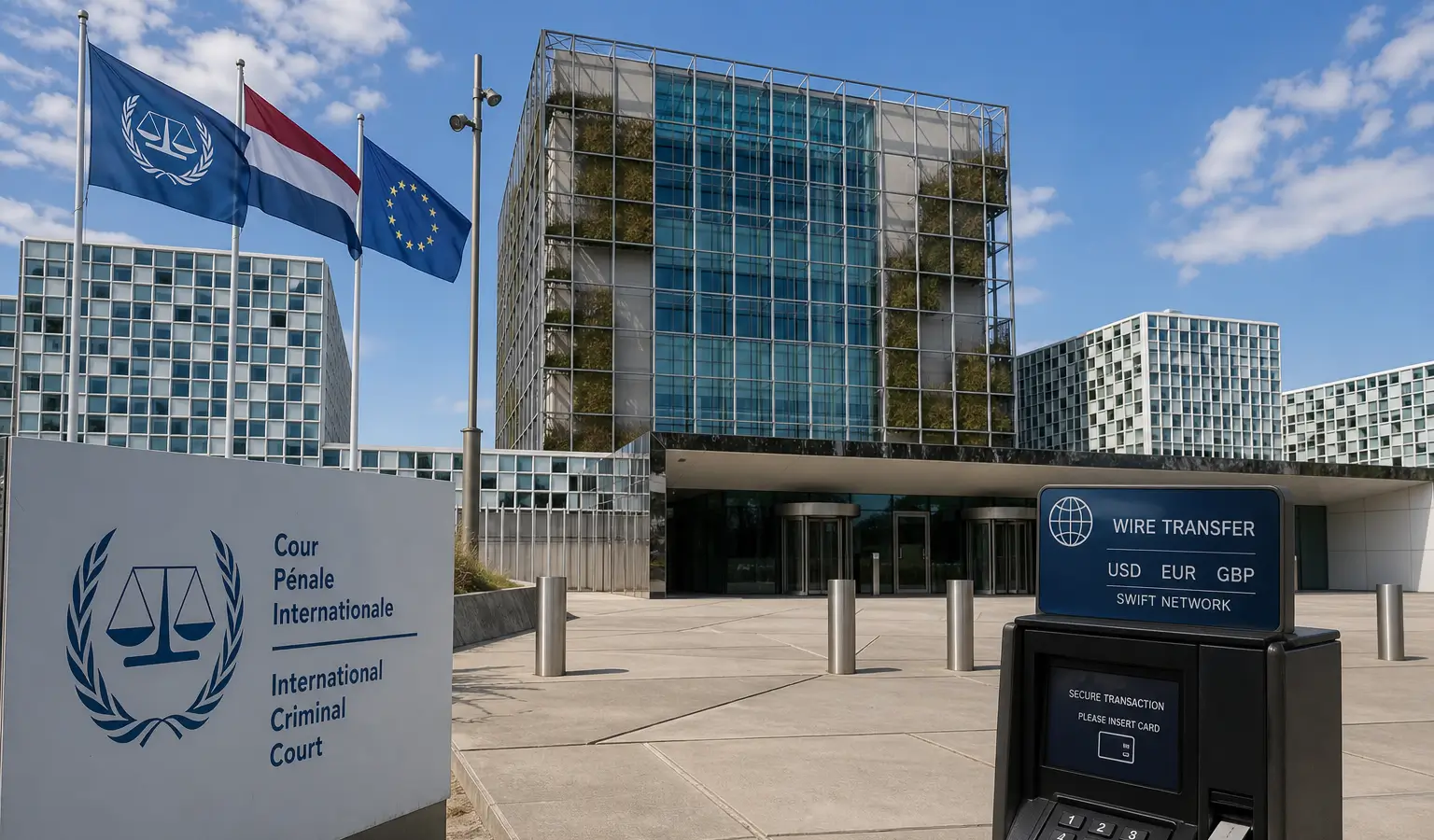
The Trump administration has prepared sanctions meant to block most transactions with the International Criminal Court (ICC). According to the Wall Street Journal, there would be a wind-down period of six to seven months. It would be the first time Washington would not only target court staff, but the institution itself.
Dollar Rails Under Pressure
The measure fits into a broader U.S. approach to sanctions and crypto. The U.S. Treasury Department has long been looking for more room to go after people and parties that use crypto to get around sanctions. At the same time, a sanctions regime like this often leads to de-risking, where banks and financial institutions cut ties as a precaution with customers or regions seen as risky.
The ICC case shows how far that pressure can reach. Dollar payments run through U.S. correspondent banks, which means parties outside the U.S. also have to deal with American rules. If an institution itself ends up on the sanctions list, that can affect salaries, suppliers, and witness payments, even if those are paid in another currency.
Stablecoins Offer No Escape
On paper, dollar stablecoins seem like a possible workaround because they are pegged one to one to the dollar. In practice, that route has already been closed off. A Treasury rule under the GENIUS Act requires approved issuers to be able to block, freeze, and refuse transactions, and to screen against the OFAC sanctions list.
That is no longer just theory. Tether froze $344 million in USDT on the Tron chain in April, together with OFAC. The company said at the time that it acts immediately when there are credible links to sanctioned parties or criminal networks. Bitcoin also does not offer a real escape, because converting to euros or dollars still goes through crypto exchanges and banks that check the same sanctions lists.
Why This Matters for Europe
For European crypto readers, this is especially relevant because it shows how strongly U.S. sanctions spill over into international payments. Parties outside the U.S. can also get caught up in the same screening, especially if they depend on dollar liquidity or on regulated crypto exchanges. The ICC is meanwhile looking for alternatives, including by switching to openDesk, an open source work platform, which shows that institutions are trying to reduce their dependence on U.S. technology and payment rails.
The debate over crypto sanctions in Washington is also about the same question: how do you stop digital assets from being used to dodge oversight without unnecessarily blocking legitimate payments.