Gemini Keeps Shrinking, but Licenses Are Drawing Buyers
The market value is dropping fast, but Gemini’s U.S. and European licenses make the company interesting to potential buyers. Custody and regulatory access seem to matter more than exchange revenue.
Key Takeaways
- Gemini Space Station has lost about 80% of its market value since its IPO and now has a market cap of around $753 million.
- Exchange revenue fell 38% in the second quarter to $12.5 million, while spot volume and assets on the platform dropped sharply.
- Buyers seem especially interested in Gemini’s licenses and custody infrastructure, but the Winklevoss twins control 94.5% of the voting rights.
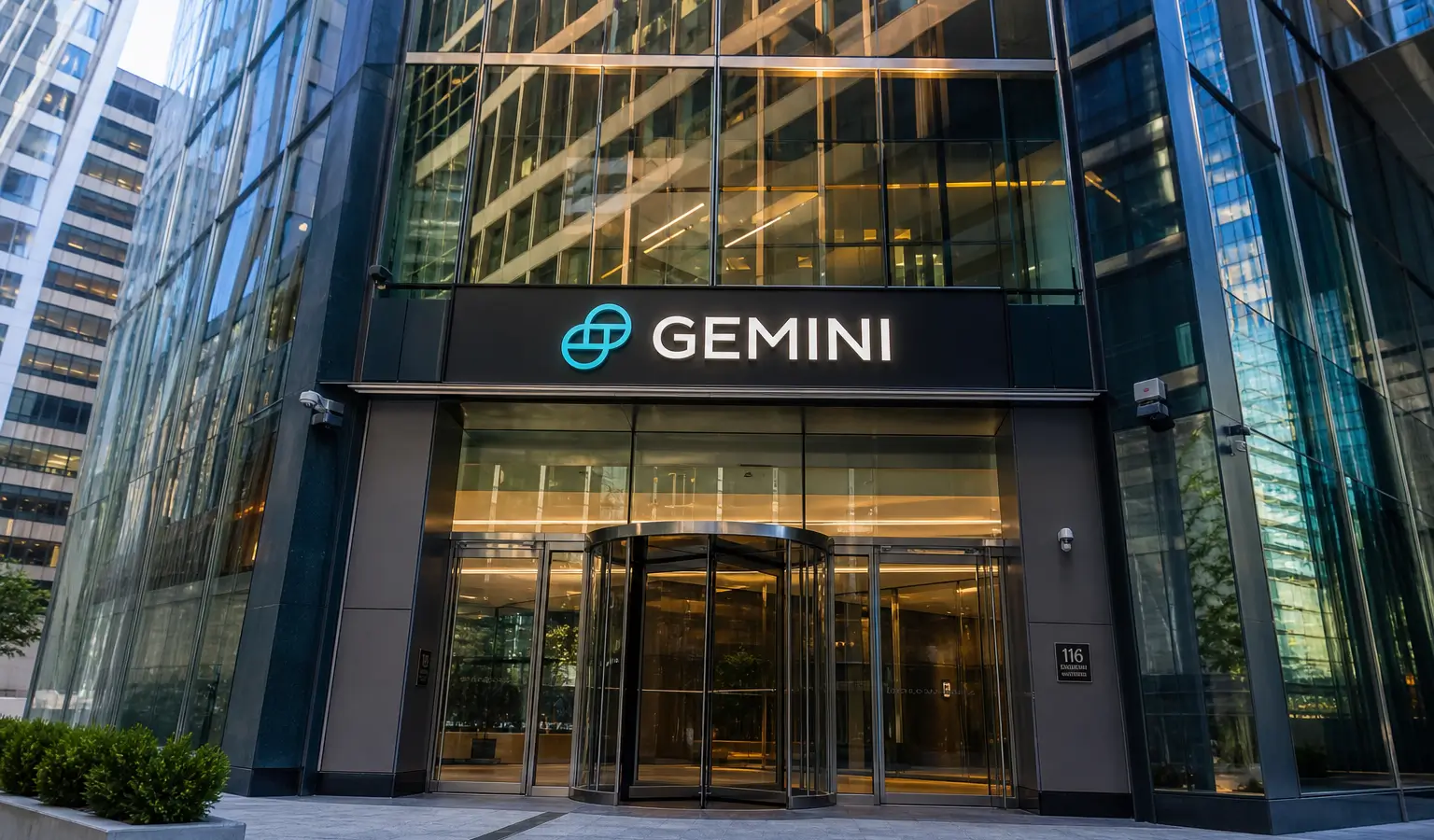
Gemini Space Station, the crypto company behind the Gemini crypto exchange, is seeing its market value keep sliding as questions grow about whether the company’s licenses and custody infrastructure are ultimately more valuable than its trading business itself. Since the IPO, the stock has fallen about 80%, and the market cap now sits around $753 million (€657 million).
Weaker Numbers at Gemini
The decline did not come out of nowhere. In the second quarter, exchange revenue fell 38% year over year to $12.5 million (€10.9 million). Spot volume also dropped sharply, down 66% to $3.8 billion (€3.3 billion), while assets on the platform fell to $8.4 billion (€7.3 billion), from $18.2 billion (€15.9 billion) before.
That puts Gemini’s core business under pressure. A venture capital investor told CoinDesk that the exchange technology itself does not stand out much compared with competitors. For a potential buyer, the question is therefore less about trading volume and more about what is behind the scenes.
Licenses as the Prize
Through its subsidiaries, Gemini still holds important licenses and approvals that are hard and time-consuming for competitors to build on their own. According to the source, buyers would have to weigh whether it is cheaper to buy those entities than to get the same approvals themselves, including the legal costs and the time involved.
That fits a broader trend in crypto M&A, where buyers are increasingly paying for regulatory access, distribution, and existing customer relationships rather than just trading volume. Earlier, Keyrock bought BlockFills’ trading operations to add licenses, derivatives expertise, and institutional clients. Ondo also explored a deal worth up to $500 million (€436 million), while LMAX and B2C2 have looked into strategic transactions.
Gemini has also expanded its regulatory footprint outside the U.S., including in Ireland, Italy, Greece, France, and Malta. That means the company can also offer derivatives within the European Economic Area. For European crypto followers, that matters because licenses like these are playing a bigger role in takeovers and market access.
Voting Rights Make a Deal Tough
Still, an acquisition would not be simple. The Winklevoss twins effectively own 94.5% of Gemini’s voting rights. That can make negotiations straightforward, since two people effectively have the final say, but it also makes a hostile takeover nearly impossible.
Lorenzo Valente of ARK Invest suggested on X last month that Hyperliquid could buy Gemini and use it as a regulated U.S. gateway for perpetual futures and prediction markets. There is no sign that Hyperliquid is actively pursuing such a deal, but the idea does show why Gemini could look more appealing to some buyers than its current market value suggests.
The pressure on Gemini also fits a broader weakness among publicly traded crypto platforms. Crypto Spot Volume Rises 19% in August to $510 Billion showed that trading volume on major exchanges picked up again, but that recovery does not automatically reach every individual exchange.