Bitcoin Struggles With Debasement Trade Despite $40 Trillion Debt
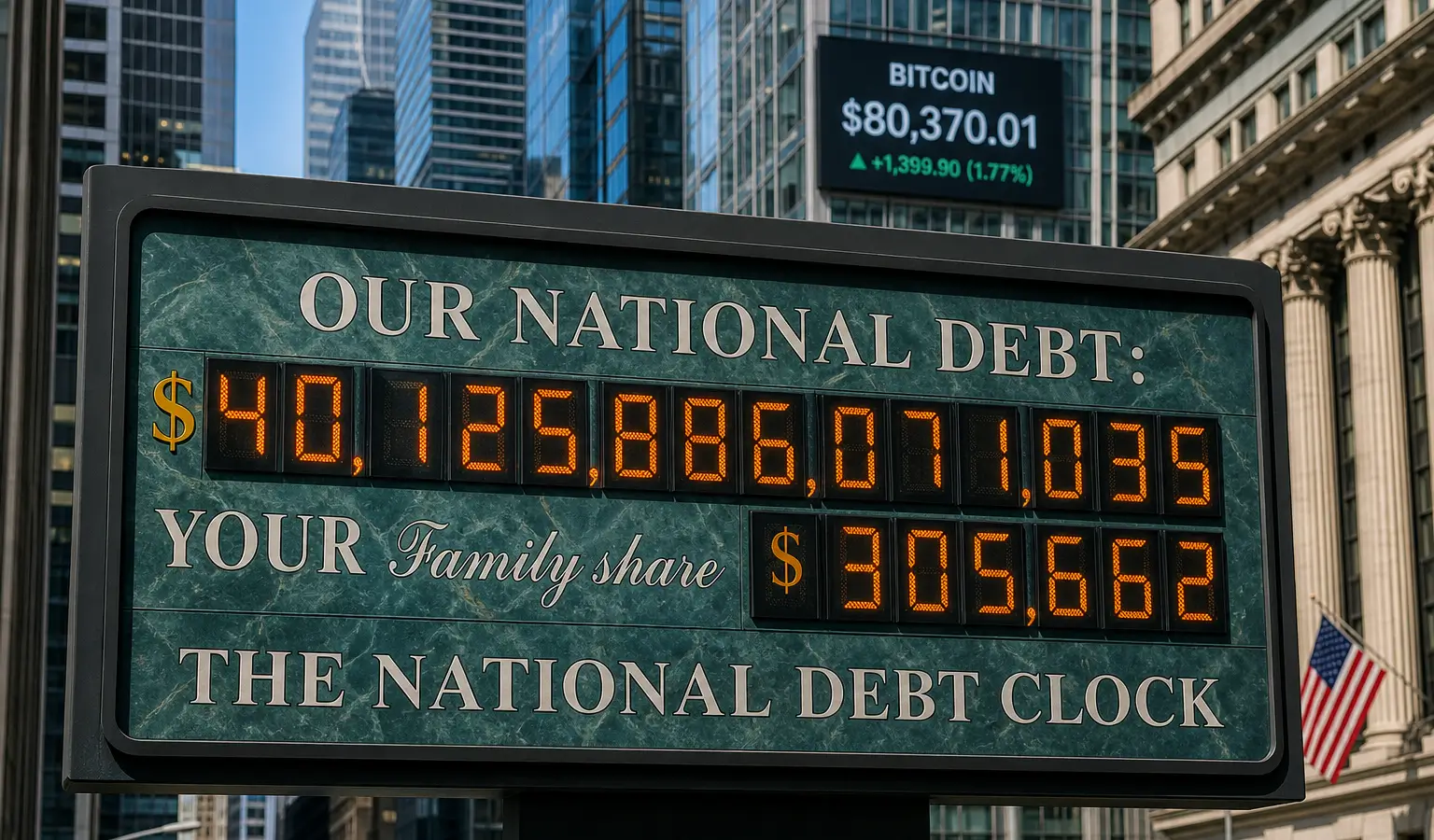
U.S. debt above $40 trillion keeps the debate over scarce assets alive, but high real yields and moves in the bond market are cooling Bitcoin's rally.
Key Takeaways
- U.S. national debt has climbed above $40 trillion, while Bitcoin is trading around $80,000 and remains far below its record.
- BloFin says the debasement trade is entering a second phase, where policy around borrowing costs and bond market interventions also matters.
- Bitcoin rose about 25% in August after higher long-term yields and bigger buybacks from the U.S. Treasury Department.
The U.S. national debt has climbed above $40 trillion (€34.4 trillion), but Bitcoin is still trading around $80,000 (€68,800), about 37% below last year's record. That is putting pressure on one of Bitcoin's oldest macro stories: if higher debt and weaker currencies make scarce assets more attractive, why did Bitcoin fall so often in 2026?
Debt and Policy
Analysts at BloFin say the debasement trade has entered a second phase. In this phase, investors are not just watching money creation and budget deficits, but also government efforts to steer borrowing costs. The U.S. government is still running a deficit of nearly 6% of GDP, while long-term yields remain high.
According to the report, the story lost momentum in early 2026. Bitcoin then fell below $62,000 (€53,300), and gold and silver also gave back a lot of ground. BloFin partly links that to Kevin Warsh's nomination as Fed chair, because the market saw him as someone less likely to choose aggressive balance sheet expansion to offset fiscal pressure.
The Bond Market Sent the Signal
The picture changed in August. On August 18, the yield on 30-year U.S. Treasuries hit its highest level since 2007. A day later, the U.S. Treasury Department said it would at least double the maximum amount of liquidity support through buybacks in some bonds with maturities of 10 to 30 years, from $2 billion (€1.7 billion) to at least $4 billion (€3.4 billion) per operation.
Bitcoin rose about 25% in August, moving from around $64,000 (€55,100) to nearly $80,000 (€68,800). BloFin sees that as a sign that investors are paying closer attention to whether policymakers will really keep accepting higher borrowing costs. The Treasury Department cannot print money itself, but the decision to scale up buybacks does show that pressure in the bond market is being taken seriously.
Why This Matters for Bitcoin
For European crypto readers, the key point is that the debate is no longer just about inflation or money printing. The mix of high debt, rising interest costs, and intervention in the bond market could keep the case for scarce assets like Bitcoin relevant for longer. At the same time, there is still a counterweight: 10-year real Treasury yields are still around 2.4%, which keeps government bonds an attractive alternative for many investors.
That also helps explain why Bitcoin in 2026 still looks a lot like a classic crypto cycle. The price peaked about 534 days after the April 2024 halving, similar to earlier cycle tops in 2017 and 2021, and then fell by more than half before recovery started. The debasement trade has not disappeared, but the market still seems to be looking for the moment when that story starts to matter more than yields. A recent rally was also helped by the idea that the Fed will leave rates alone for longer, as shown by the reaction to Christopher Waller's signal.