Bitcoin Futures Carry Falls Below U.S. Treasuries
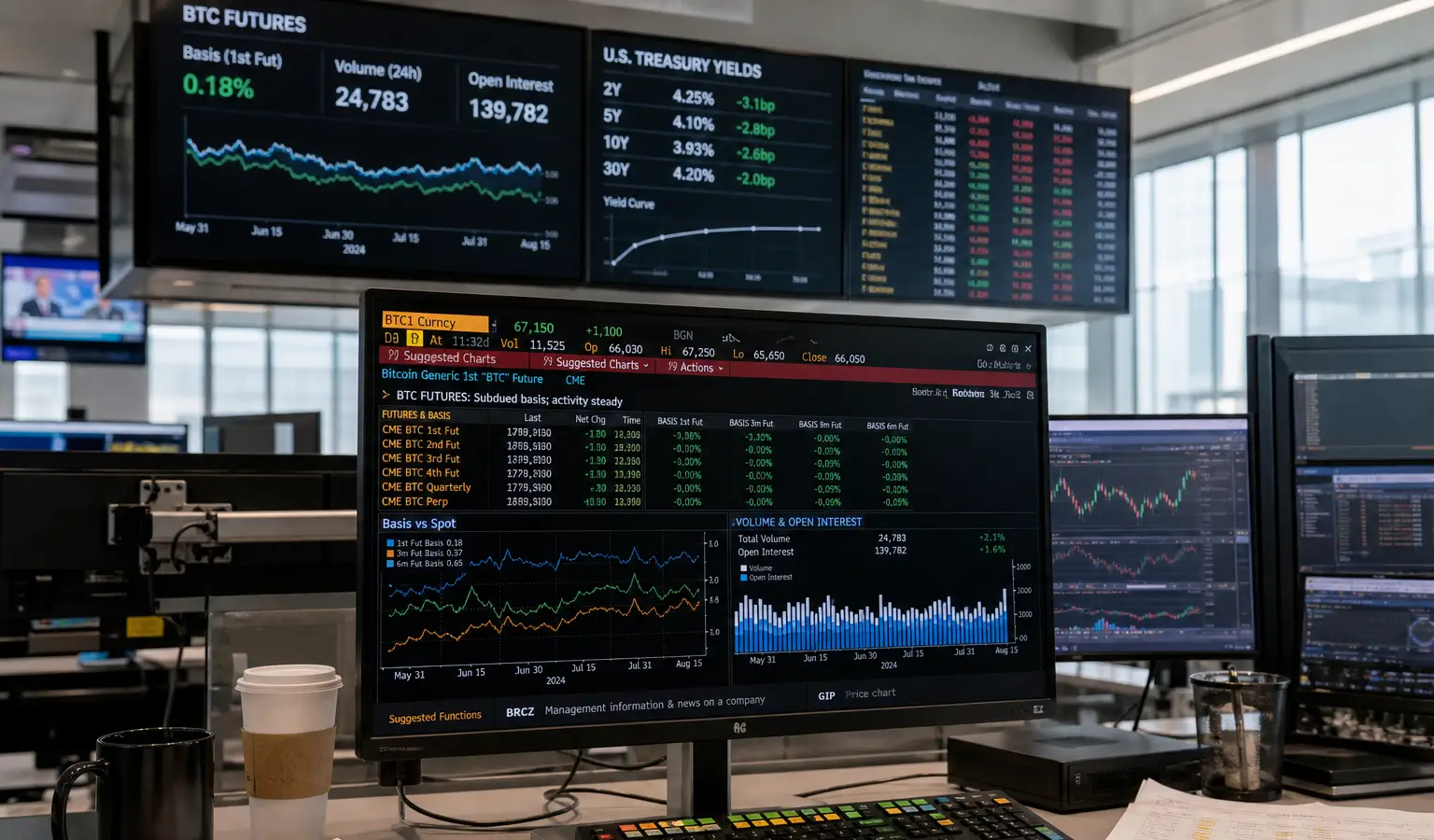
The basis on Bitcoin futures now pays less than two-year U.S. Treasuries. According to Glassnode and Coinglass, that points to cooling derivatives trading and a tighter market structure.
Key Takeaways
- The carry on Bitcoin futures has fallen below the yield on 2-year U.S. Treasuries since February.
- The current return is around 3%, while 2-year Treasuries yield an average of 3.8%.
- Futures volume dropped sharply in July, pointing to a cooler but more efficient crypto market.
The carry on Bitcoin futures has been sliding since February and is now below the yield on U.S. government bonds with a two-year maturity. What used to be an attractive source of income during the last bull market now pays less than simply holding Treasuries.
Carry Is Losing Its Appeal
In the 2021 bull market, carry trades on both regulated and unregulated crypto exchanges could often generate returns of 20% or more. The basic trade was straightforward: short Bitcoin futures while holding a spot ETF at the same time. That setup has now reversed. The current return is around 3%, while the average yield on 2-year Treasuries is 3.8%.
That spread matters for traders deploying capital around the so-called basis, which is the gap between futures and spot prices. Glassnode says that basis has been below the 2-year Treasury note for more than five months on an annualized basis. In a Telegram post, the company added that the 3-month basis has been earning less than a 2-year Treasury since February, a run that, based on the data, has only happened once before, from August 2022 to January 2023.
Less Volume, Tighter Market
The decline in carry lines up with a clear slowdown in the Bitcoin futures market. According to Coinglass, July volume came in at just over $880 million (€766 million), down from a February peak of $1.47 trillion (€1.3 trillion). The broader crypto bear market is also weighing on activity.
At the same time, the shrinking basis points to more than just lower returns. It also suggests a more developed market structure. As the gap between futures and spot narrows, bid-ask spreads can tighten and hedging becomes easier. For traders, that means fewer obvious arbitrage setups, but also a market that is pricing assets more efficiently.
Why This Matters
For European crypto investors, the shift is a reminder of how fast returns on popular derivatives strategies can change as the market matures. The comparison with Treasuries also shows that Bitcoin futures now have to compete more directly with traditional yield products for capital. That could matter for traders who view crypto not only as a directional bet, but also as a market for basis, liquidity, and execution.
The slowdown also fits with broader signs of softer demand, including the declining spot and ETF activity that was already visible earlier. With less volume and fewer inflows, it becomes harder for carry strategies to keep earning the same premium.