Bitcoin Whales Return to Highest Level in Six Months
Santiment says 90 wallets now hold at least 10,000 BTC, while smaller holders are selling after the Coldcard hack and the delay of the U.S. Clarity Act.
Key Takeaways
- The number of Bitcoin wallets holding at least 10,000 BTC climbed to 90, the highest level in six months.
- Since July 29, wallets with between 10 and 10,000 BTC have added $1.5 billion worth of bitcoin.
- Santiment says a wallet hack and the delay of the Clarity Act are helping drive selling pressure among smaller holders.
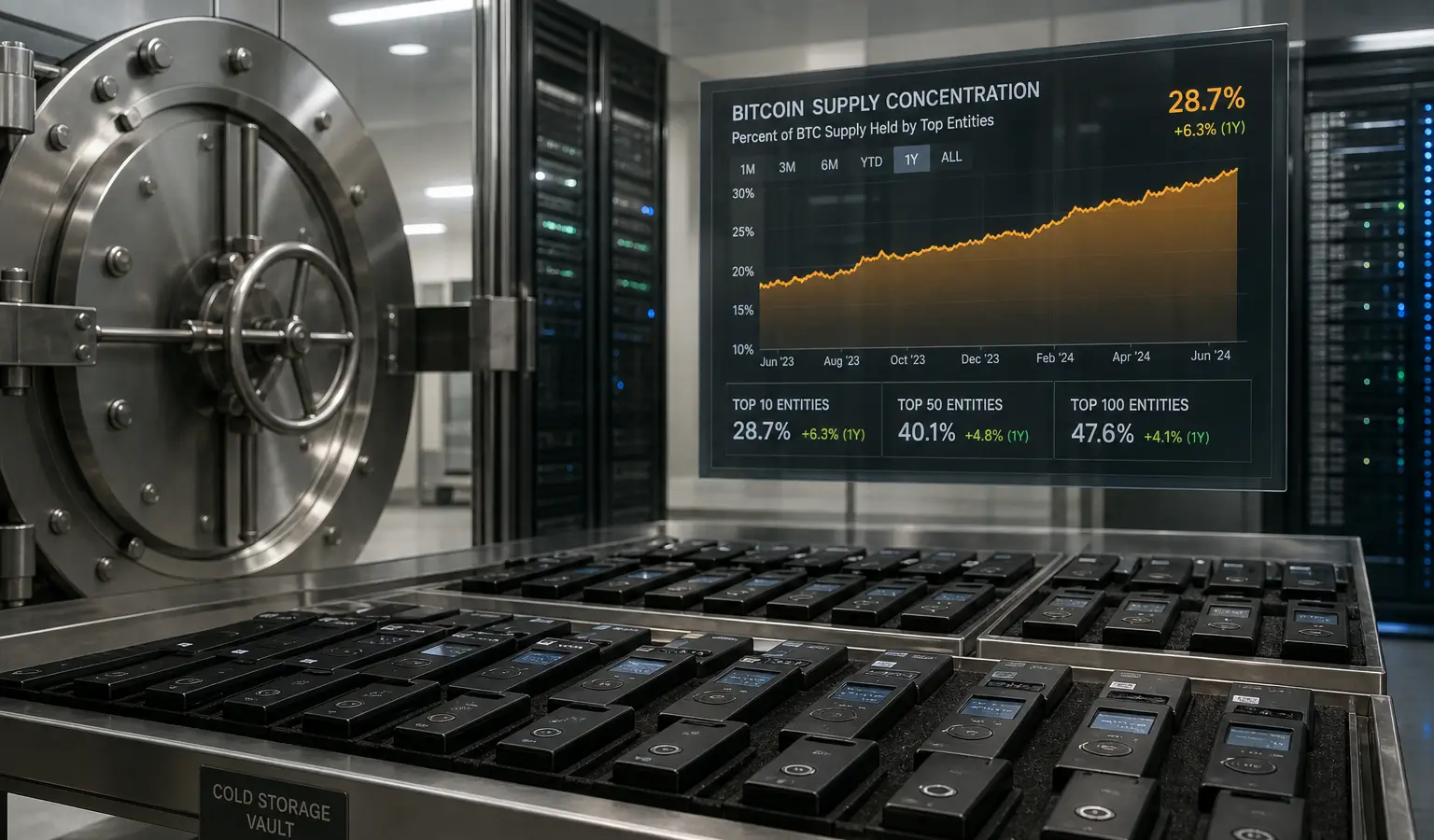
The number of Bitcoin wallets holding at least 10,000 BTC has climbed back to 90, the highest level in six months, according to Santiment. Over the last eight weeks, six wallets were added, a 7.1% increase, even as smaller holders continued to reduce exposure. Bitcoin was trading near $63,800 (€55,200) at the time of writing.
Large Wallets Keep Building
The latest jump lines up with a broader accumulation trend Santiment highlighted four days ago. Since July 29, wallets in the 10 to 10,000 BTC range have picked up $1.5 billion (€1.3 billion) worth of BTC. Santiment says that split, with larger players buying and smaller holders selling, increased the odds of a move above $70,000 (€60,600) rather than a drop below $60,000 (€51,900).
That kind of concentration among the biggest holders also fits a familiar crypto market pattern. In the past, these stretches of whale accumulation have often come before major price swings. Whale wallets account for only a small share of total Bitcoin addresses, but they control a large portion of the supply, which gives their activity outsized influence in a market where liquidity can change quickly.
Uncertainty Is Fueling Selling Pressure
Santiment points to two recent sources of uncertainty behind the pullback in so-called micro-wallets: the Coldcard hardware wallet exploit, which drained about $120 million (€104 million) worth of bitcoin, and the delay surrounding the U.S. Clarity Act. The long-awaited crypto market structure bill has now been pushed to September by the Senate.
Taken together, the security incident and the delayed regulation appear to be reinforcing a familiar supply rotation, with coins moving from smaller wallets into larger ones. That does not mean prices have to rise immediately, but it does show that the biggest market participants are becoming more active while retail traders remain cautious.
Why This Matters
For European crypto readers, the takeaway is that onchain data often gives an early read on how supply is shifting before price action makes it obvious. If large wallets keep accumulating while liquidity stays thin, the market can become more vulnerable to sharp moves. At the same time, the mix of a wallet hack and a delay in U.S. legislation shows how security and regulation can shape Bitcoin sentiment far beyond the U.S. That also connects to the broader discussion around how large holders are starting to buy net again as selling pressure eases.