Block Applies for OCC Bank Charter for Bitcoin Custody
The proposed trust bank would hold bitcoin and stablecoins under OCC oversight, without deposits or loans. It fits into the U.S. trend of bringing crypto custody into the banking system.
Key Takeaways
- Block filed an application with the OCC on September 8, 2026, for Builders Bank & Trust.
- The proposed trust bank is meant to focus on custody and fiduciary services for bitcoin and stablecoins.
- The application has not been approved yet; until a decision is made, Builders Bank & Trust remains just a plan on paper.
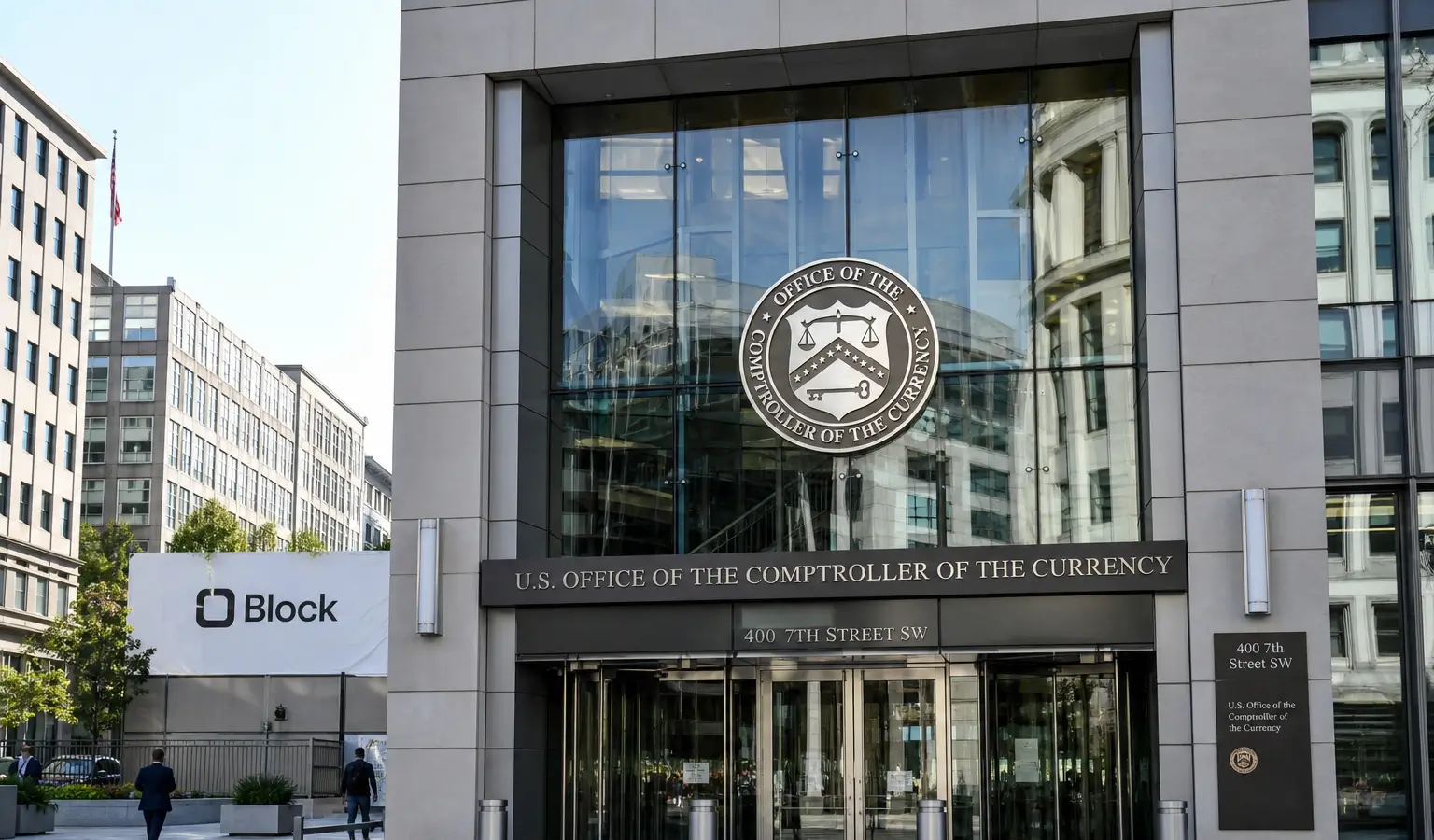
Block filed an application on Tuesday, September 8, 2026, with the American Office of the Comptroller of the Currency (OCC) for Builders Bank & Trust. It is a proposed federally regulated, uninsured national trust bank that is supposed to focus on custody and fiduciary services for bitcoin and stablecoins. The application has not been approved yet, so nothing is changing for customers or the market for now.
What Block Wants to Build
The plan is not about a regular bank with deposits and loans. Instead, Block wants to set up a specialized trust bank for safeguarding digital assets and related fiduciary services. According to the application, Builders Bank & Trust would provide a federal oversight framework for activities that Block already offers in part.
Block says this kind of structure could help the company scale its operations, but that depends entirely on the OCC process. As long as the regulator does not give the green light, Builders Bank & Trust remains a proposal. So the filing does not mean the services are already available through this bank.
Why This Matters
The application fits into a broader trend in which U.S. regulators are increasingly bringing crypto custody into the banking framework. In earlier guidance, the OCC already made clear that national banks and federal savings associations may offer crypto custody, and in 2025 the regulator again confirmed that execution and outsourcing of such services are also possible under certain conditions. That makes Block’s move especially interesting for firms that want to store digital assets through a regulated structure.
Attention to these kinds of services is also growing in other parts of the U.S. For example, Minnesota introduced rules in 2026 for banks and credit unions that want to offer crypto custody, with requirements for policies, internal controls, and security. For European readers, the application shows how quickly the debate is shifting from standalone crypto services to formal banking structures around custody and oversight.
Block’s move also lines up with a broader wave of applications for bank and trust charters in the sector. Zerohash previously filed a new trust charter application after the OCC sent back an earlier version, showing that crypto infrastructure companies are increasingly looking for a federal banking structure.
OCC Still Has to Decide
The application is now with the OCC, which has to decide whether Builders Bank & Trust can be established. If the regulator agrees, Lee Woolley would become president and chief executive of the proposed bank. Woolley is currently Block’s digital asset strategy lead, according to MarketScreener reporting based on Dow Jones.
According to that reporting, Block points to its experience with digital assets, Square Financial Services, and the banking expertise within the team. Bloomberg Law also reported that this is an uninsured national trust bank that would offer custody and related fiduciary services without taking deposits or making loans. Until a decision is made, the bank remains just a plan on paper.