Uzbekistan Tests HUMO Stablecoin With 20 Merchants
The pilot is overseen by NAPP and the central bank, with attention on backing, cybersecurity, and anti-money laundering checks. Asterium is testing the stablecoin in a sandbox with more than 20 merchants.
Key Takeaways
- Uzbekistan is testing the HUMO stablecoin for 12 months with more than 20 merchants in a sandbox environment.
- HUMO is pegged 1:1 to the som and is backed by government securities, under the supervision of NAPP and the central bank.
- Regulators are reviewing, among other things, collateral, cybersecurity, consumer protection, and anti-money laundering checks.
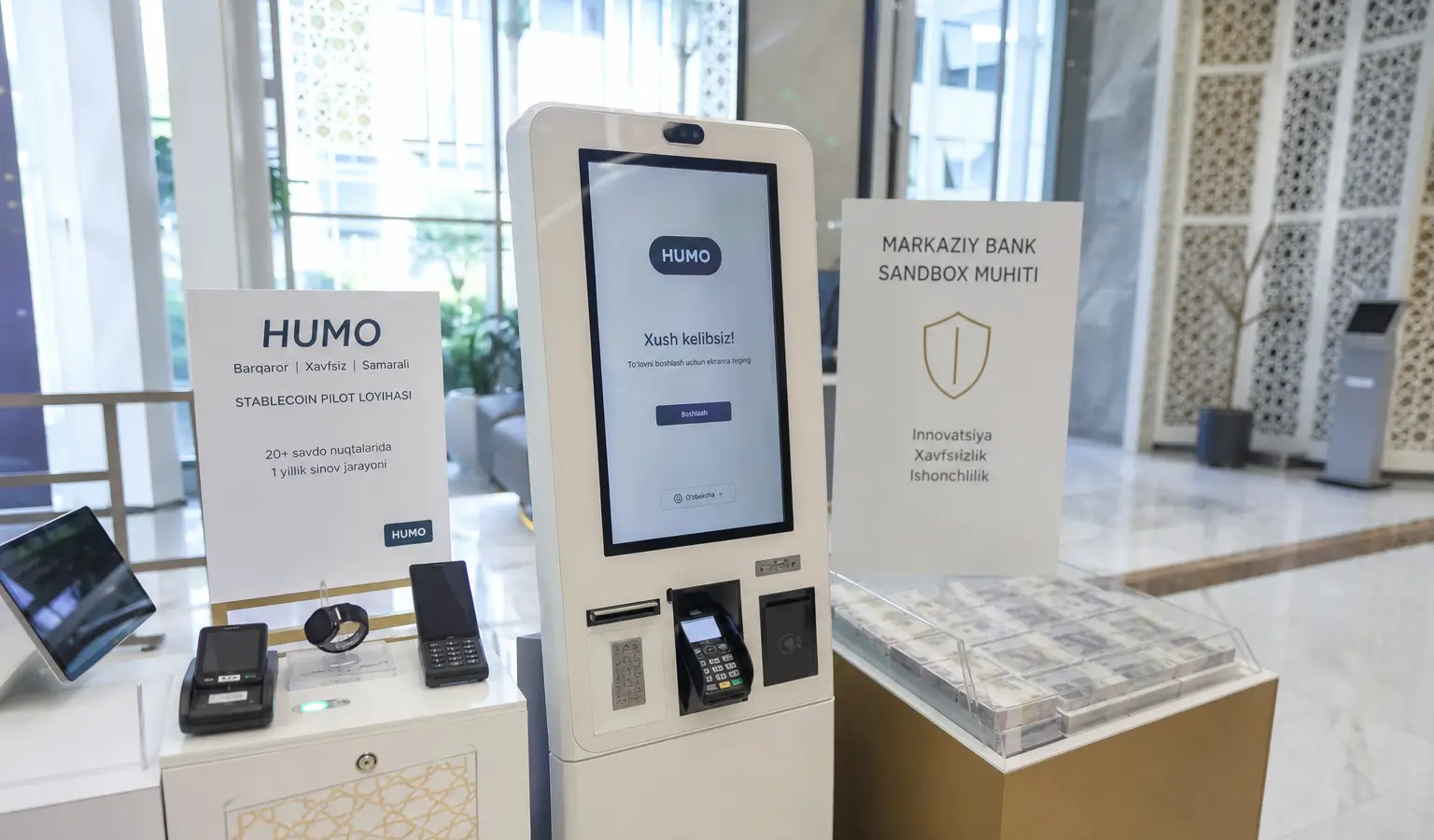
Uzbekistan has started a pilot for the HUMO stablecoin, a token pegged 1:1 to the som and backed by government securities. Humo Digital is testing the payment method for 12 months with more than 20 merchants. The pilot is under supervision of the National Agency for Prospective Projects, or NAPP, and the central bank of Uzbekistan.
Pilot in Sandbox
The test is running in a sandbox, a controlled environment where new financial products can be tested under supervision. According to the parties involved, they are looking not only at the issuance of HUMO, but also at the circulation and redemption of the token. Payment processing and the infrastructure of participating banks are also part of the trial.
Asterium, a licensed crypto exchange, is a project partner. The first test period lasts 12 months. The total project timeline can run up to three years, but a broader rollout has not yet been decided.
Oversight of Risks
The regulators are reviewing, among other things, whether the collateral is sufficient, how strong the cybersecurity is, and how well consumers are protected. Anti-money laundering checks are also part of the review. That means the pilot is focused not only on using a stablecoin for payments, but also on whether the controls around it are strong enough.
The project follows a framework approved in November 2025. That framework makes stablecoin payment pilots possible and also includes rules for tokenized stocks and bonds. HUMO therefore fits into a broader testing environment for digital financial products in Uzbekistan.
Elsewhere in Asia, regulators and market participants are also looking for a similar balance between innovation and control. For example, the regulated rollout in Hong Kong showed how stablecoins are first tested in a limited environment before broader use follows.
Why This Matters
For European crypto readers, this pilot shows how governments are increasingly testing stablecoins within a regulated framework. The combination of a fixed peg to the national currency, government securities as backing, and oversight of multiple risks makes the project relevant beyond Uzbekistan itself. It is also an example of how crypto payments can be tried out in a controlled environment without an immediate nationwide rollout.