Brazilian Central Bank Slows Large Crypto Transfers
The new anti-fraud rules mainly affect stablecoins and self-custody wallets, and exchanges will have to document risky transfers and can release them earlier.
Key Takeaways
- The Brazilian central bank is requiring crypto exchanges to hold certain transfers to foreign platforms and self-custody wallets for up to 24 hours.
- Transfers above the equivalent of $10,000 automatically fall under the waiting period, and smaller transactions can also be held if they are seen as higher risk.
- The rules are set to take effect on January 1, 2027, and put more responsibility on exchanges for risk assessment and documentation.
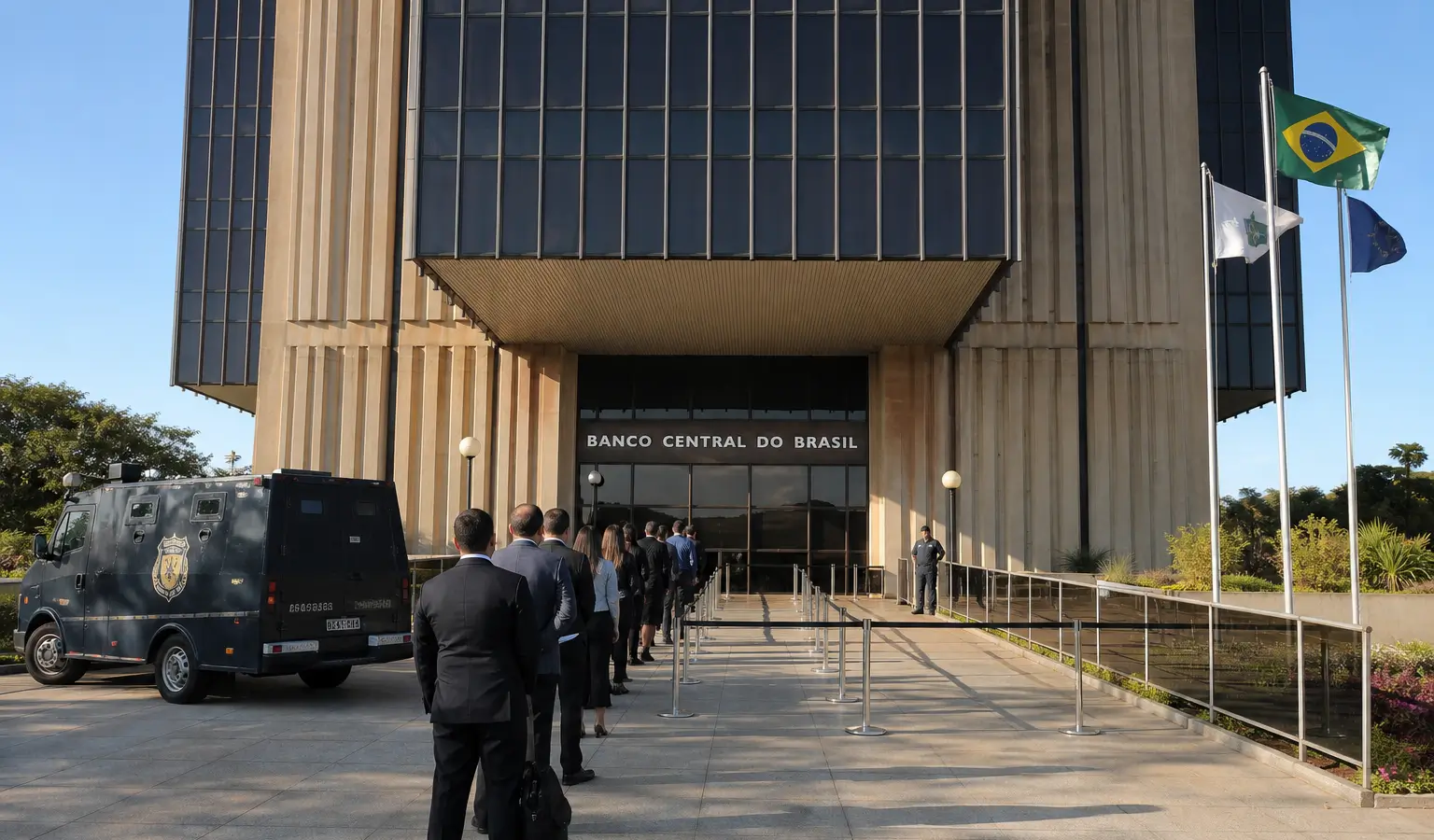
Brazil’s central bank will require crypto exchanges to pause certain customer transfers to foreign platforms and self-custody wallets for as long as 24 hours. The policy is part of a broader anti-fraud push and is scheduled to start on January 1, 2027.
New Hold for Transfers
The rule kicks in when a customer deposits Brazilian reais or crypto into an exchange and then moves those funds abroad or into a wallet they control. Any transfer above the equivalent of $10,000 (€8,670) is automatically subject to the waiting period, even if that threshold is reached through several transactions on the same day.
Exchanges can also hold smaller transfers if they consider them risky. The central bank says cryptocurrencies, including stablecoins, are being used to move money tied to financial fraud before victims or institutions can recover it.
The measure is laid out in Resolution BCB No. 584/2026, published on August 7. If an exchange’s risk review finds no signs of abuse, it may release a transfer early, but it still has to document the decision and let customers know when a transaction is being held.
More Pressure on Exchanges
The new framework gives exchanges more responsibility for judging risk based on the customer, the transaction, the counterparty, and the destination country. It also fits into Brazil’s wider effort to bring crypto, especially stablecoins, more firmly into the financial system while reducing room for abuse.
Back in April 2026, the central bank already barred the use of crypto, including stablecoins, for international transfers inside the regulated eFX system. It also said that transactions between eFX providers and foreign parties would need to go through traditional currency channels or nonresident accounts in reais.
For European crypto readers, the move is another sign of how quickly regulators are tightening the rules around stablecoin flows and self-custody transfers. Measures like this could matter for exchanges with international users, since compliance requirements around source, destination, and counterparty are becoming harder to ignore. A similar approach is also taking shape elsewhere: in South Africa, regulators are considering proposals that would route cross-border crypto transfers through licensed providers. According to Regina Pedroso, chair of the Brazilian tokenization group Abtoken, that could raise costs for legitimate users and put pressure on the competitiveness of domestic exchanges.