Cantor Sees Bitcoin Bottom Around October in Bear Market
Cantor Fitzgerald expects Bitcoin could form a cyclical bottom around October, while the bank shifts its focus to tokens with durable fee and cash flow models.
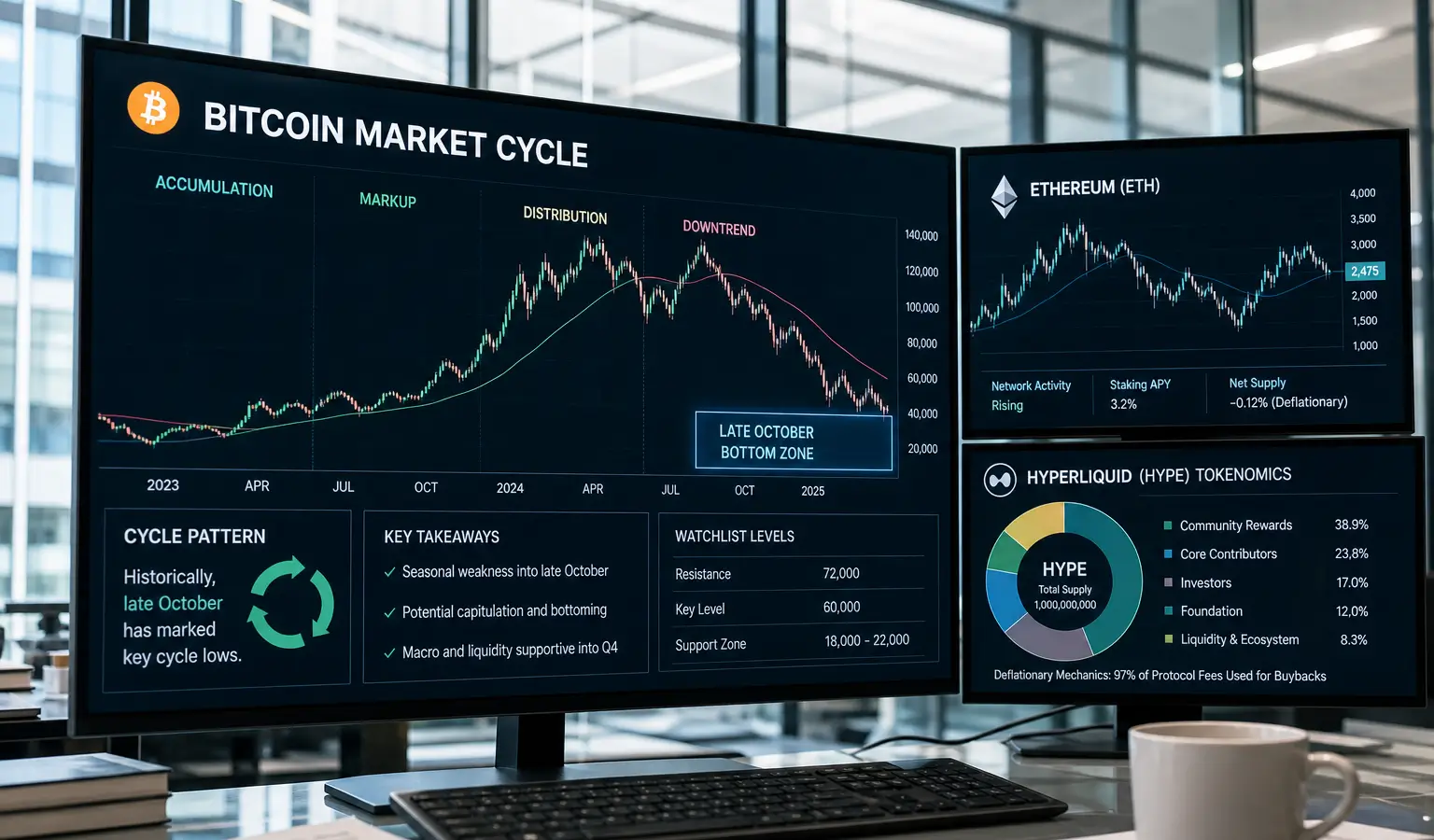
Key Takeaways
- Cantor Fitzgerald sees Bitcoin possibly hitting a bottom around the end of October, based on historical bear market patterns.
- The bank warns that macroeconomic, regulatory, and geopolitical risks could disrupt that pattern.
- Cantor expects durable token demand to matter more than pure network activity, with Hyperliquid as an example of fee-driven tokenomics.
Wall Street bank Cantor Fitzgerald says the crypto market may be in the last stretch of the current bear market, with Bitcoin potentially carving out a bottom around October if past cycle behavior holds up. The bank argues that, for now, investors should pay less attention to speculation and more attention to networks that can convert usage into lasting token demand.
Bitcoin Is Approaching a Cyclical Bottom
Cantor believes Bitcoin is now in the later phase of the current downtrend. As of June 10, the asset was 252 days removed from the 2025 peak and down about 51 percent, while the average bottom in the three prior market cycles arrived 384 days after the top. If that same pattern plays out again, the low could come near the end of October.
Still, the analysts, led by Gareth Gacetta, say the timing should not be treated as a precise forecast. Macroeconomic, regulatory, and geopolitical shocks could easily disrupt the pattern, even though the bank notes that crypto's reflexive structure can also make historical cycles reinforce themselves.
The Focus Is Shifting to Token Value
Cantor says the next set of winners will not necessarily be the networks with the most activity. Instead, it expects the stronger protocols to be the ones that turn usage into durable cash flow or a persistent monetary premium. In that framework, the bank highlights Hyperliquid as the clearest example of fee-based tokenomics, including through HYPE buybacks and burns.
Bitcoin remains Cantor's main monetary benchmark, while Ethereum is still the leading collateral layer for onchain finance. The analysts say Solana, XRP, and Zcash each have their own advantages, but they still need to show that ecosystem growth can translate into lasting token demand.
Why This Matters
For European crypto investors, the main point is that Cantor is treating the market as more than a simple price call. It is also a debate about how value gets captured. That fits a broader shift in crypto, where the growth of stablecoins, tokenized assets, onchain credit, and DeFi does not automatically mean the tokens tied to those systems will become more valuable.
The bank also views digital asset treasury companies as a growing link between traditional capital markets and crypto. These public companies hold large digital assets on their balance sheets and are increasingly using tools such as convertible debt, preferred stock, and share sales to buy crypto as a reserve asset, which could deepen the role of public markets in the sector.