Cardano Avoids Governance Gridlock, ADA Remains Weak
The vote saved four seats on the Constitutional Committee, preventing treasury decisions and the planned Leios upgrade from getting stuck. ADA, however, stayed around $0.197.
Key Takeaways
- Cardano avoided a governance gridlock on September 1 by just barely approving four new seats on the Constitutional Committee in time.
- ADA barely reacted to the news and stayed around $0.197, since the vote mainly removed a risk.
- Without new members, the committee would have fallen below the minimum, which could have stalled treasury payouts, protocol changes, and a hard fork.
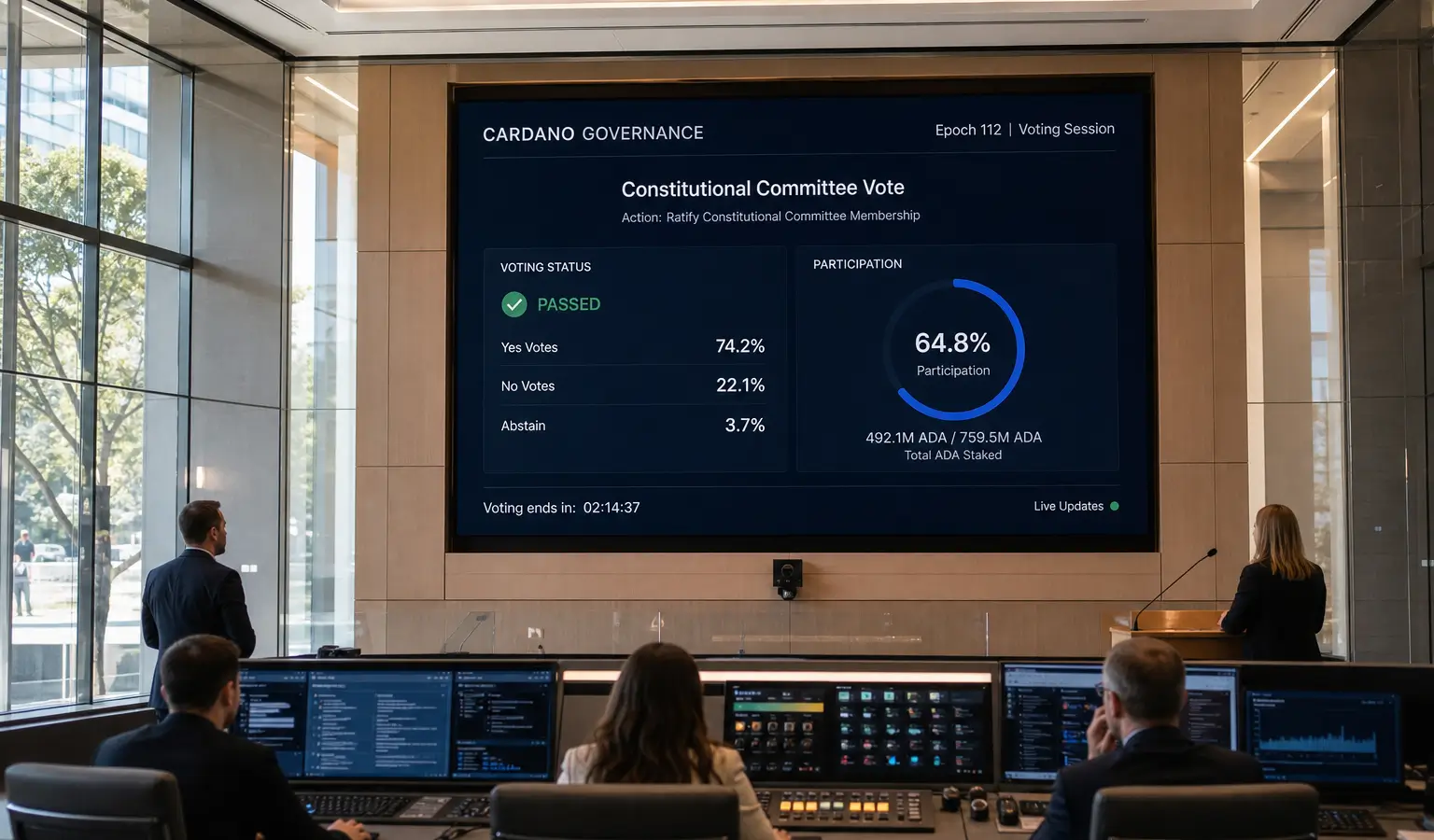
Cardano narrowly avoided a governance gridlock at the last minute. The vote on four new seats in the Constitutional Committee passed on September 1 by just enough, but the ADA price barely reacted and stayed around $0.197 (€0.17).
Vote Came Down to the Final Day
Tension built because four of the committee’s seven seats were set to expire at the end of epoch 653, on September 1 at 21:44 UTC. For days, it looked like the stake pool operators might miss the mark. On August 30, their support stood at 39 percent, well below the required 51 percent. The delegated representatives were at 66.3 percent, just under the 67 percent threshold.
That fits with how Cardano has set up its governance. Stake pool operators and DReps have to actively approve proposals, and if a group does not vote, it automatically counts as an abstention. Because of that, low participation can block a proposal even when there is broad support in the community.
One day before the deadline, support among the pools was around 49 percent. In the final hours, the missing votes came in after all. Shortly after the vote closed, the governance organization Intersect said the action had been ratified.
What Remains Open Now
Without new members, the committee would have dropped back to three seats, below the minimum of five. That would have stalled treasury payouts, changes to protocol parameters, amendments to the constitution, and the launch of a hard fork. That last part also affects the Dijkstra upgrade with Ouroboros Leios, which is meant to make the network faster.
The new members will serve until epoch 799, according to the official result. Not everything was approved: the proposal to lower the minPoolCost to 75 ada did not get enough support in the same epoch.
Why ADA Barely Moved
For traders, the vote was mainly about removing a risk, not about immediate new upside. That also makes sense in a governance model where turnout among DReps and stake pool operators remains decisive. A recent analysis also pointed out that voting power among DReps is becoming more concentrated and that participation is getting harder because of fragmented tools, lots of information, and usability barriers.
For European crypto followers, this matters because Cardano shows how important governance is for the progress of a blockchain. If participation stays low, future proposals could face delays again, even without anything actually going wrong with the network itself. The recent Van Rossem hard fork was still approved smoothly through the same governance structure, but this vote shows that turnout does not stay high on its own.