Cardano Hands Core Software Over to Outside Teams
Input Output is handing off maintenance of Haskell, Plutus, and Hydra to teams like Se7en Labs and Teragone. The move is meant to make Cardano less dependent on one party, while Voltaire and on-chain governance continue.
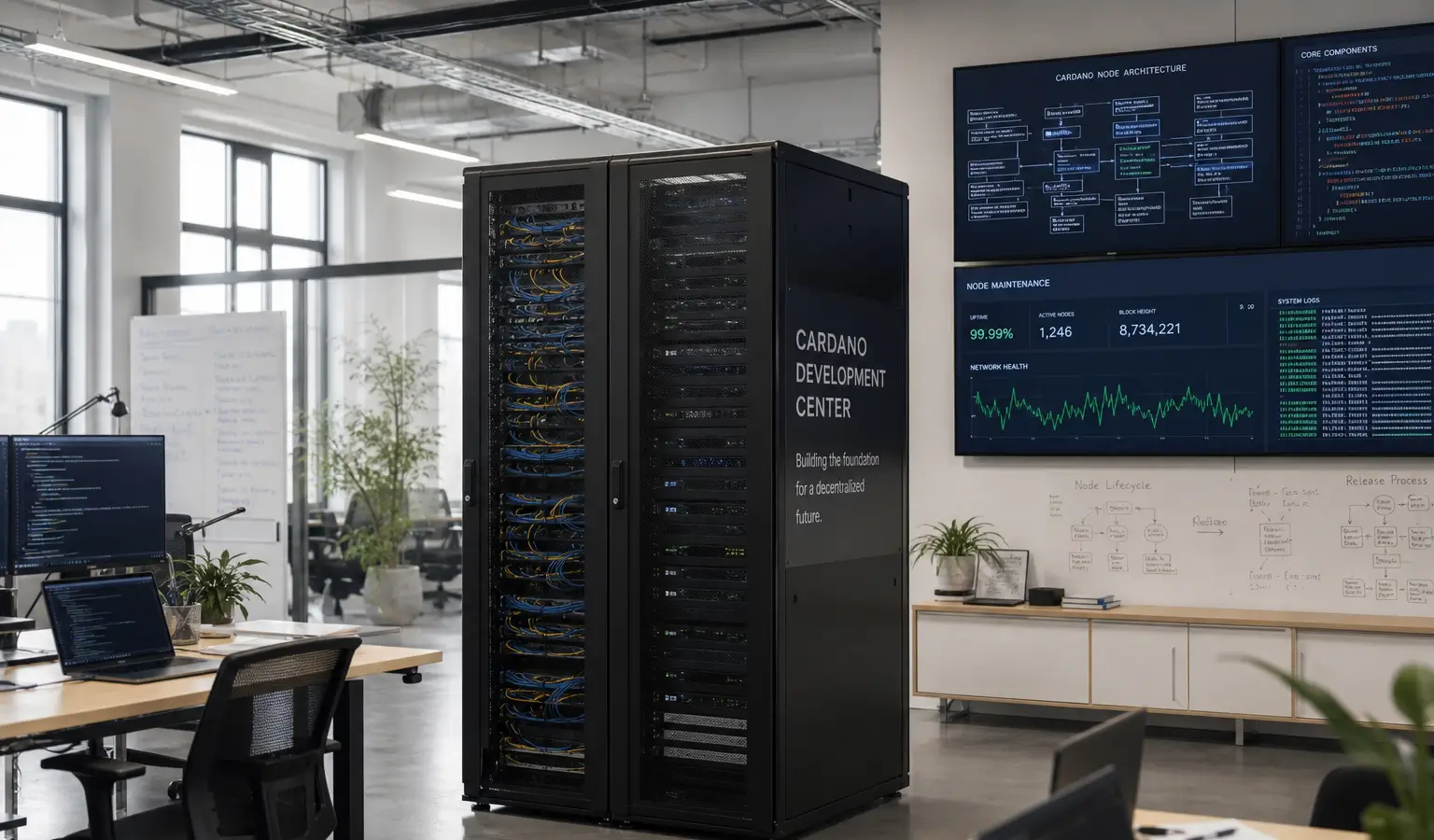
Key Takeaways
- Input Output is shifting control of Cardano’s core infrastructure to outside teams in an effort to reduce reliance on the network’s original builder.
- The transition begins in August and will continue through 2027, covering the Haskell node, Plutus, Daedalus, Hydra, and developer relations.
- The change is part of Cardano’s Voltaire phase, where governance is already decentralized and software maintenance is now being distributed more widely.
Cardano developer Input Output is turning over control of key blockchain infrastructure to outside teams. The company says the goal is to make Cardano less dependent on the group that originally built it and to push the network another step closer to full decentralization.
Transfer of Core Components
The handoff covers several major pieces of the network, including the Haskell node, the Plutus smart contract platform, the Daedalus wallet, Hydra scaling technology, and developer relations. Input Output said the rollout begins in August and will run through 2027.
A number of specialized firms are part of the effort, including Se7en Labs and Teragone. Se7en Labs works on blockchain infrastructure, while Teragone contributes to Mithril, Cardano’s stake-based signature protocol. Independent teams will also be responsible for maintaining at least three Cardano implementations in Haskell, Rust, and Go.
Voltaire Phase Continues
The move fits into Cardano’s broader roadmap, where earlier phases such as Byron, Shelley, Goguen, Basho, and Voltaire each marked a different stage in the network’s growth. Voltaire already brought in on-chain governance, giving ADA holders a decentralized way to vote on the network’s direction.
Input Output says the next step is to decentralize not just governance, but also software maintenance. Formal specifications will be handled by member organizations such as Intersect and Pragma, while development will still go through community review and voting.
Why This Matters
For European crypto readers, the main question is whether Cardano can also reduce its dependence on a single company at the technical level. That could shape how developers, validators, and users think about the network’s resilience. It also shows that decentralization is not just about governance, but about who actually keeps the codebase running.
The announcement comes as Cardano continues to face weak network activity. DeFi revenue and other usage metrics have been under pressure for some time, while rivals like Tron and Solana are attracting far more capital, according to the comparison cited. ADA is also under pressure, trading around 16 cents on Friday, nearly 95 percent below its $3.10 (€2.71) peak in September 2021.
Charles Hoskinson, Cardano’s cofounder, described the handoff as the final stage of the Voltaire era and a move toward full decentralization of node and reference blueprint development. He also said Cardano needs more specialized teams to set goals and allocate resources, while Input Output will focus more on research and new initiatives through IO Labs and IO Ventures.