Cardano Spin-Off Veridian Tokenizes Shares On-Chain
Veridian is now an independent Swiss company and uses Cardano’s CIP-0113 for tokenized shares. The case connects digital identity with regulated assets and compliance.
Key Takeaways
- The Cardano Foundation spun off Veridian into an independent company and tokenized its shares on-chain on the Cardano chain.
- That gives Cardano the first live use of CIP-0113, the programmable token standard for rules around tokens.
- Veridian builds identity software for governments, companies, and AI agents and wants to attract strategic investors in 2027.
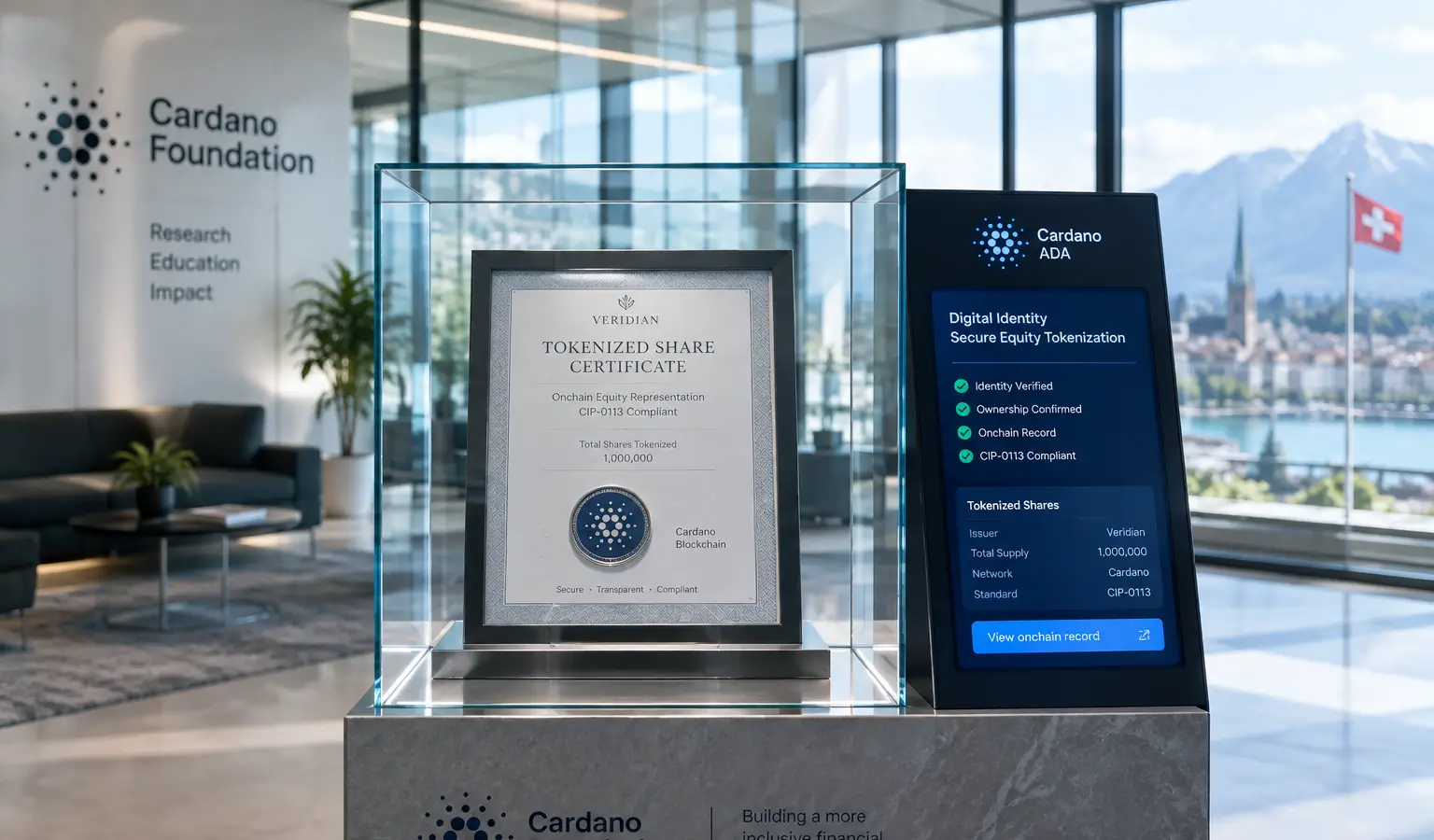
The Cardano Foundation has spun off Veridian, the digital identity project, into an independent company and tokenized that company’s shares on-chain on the Cardano chain. That gives Cardano its first live example of its new programmable token standard, CIP-0113, which can connect rules directly to tokens.
Veridian Becomes Independent
Veridian is based in Switzerland and wants to build tools that let governments, companies, and AI agents prove their identity and online actions. The company is led by Thomas A. Mayfield, who previously worked at the Cardano Foundation on decentralized trust and identity solutions.
According to the foundation, Veridian wants to attract strategic investors in 2027. Frederik Gregaard, CEO of the Cardano Foundation and chairman of Veridian, said the company has 1 million shares and that most of them have already been tokenized.
CIP-0113 Gets Its First Use Case
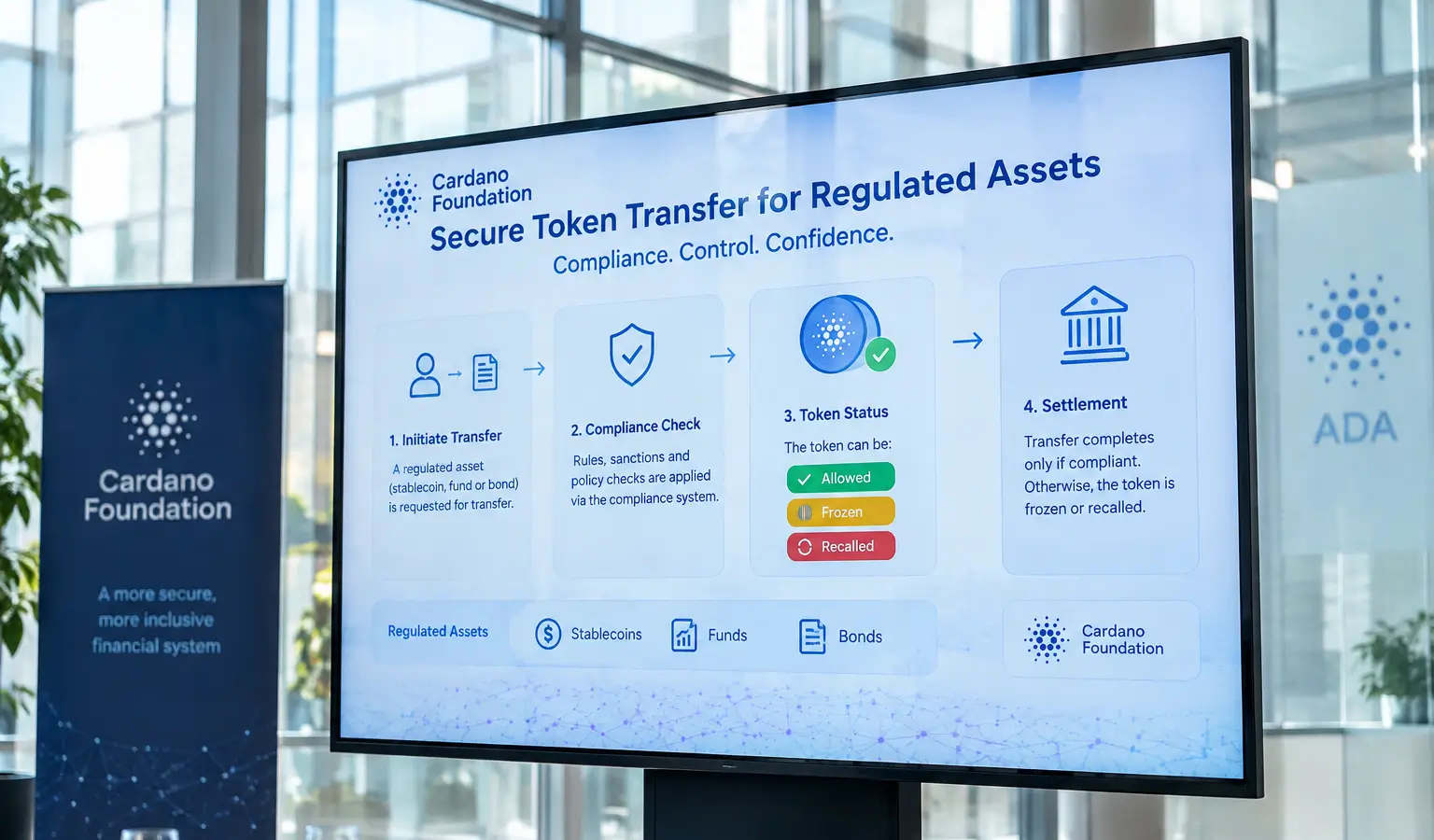
CIP-0113 is meant for issuers that want to attach conditions to a token, for example around who can receive it and, where needed, whether it can be frozen, seized, or transferred. That makes the standard especially relevant for regulated products like stablecoins, funds, and tokenized securities, where identity and compliance play a big role.
Veridian is now showing how that can work in practice with tokenized equity. Gregaard called it a first operational case for shares on Cardano, instead of a purely theoretical example.
The new token standard for regulated assets also fits that same direction: Cardano wants to give issuers more control over identity, transferability, and rule compliance.
Identity and AI Come Together
The identity layer behind Veridian uses open standards like KERI and ACDC to issue digital credentials. Those are meant to help people, companies, and software agents prove their identity or authority without one central database controlling all the data.
The Cardano Foundation also said the Veridian wallet is live on iOS and Android and that the project mapped Utah’s digital identity requirements. In May, Utah launched its State Endorsed Digital Identity Program with SB 275.
For European crypto readers, the main takeaway is that Cardano is showing how blockchain, identity, and regulated assets are moving closer together. The mix of tokenized equity and verifiable identity could matter for parties working with compliance, access, and transferability of digital assets.