Cardano Activates Van Rossem Hard Fork and Eyes ADA
The upgrade is designed to speed up Plutus and the smart contract layer, while Cardano’s Voltaire governance has now approved a major change for the first time.

Key Takeaways
- Cardano activated the Van Rossem hard fork on July 18, bringing Protocol Version 11 live.
- The upgrade is meant to enable faster and cheaper smart contracts and also strengthens node security.
- More than 77 percent of delegated representatives and 52 percent of stake pool operators approved the first major upgrade through Voltaire governance.
Cardano activated the Van Rossem hard fork on July 18, officially bringing Protocol Version 11 online. The rollout appears to have gone through without major issues, aside from a short block gap, and it is intended to set up faster and cheaper smart contracts across the network. For ADA holders, the bigger question is whether a technical upgrade like this can translate into a more durable price rebound.
What Van Rossem Changes
A hard fork is a permanent protocol change, so every node has to move to the new rules at the same time. Van Rossem went live at around 21:45 UTC and takes its name from contributor Max van Rossem, who is a key figure in Cardano. From what is known so far, the upgrade did not create any disruption for users or their assets.
Most of the changes focus on the smart contract stack. Plutus now runs faster, the network includes new built-in functions, and the cost models have been updated. Node security has also been improved, which should make the underlying infrastructure more robust.
Governance Carries More Weight
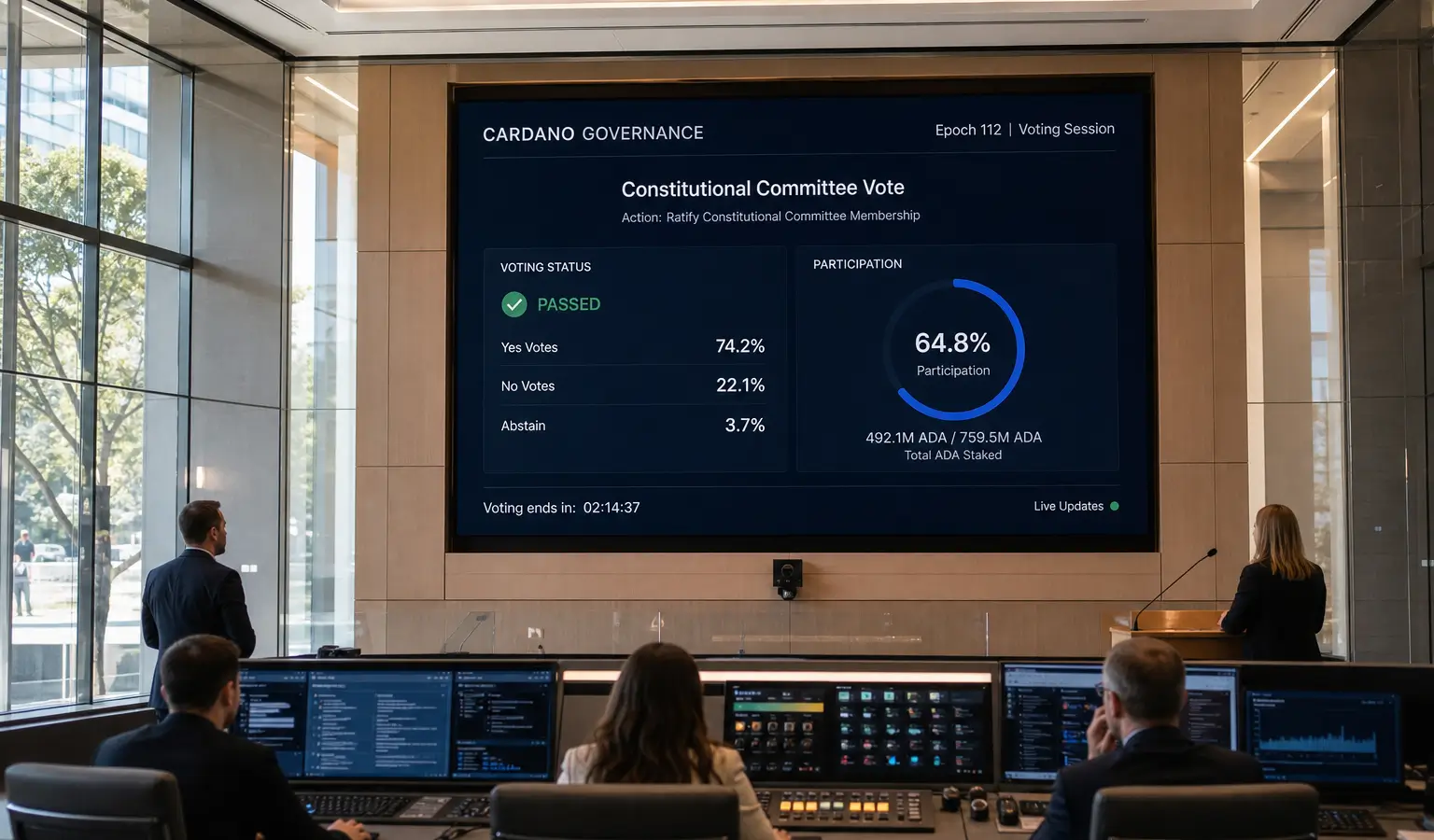
What makes this upgrade notable is that it is the first major change to be fully approved through Cardano’s Voltaire governance. More than 77 percent of delegated representatives and 52 percent of stake pool operators voted yes. That suggests Cardano’s onchain decision-making is no longer just a concept, but something that is now being used for a network-wide upgrade.
Intersect, which helps coordinate Cardano’s development, said the activation shows that governance is becoming more mature. The upgrade also remains within the Conway governance era, since it is an intra-era change rather than the start of a new phase for the network.
Why ADA Investors Are Watching
For the crypto market, the key point is that technical upgrades alone rarely change a trend on their own. ADA was trading around $0,1663 (€0.15), up about 1.2 percent over the past 24 hours, but earlier Cardano hard forks tended to trigger an initial burst of excitement before the market settled back down unless real usage followed. So the real test is not just whether the code is better, but whether developers, DeFi projects, and NFT applications start using the network more often afterward.
There is also a bigger operational shift coming. Starting in August, Input Output will hand off core infrastructure, including the Plutus platform and the Daedalus wallet, to outside parties. That makes the next few months especially important as Cardano tries to align its technical roadmap with how well it can actually execute it.