CFTC Puts AI Center Stage and Sees a Path to Autonomous Trading
The U.S. regulator is looking at how AI trading and autonomous trading agents fit within registration, liability, and oversight of derivatives and crypto markets.
Key Takeaways
- CFTC Chair Mike Selig calls AI a possible path to more autonomous trading and sees AI, crypto, and infrastructure as connected market developments.
- The regulator is already using AI to oversee derivatives markets, but it is still wrestling with questions about registration, liability, and the identity behind trading agents.
- The debate also touches crypto, where the CFTC is looking for more clarity on rules for software and tools, while market participants are increasingly using AI algorithms.
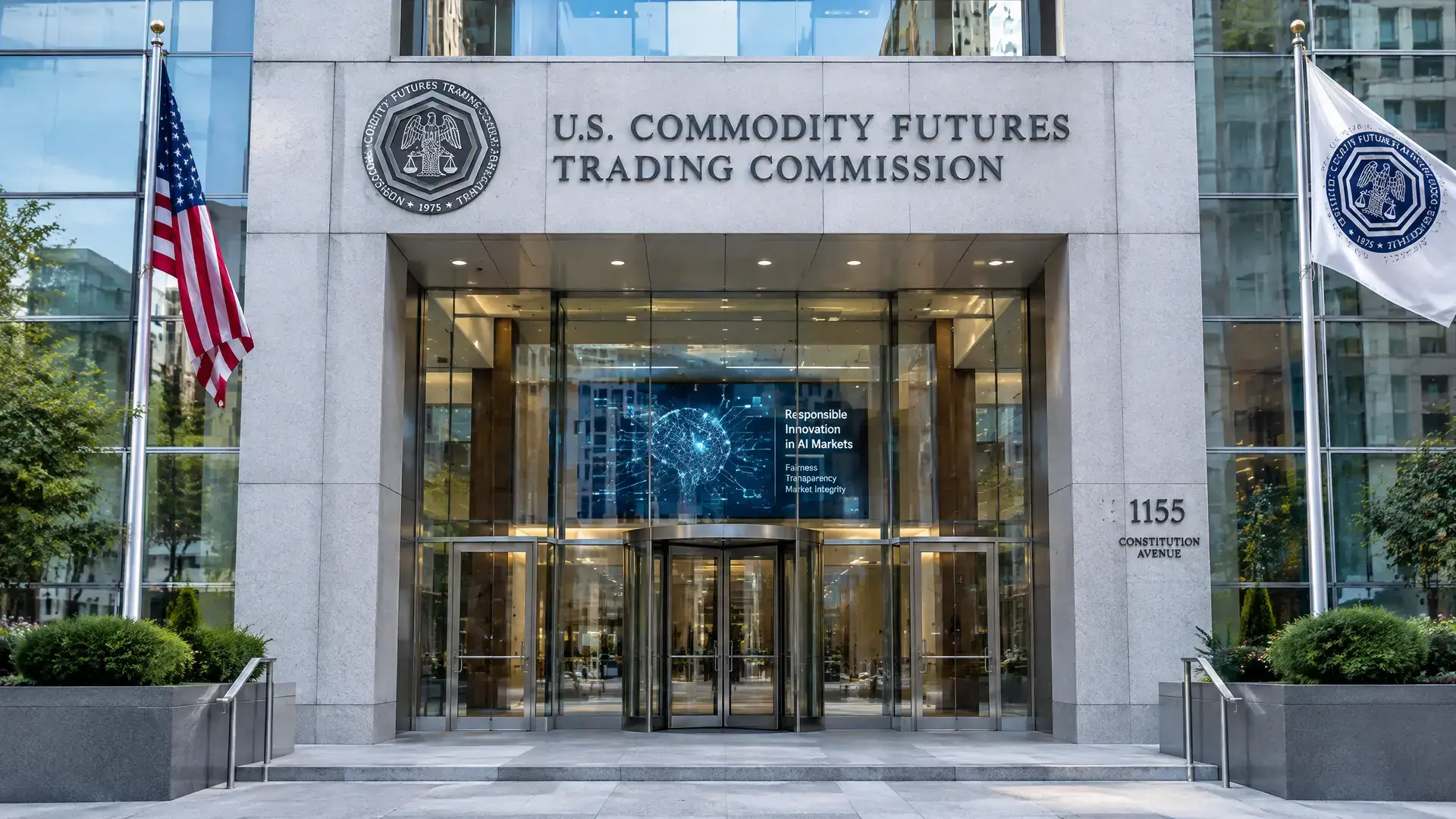
The U.S. regulator CFTC is putting artificial intelligence firmly on the agenda. Chair Mike Selig said at a forum that AI could be a possible path to more autonomous trading. At the same time, he warned that regulators still have a lot of questions to work through around registration, liability, and who exactly is behind a trading agent.
AI and Crypto in the Same Breath
Selig described AI, crypto, and modern financial infrastructure as three developments that could reshape markets together. In his view, that combination can widen access to advanced financial tools and help firms manage risk more precisely. He went a step further by saying the word 'artificial' no longer fits and that the technology is better understood as super intelligence, or SI.
The CFTC does not seem to want to just talk about that shift, but also use it itself. Selig said his staff is already heavily using AI to monitor derivatives markets. At the same time, he stressed that the rise of computer agents in trading raises new oversight questions, especially if an agent carries out transactions on its own on behalf of a user.
New Questions for Regulators
The core of his message was that regulation has to keep up with the technology. Selig asked out loud whether the developer of such an agent falls under registration requirements and who is liable if the system goes off the rails. He also raised the question of how regulators can determine on whose behalf a non-human trading agent is acting, and whether that requires a new kind of know-your-customer process.
Those questions also apply to crypto, where software developers and interface builders have long faced similar uncertainty. Selig said the CFTC has dealt with that before and that under his leadership the regulator has tried to provide more clarity on the rules for software and tools in crypto asset markets.
Why This Matters for Crypto
For European crypto readers, this is especially relevant because the debate shows how regulators are increasingly putting AI and crypto in the same bucket. The CFTC previously launched a Frontier Forum series around AI and agentic finance, which suggests the U.S. regulator sees this not as a one-off trend, but as a topic for ongoing oversight. The Futures Industry Association had earlier called for a technology-neutral approach, with the focus on how the technology is used and what effect it has, rather than on the label itself.
Brett Harrison also took part in the forum. He is the CEO of AI derivatives exchange Architect and the former head of the U.S. arm of FTX. He said consumer models like Claude, ChatGPT, and Gemini make it easier for traders to turn unstructured information, such as news, into a trading decision. In his view, more and more market participants, from retail to institutional players, are using these black box algorithms to trade derivatives.