Clarity Act Stalls Over Trump Ethics as Democrats Push for Tougher Rules
Democrats say the ethics limits tied to Trump’s crypto interests do not go far enough, while enforcement and the DOJ’s role are splitting the Senate.
Key Takeaways
- The U.S. Senate and the White House are clashing over the Clarity Act, mainly over ethics limits on President Donald Trump’s role in the crypto industry.
- Democrats say the proposed enforcement is too weak, and they want state prosecutors to be able to act alongside the Department of Justice.
- The political fight is slowing the bill down, even though it is meant to bring clarity on crypto rules, oversight, and authority.
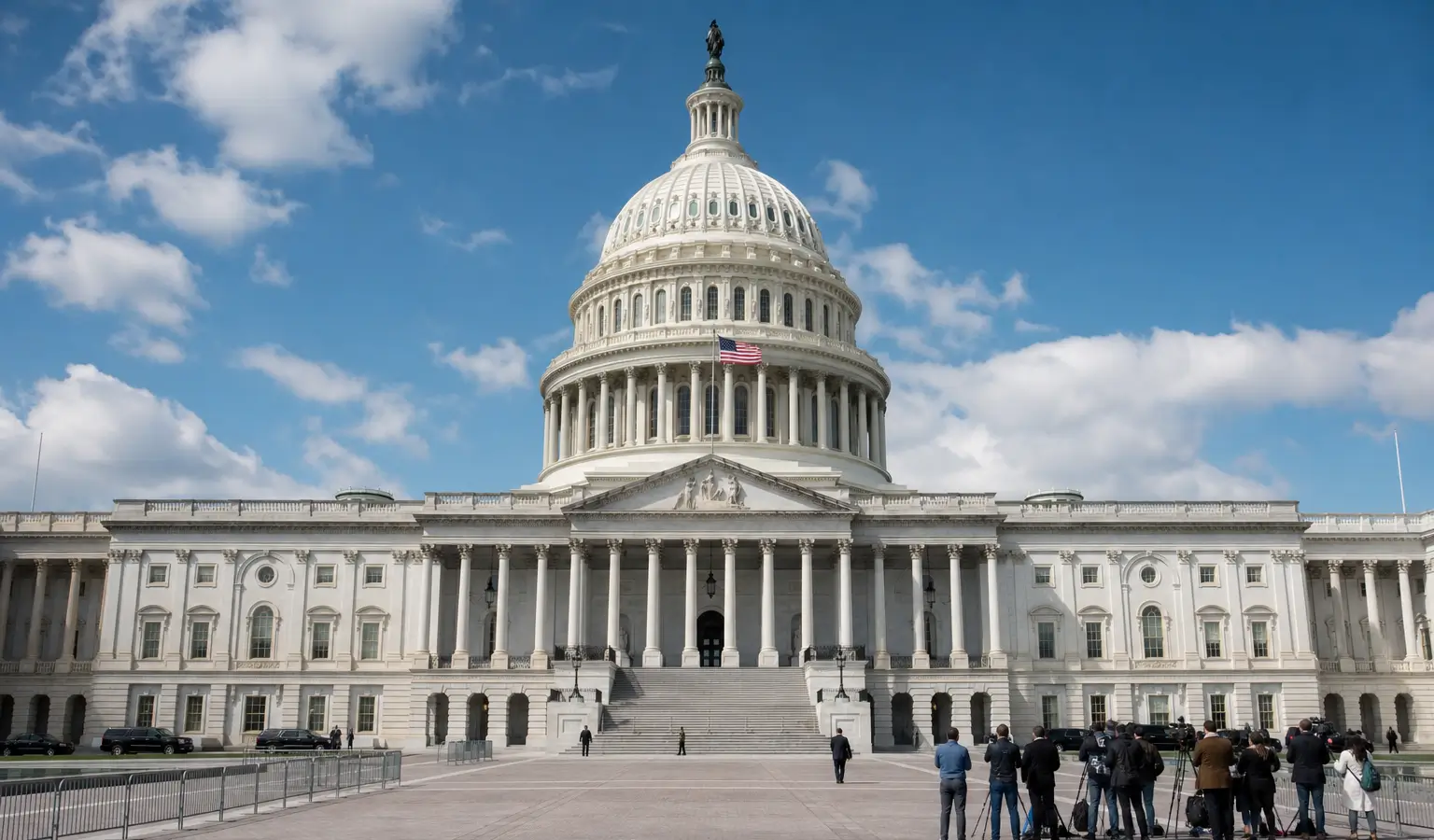
The American Senate Democrats and the White House are back in a standoff over the Digital Asset Market Clarity Act. This round of the fight centers on an ethics provision designed to rein in President Donald Trump’s crypto activity. For the first time, the bill would place explicit limits on a sitting president, but Democrats still argue the guardrails are too weak and want stronger enforcement.
Ethics Becomes Part of the Deal
According to White House crypto adviser Patrick Witt, Trump’s concession matches what Democrats had been asking for earlier. He told CoinDesk that the president agreed to limits on his conduct in the crypto industry, something no other president has done before. Even so, Democrats say the enforcement language still does not go far enough, especially after Senator Elizabeth Warren said Trump reportedly brought in more than $1.4 billion (€1.2 billion) from crypto ventures in 2025.
The current draft would temporarily block top officials from issuing or sponsoring cryptocurrencies. But that does not automatically reach every business interest, which means Trump’s ties to World Liberty Financial could still remain outside the scope of the rule. The provision could still require him to pull back from certain investments, including through trusts he cannot directly access.
Enforcement Is Still the Main Sticking Point
The biggest unresolved issue is who gets to enforce the rules. Under the current version, that responsibility sits mostly with the U.S. Department of Justice, which would be capped at a fine of $500,000 (€439,500) and would not be able to file a civil case. Democrats want state prosecutors to have a role as well, so enforcement does not rest entirely with a department under a Trump administration.
The timeline is another problem. The restriction would expire at the start of 2029, which means a future administration would not be able to prosecute earlier violations after that point. That further narrows the bill’s reach. So while the law does acknowledge that crypto conflicts of interest matter, the real question is whether the enforcement is strong enough to have any practical effect.
Pressure on the Senate Is Building
The fight has already pushed the Clarity Act back by months and could even leave it outside the window for relatively easy passage in 2026. Senate Majority Leader John Thune said Thursday that the bill is unlikely to clear the Senate before the summer recess. At the same time, major crypto lobbying groups are pressing for quick action, arguing that any delay would leave the U.S. without targeted rules, consumer protections, and a clear division of authority between the SEC and CFTC for now.
For European crypto watchers, the bigger lesson is that the U.S. debate over Clarity shows how difficult it still is to build one framework for crypto exchanges, token issuers, and institutional players. The bill is meant to reduce legal uncertainty, but the political battle over Trump makes it clear that regulation in the U.S. is still about power and ethics as much as market structure. That ethics debate has been part of the Senate discussion for some time, and Trump’s crypto income had already put the talks under pressure earlier.