Coinbase Opens MiCA Hub in Luxembourg as Binance Pulls Back From Greece
Coinbase picked Luxembourg as its European MiCA headquarters and gets access to all EU countries. Binance withdrew its Greek application and will have to look for a license elsewhere.

Key Takeaways
- Coinbase opened its MiCA hub in Luxembourg on June 24, making Luxembourg its European headquarters.
- The Luxembourg MiCA license gives Coinbase access to all 27 EU member states and more than 450 million EU citizens.
- Binance withdrew its Greek license application and is therefore not on ESMA's list of MiCA-approved crypto companies.
Coinbase opened its new office in Luxembourg on June 24, naming Luxembourg as its European headquarters under the MiCA framework. This is an important step for the crypto company, since it now officially has a license to operate in all 27 EU member states. At the same time, Binance pulled back from its license application in Greece, which means it does not appear on ESMA's list of MiCA-approved crypto companies.
Coinbase Strengthens Its Position With Luxembourg MiCA License
Coinbase secured its MiCA license from Luxembourg's financial regulator, the Commission de Surveillance du Secteur Financier, back in June 2025, well ahead of the July 1, 2026 deadline. That gives the company a license that covers more than 450 million EU citizens. The company was already operating with national licenses in six EU countries, including Germany and France, and has been listed on Nasdaq since 2021, which gives regulators a high level of transparency.
The office opening in Luxembourg was led by Chief Policy Officer Faryar Shirzad and Luxembourg Finance Minister Gilles Roth. With this move, Luxembourg is positioning itself as a major hub for institutional crypto and tokenization in the EU.
Binance Loses EU Access After Greek License Bid Falls Through
Unlike Coinbase, Binance withdrew its license application in Greece, which means it is not on ESMA's list of MiCA-approved companies. That means Binance can no longer legally offer services to EU customers through this license starting July 1. European regulators have taken a close look at Binance in recent years, especially after the U.S. case in which the company pleaded guilty to money laundering and sanctions violations.
Binance paid more than $4.3 billion in fines and saw founder Changpeng Zhao step down as CEO. The company says it is meeting MiCA requirements and has about 1,500 compliance employees. Binance plans to apply for a new license in another EU country so it can regain access to the European market.
European Crypto Rules and the Impact on Market Access
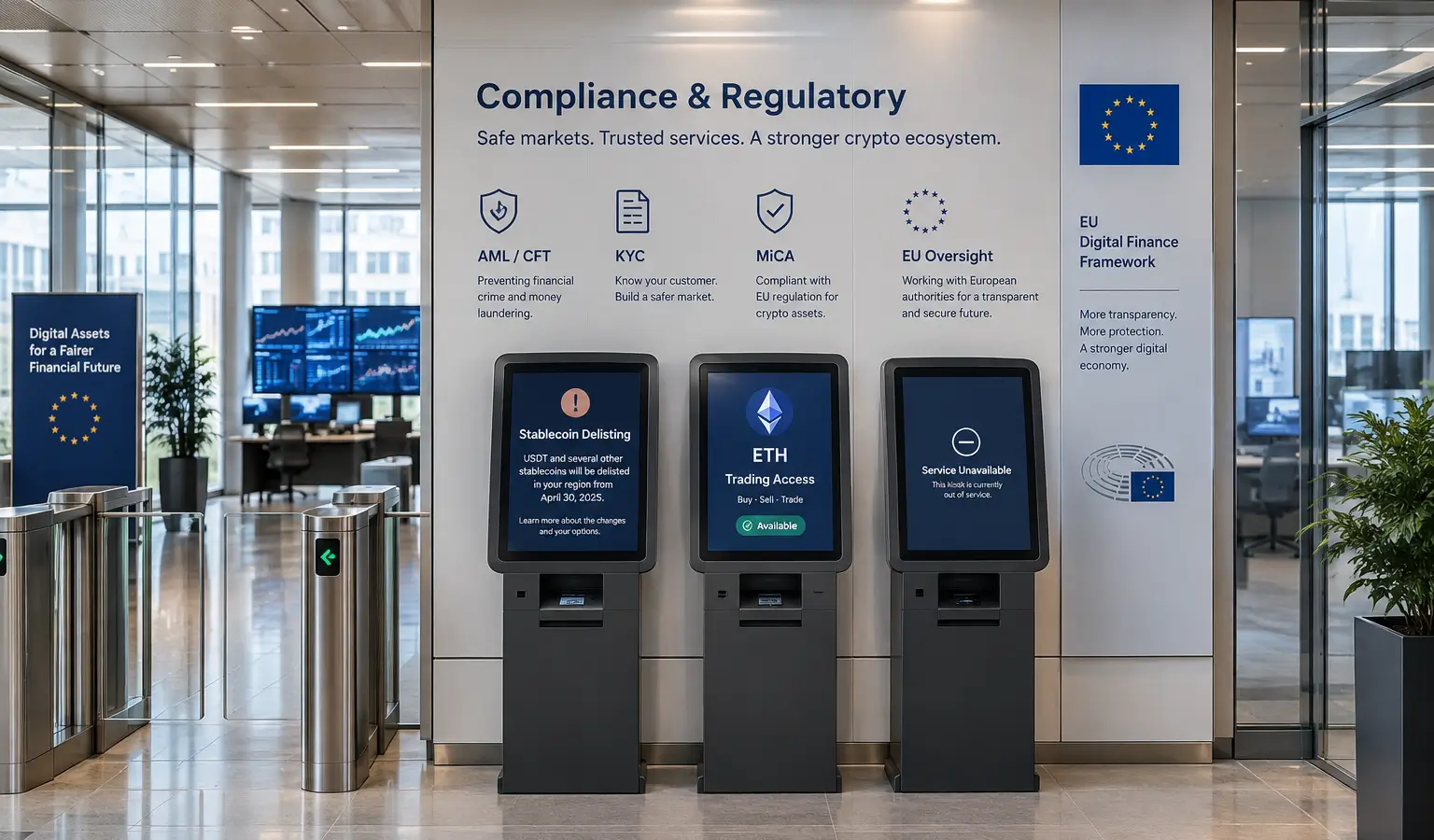
The MiCA rules, which have been in effect since December 2024, create a single legal framework for crypto companies in the EU. Companies need a license from one member state to operate across the entire EU. The goal of this policy is to give regulators better oversight of the crypto market and improve financial stability and investor protection.
With just a few days left before the deadline, more than 230 crypto companies have already secured their MiCA licenses, including Coinbase and Kraken. For companies without a license, ESMA has already warned that they must stop onboarding new EU customers and wind down their operations before the end of the transition period, as also shown in the regulator's final warning. For Binance, its future in the EU depends on getting a new license in another country. These developments show that Europe's crypto market is being shaped more and more by regulation, and that reputation and compliance are crucial for access to the EU.
What This Means for European Crypto Users
For European users, Coinbase's MiCA hub opening in Luxembourg means they can count on a regulated and transparent provider that meets the latest EU standards. Binance's pullback from Greece may temporarily limit its offerings, but the company is still looking for ways to operate within the EU. This highlights how important MiCA is as a tool for making Europe's crypto market safer and easier to understand, which matters for anyone investing or trading crypto in the EU.