Crypto Falls Despite Iran Deal After Hawkish Fed Policy
The Fed is keeping a tight tone, which is pushing crypto lower despite the Iran deal. Investors are now looking for new catalysts to set the direction.

Key Takeaways
- The crypto market fell broadly on Thursday, despite the peace deal between the U.S. and Iran that pushed stocks higher.
- Bitcoin dropped 3% to around $63,900; Ethereum, XRP, and Solana also lost ground, while Tron edged up slightly.
- The Fed held rates steady but turned more hawkish, which analysts say reduces liquidity and puts pressure on crypto.
The crypto market saw a broad drop on Thursday, even with news of a signed peace deal between the U.S. and Iran that gave stock markets a boost. Bitcoin was trading around $63,900 (€55,100), down 3% over the past 24 hours, but it was still up 2% on the week. Other major coins like Ethereum, XRP, and Solana fell 3.4%, 3.9%, and 3.6%, respectively. Tron was the only major coin to post a small gain, up 0.9%.
The Fed Keeps Rates Unchanged but Signals Caution
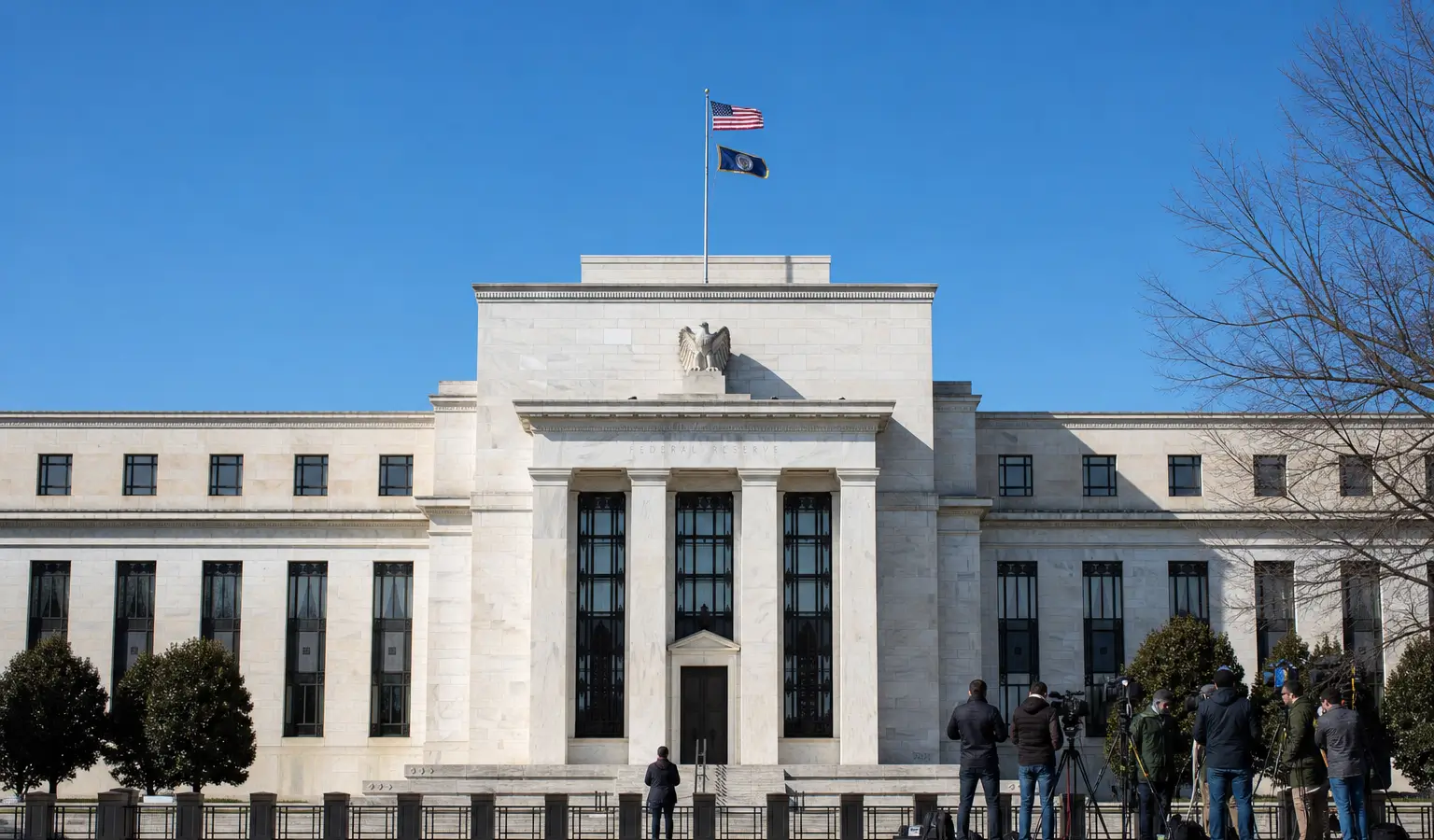
The Federal Reserve decided to leave rates unchanged at 3.5% to 3.75%, in line with expectations. At the same time, the central bank said it was more worried about inflation than economic growth. That showed up in updated projections pointing to higher inflation and a slower pace of future rate cuts. Some policymakers even left open the possibility that rates could move higher. This was the first rate meeting under Chair Kevin Warsh, who is known for backing tighter monetary policy to rein in inflation.
Tighter monetary policy usually means less liquidity in financial markets, which puts pressure on risk assets like crypto. That helps explain why the crypto market still fell despite the positive Iran news. For the market, this fits into a broader pattern where Bitcoin is lagging behind global liquidity, while investors wait for a clearer trigger.
Iran Deal Lifts Stocks, but Crypto Lags Behind
Stock markets reacted positively to the news that President Donald Trump signed a preliminary deal with Iran, which appears to be ending the conflict and reopening the Strait of Hormuz. That pushed S&P 500 futures up 0.9% and Nasdaq futures up 1.5%, while oil prices fell toward $78 (€67) per barrel.
Cryptocurrencies, though, seemed to react mostly to the Fed’s monetary policy and less to geopolitical developments. Analysts expect Bitcoin to stay in a range between $60,000 (€51,800) and $70,000 (€60,400) for now, until a clear catalyst shows up. Possible triggers include new rules like the CLARITY Act or further de-escalation in the Middle East. That lines up with recent trading around the $63,000 (€54,400) area, where on-chain data shows buyers were still active. Bitcoin Sees Strong Buying Activity Between $59,000 and $67,000 After Recent Drop shows why that range matters for traders.
What Does This Mean for European Crypto Investors?
For European investors, Fed policy can matter because it affects global liquidity and risk appetite, both of which also influence the European crypto market. The mix of tighter monetary policy and geopolitical developments is creating an uncertain market backdrop where crypto prices may keep consolidating. It remains to be seen whether new regulation or international tensions can spark a breakout in the current price action.