Franklin Templeton Sees Altcoins as Key to Agentic AI
Franklin Templeton points to blockchains, Solana, and stablecoins as the backbone for AI agents that can make micropayments on their own. The asset manager says that could create fresh demand for altcoins.
Key Takeaways
- Franklin Templeton says investors looking for AI growth should not stop at AI stocks and should also consider crypto and altcoins.
- The asset manager says agentic AI may need blockchains for micropayments because traditional card networks are too costly for that use case.
- Franklin Templeton points to Solana and stablecoins as examples of infrastructure and tokens that could benefit from agentic payments.
Franklin Templeton says investors who want exposure to AI growth should look beyond AI stocks and also pay attention to crypto and altcoins. In the firm’s view, agentic AI, where autonomous software can complete tasks and send payments on its own, could become a major source of blockchain usage.
Micropayments as the Core
Franklin Templeton’s case starts with the way AI agents would actually pay for things. These systems are expected to make constant small payments for compute, data, and services, but traditional card networks are often too expensive for that because fees can run around 2% to 3% plus a fixed charge per transaction.
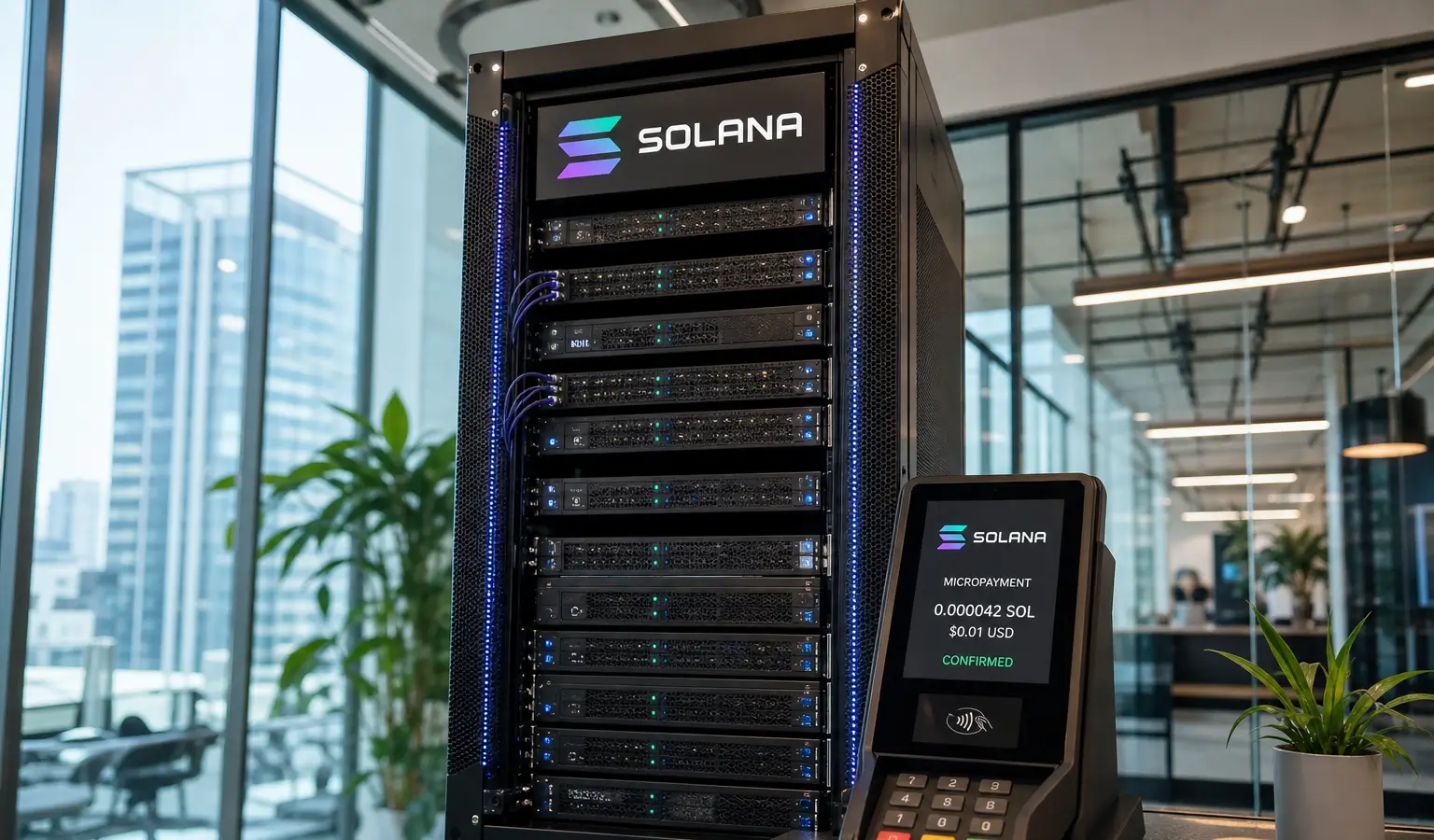
Blockchains, by contrast, can settle sub-cent payments in seconds and log them automatically. Sandy Kaul, head of digital assets at Franklin Templeton, said agentic AI will likely need crypto technology and blockchains as the base layer for this kind of activity.
The industry is already moving toward real-world tools here. Coinbase built the x402 protocol and later moved it under the Linux Foundation, with companies including Visa, Mastercard, Stripe, Google, and Circle now listed as backers. Mastercard has also launched Agent Pay for Machines, a protocol designed to support micropayments between AI agents. In the context of x402, more than 100 million agentic payment transactions have already been processed on Coinbase’s Base network, suggesting machine-to-machine payments are moving from concept to actual use faster.
Why Altcoins Are Part of It
Franklin Templeton sees the biggest upside in the tokens tied to the networks these AI agents use. If an agent runs on a blockchain, it typically pays fees in that network’s native token. Kaul pointed to Solana as one example and said enterprise software is likely to drive the first wave of demand.
The asset manager says many portfolios are still built mainly around the AI theme through shares of AI-related companies. But for the next stage, where software starts handling transactions on its own, Kaul says investors should also think about exposure to cryptocurrencies and altcoins tied to blockchain apps and projects.
Stablecoins also fit into that picture. In agentic payments, they are being used more often because they are programmable and cheap to move, which makes them well suited for a long series of small transactions. That lines up with the rise of Coinbase for agents, which gives AI bots their own accounts to trade and pay on behalf of users.
Why This Matters for European Investors
For European crypto readers, the main takeaway is that AI and crypto are increasingly being discussed as part of the same infrastructure story. If agentic commerce keeps expanding, attention could shift from pure AI stocks to the networks and tokens that make those digital payments possible. Franklin Templeton also says the market is still mostly looking ahead, while McKinsey estimates the potential revenue from agentic commerce by 2030 at $3 trillion (€2.6 trillion) to $5 trillion (€4.4 trillion).