SEC Wants to Modernize Transfer Agent Rules for Blockchain
The regulator wants securities recordkeeping and settlement to better fit tokenization, smart contracts, and AI. That also brings the role of transfer agents in blockchain-based markets into focus.
Key Takeaways
- The SEC wants to modernize transfer agent rules for blockchain, tokenization, and AI.
- The current rules mostly date back to the late 1970s and no longer fit digital markets.
- The consultation period lasts 60 days; after that, the SEC can work the responses into a final version.
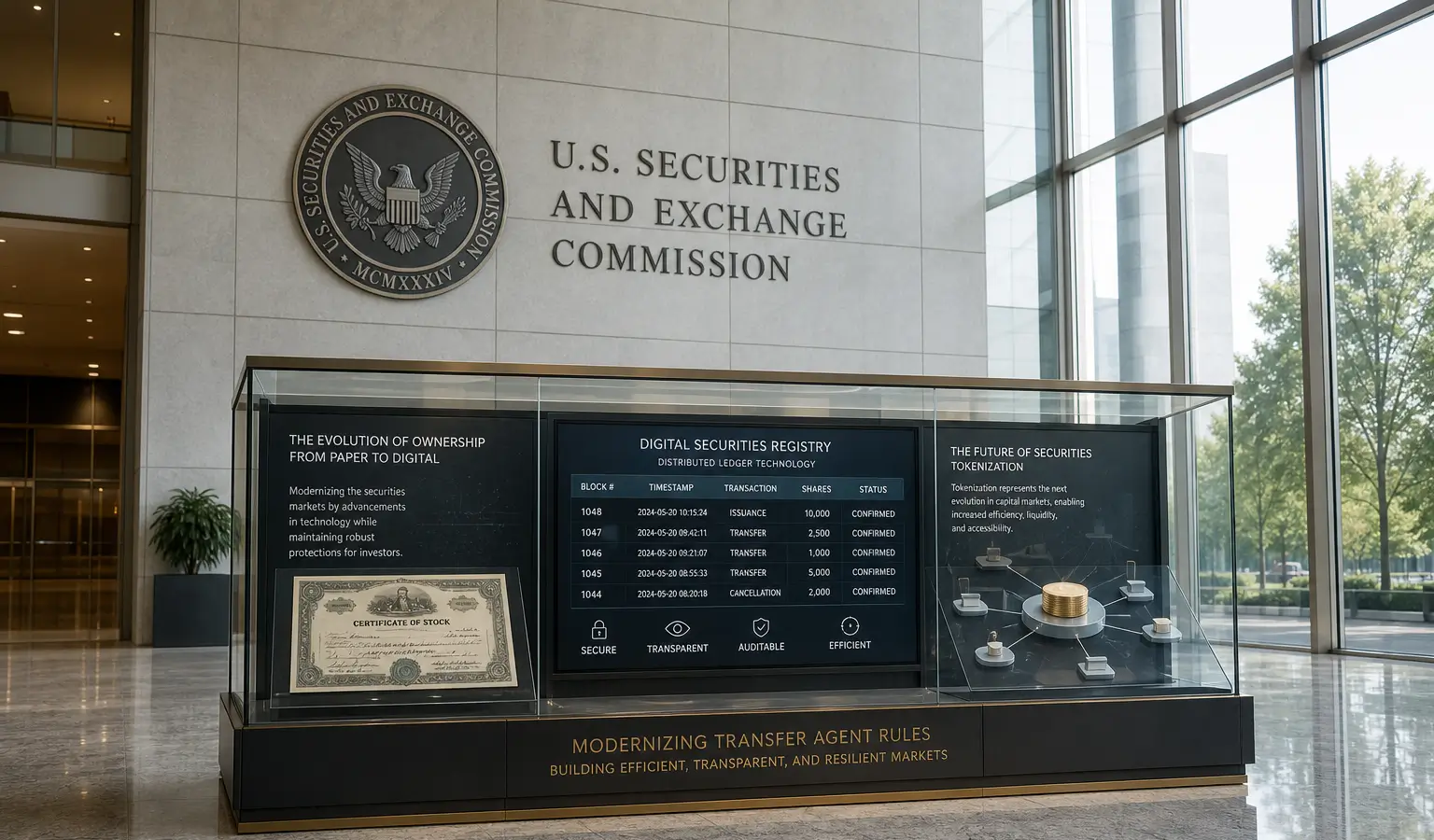
The U.S. Securities and Exchange Commission wants to modernize its rules for transfer agents so they better fit blockchain, tokenization, and AI. The regulator says the current rules have barely been updated since the late 1970s, while the market now operates much more digitally.
Old Rules, New Systems
Transfer agents keep ownership records for securities and also handle things like mergers and dividend payments. They also play an important role in clearing and settlement. According to SEC Chair Paul Atkins, the rulemaking needs to be adjusted to current practice, including electronic communication and blockchain technology in securities issuance and the transfer of shares.
The SEC also wants to modernize certain terms in light of technological progress and update the rules for electronic systems. In the 421-page proposal, the regulator points out that transfer agents are increasingly working in electronic markets and alongside tokenized securities and AI applications.
More Attention to Risks
The regulator says parties working with tokenized securities, distributed ledger technologies, and smart contracts need to pay more attention to the integrity of blockchain data, the security of tokenized securities, and the operating models of such systems. For parties using AI or automated technology, the SEC also names controls, clear information about system capabilities, and oversight of automated processes as points to watch.
That fits into a broader move to gradually align traditional financial infrastructure with digital technology. The Depository Trust Company is also working on tokenization services meant to modernize the processing and settlement of securities, although that is separate from the SEC proposal itself. In the same direction, the industry has long been pushing for clearer rules for tokenized stocks, with the key question being who manages the underlying shareholder rights and recordkeeping.
Important for European Crypto Readers
For European crypto readers, this is especially relevant because the U.S. is showing that tokenization is no longer just a niche topic. If a major regulator like the SEC changes the rules for securities recordkeeping, that could affect how tokenized assets and blockchain infrastructure are used in regulated markets. The consultation period runs for 60 days, after which the SEC can include the responses in a final version.