GENIUS Act Turns One as Stablecoin Rules Still Aren’t Finished
The law created a federal framework for payment stablecoins, but the OCC and FDIC still have key details to finish. KYC, reserve, and bankruptcy rules are still taking shape too.
Key Takeaways
- The U.S. GENIUS Act is now a year old, but the actual stablecoin rules are still unfinished.
- The law created a federal framework for reserves, governance, and oversight, and issuers must register by July 2028.
- The industry is also pushing the Digital Asset Market Clarity Act, while regulators continue drafting rules on custody, capital, liquidity, and KYC.
The U.S. GENIUS Act is now a year old, but the related stablecoin rules are still not fully in place. President Donald Trump signed the law last year, giving the U.S. its first federal framework for stablecoins. Even so, regulators still have to finish the specific rules that issuers will need to follow.
First Federal Framework
The law set the basic structure for reserves, governance, and operational standards, while agencies such as the Office of the Comptroller of the Currency and the Federal Deposit Insurance Corporation were left to fill in the details. For the crypto industry, that was an important step forward, but it was not yet a complete rulebook.
Crypto Council for Innovation CEO Ji Hun Kim called the law’s approval a milestone. He said institutions and builders now have a clearer base to work from, and that stablecoins are moving quickly toward broader adoption. But that next phase still depends on regulators finishing the remaining rules.
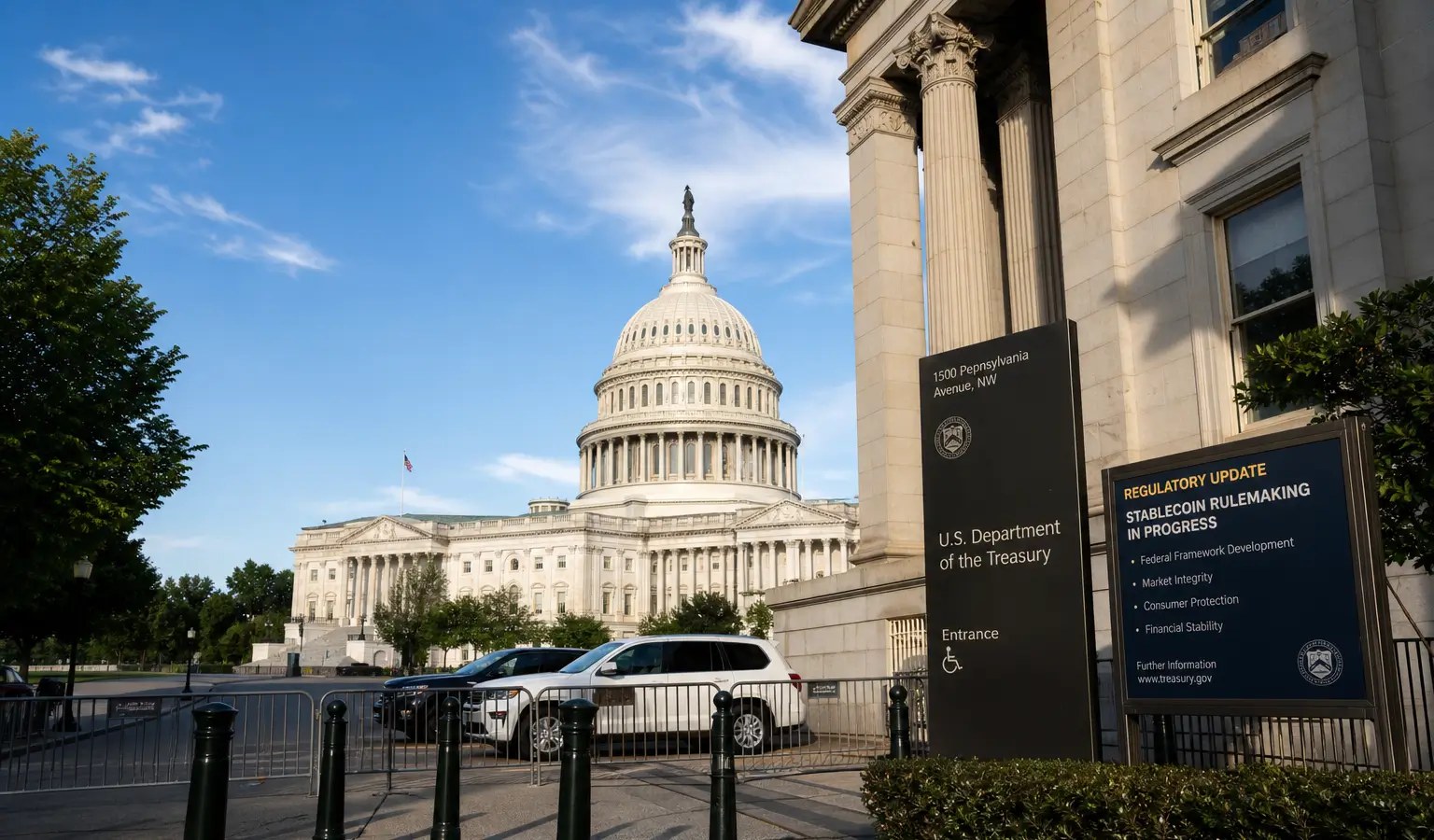
The FDIC has already put out 144 questions on stablecoin issuer oversight, with a focus on custody, capital, liquidity, and related issues. The OCC also released its own proposal in February on how the law should be interpreted. On top of that, another proposal would require stablecoin issuers to carry out know-your-customer checks similar to those used by traditional financial firms.
Rules Still Being Worked Out
The GENIUS Act is the first major federal crypto law in the U.S., even though it only covers a narrow slice of the market. At its center are payment stablecoins, digital assets used for payments or settlement, which the law says must be backed 1-to-1 by clearly defined reserves. Issuers must register as permitted issuers no later than July 2028.
The law also sets up a two-tier oversight system. Issuers with less than $10 billion (€8.7 billion) in stablecoins outstanding can be supervised at the state level, as long as the state framework is substantially similar to the federal rules and approved by the Stablecoin Certification Review Committee. It also says payment stablecoins are not securities or commodities under federal law, which keeps them outside SEC and CFTC oversight.
For holders, the law adds another layer of protection if a permitted issuer fails. Changes to the Bankruptcy Code give stablecoin holders a preferred claim on reserves ahead of other creditors.
Why This Matters
For European crypto readers, this is a good example of how quickly stablecoins can go from a niche product to a regulated payment tool, and how slow the rollout of the rules can still be. The U.S. approach could matter for crypto companies, investment products, and payment firms that operate across borders, especially as reserve, KYC, and insolvency rules become more concrete. The final outcome still depends on the rules regulators have yet to complete. In practice, that could have major consequences for companies like Tether, which may need to meet U.S. requirements within two years to keep USDT on U.S. platforms.
Clarity Act Still Stuck
At the same time, the industry is still trying to move the Digital Asset Market Clarity Act through Congress. The combined bill text has not been released yet, and several issues remain unresolved, including an ethics provision aimed at preventing top officials from profiting from their own crypto activity.
Senator Elizabeth Warren asked Trump this week for a financial disclosure covering the first half of 2026, after his 2025 filing said he made more than $1.4 billion (€1.2 billion) from various crypto activities. On the other side of the debate, Rep. Bryan Steil said during a hearing that Congress needs to pass the law to support growth in the digital asset market and replace regulation by enforcement with clear rules.