Japanese Yen and Bond Market Put Bitcoin in the Macro Spotlight
Rising Japanese rates and a weak yen are putting pressure on financing U.S. Treasuries. Through the yen carry trade, that could also hit Bitcoin and other risk positions.
Key Takeaways
- Washington is worried that a weak yen and Japanese selling of U.S. Treasuries are raising the financing costs of U.S. government debt.
- The Bank of Japan raised rates, while Japanese bond yields jumped sharply and capital may be flowing back into Japanese debt.
- For Bitcoin, this matters through the yen carry trade, because higher Japanese rates and a stronger yen can make risk positions more expensive.
Concerns in Washington about the Japanese yen and the bond market are not just about currency, but also about financing U.S. government debt. Japan is the largest foreign buyer of U.S. Treasuries, and if Tokyo sells more dollars to support the yen, that could push financing costs in the U.S. even higher. For Bitcoin, that matters because the same macro pressure also feeds into broader risk trading.
Why Washington Is Paying Attention
President Donald Trump brought up the weak yen directly with Prime Minister Sanae Takaichi last week. Japanese Finance Minister Satsuki Katayama confirmed that exchange on Friday. The yen fell to nearly 164 per dollar at the end of July, its weakest level in four decades, and is still around 157.
Japan held more than $1.1 trillion (€1 trillion) in U.S. Treasuries in May, according to the CFR. To support the yen, Tokyo sells dollars and buys yen back. Analysts estimate Japan spent about $167 billion (€146 billion) on that this year, partly by selling Treasuries. Fewer buyers for U.S. debt means Washington has to offer higher yields. The U.S. 10-year yield rose to 5.18% on September 24.
Japanese Rates Are Turning Higher
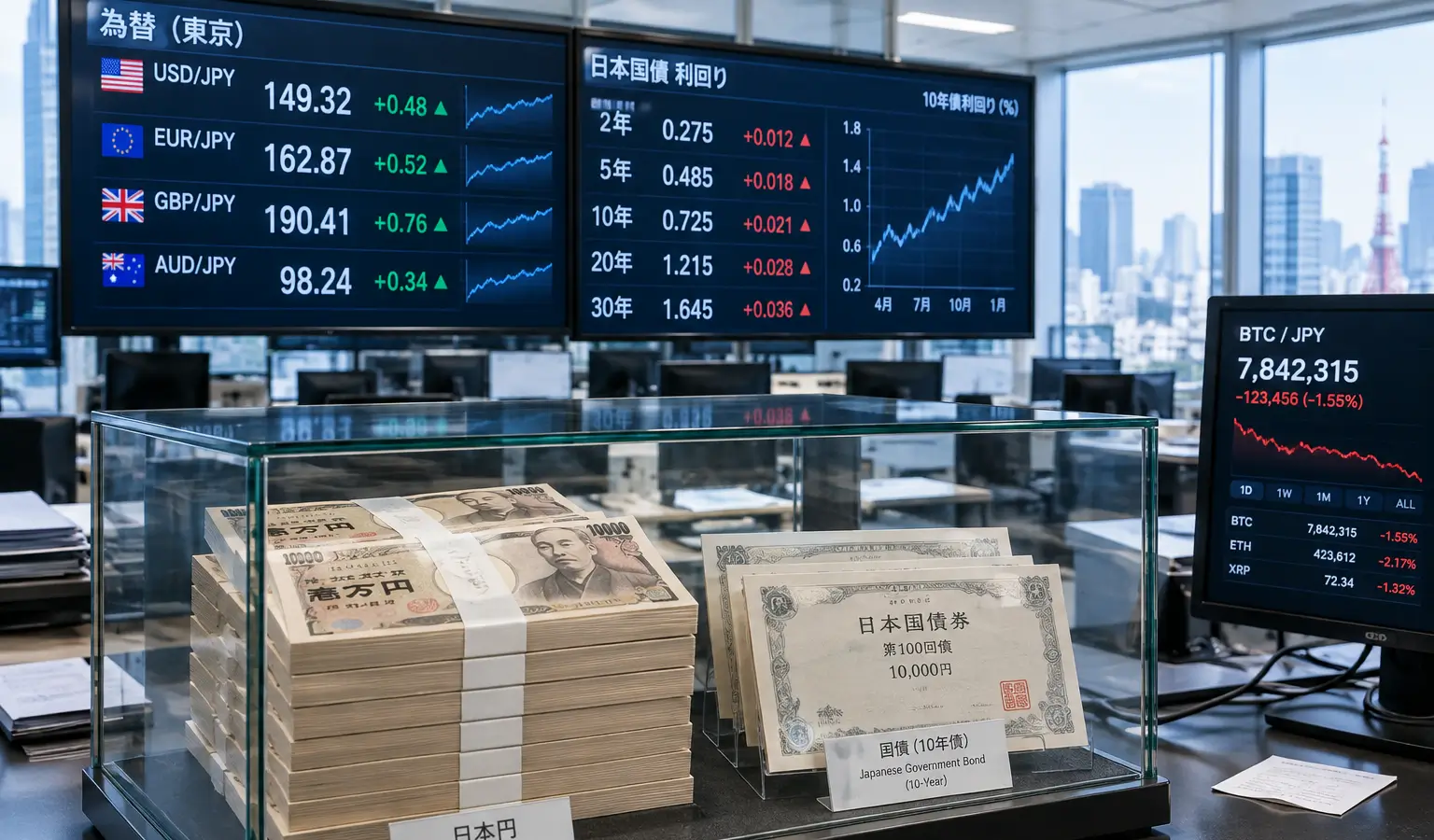
The pressure is also coming from Japan itself. The Bank of Japan raised its policy rate on September 18 to 1.25%, the highest level since 1995. Japan’s 10-year yield jumped to 3.115% on Friday, the highest level in 30 years, while the 2-year yield climbed to 1.975% on Monday, the highest level in 31 years.
That matters because Japanese investors spent years buying U.S. bonds in huge amounts simply because their own yields were close to zero. Now that Japanese rates are rising, more money could flow back home. According to the CFR, Japanese officials have even suggested that the sovereign wealth fund could swap foreign bonds, including Treasuries, for Japanese securities.
The yen hit a 40-year low against the dollar in July 2026, around 62 cents per 100 yen. During that period, the U.S. and Japan also carried out coordinated currency interventions to stabilize the currency. That shows how sensitive the market has become to every new move in the yen.
What This Means for Bitcoin
The link to crypto runs through the yen carry trade. In that trade, investors borrow cheaply in yen to fund riskier positions, including Bitcoin. If the yen suddenly strengthens or Japanese rates rise further, those loans get more expensive and traders sometimes have to unwind positions to pay them back.
That already happened in August 2024. Back then, a sudden jump in the yen triggered a fast exit from yen-funded positions, according to the Bank for International Settlements. Japan’s TOPIX lost 12% on August 5 that year, while Bitcoin and Ethereum fell as much as 20%. The BIS estimated that about $250 billion (€219 billion) in carry bets were open at the time.
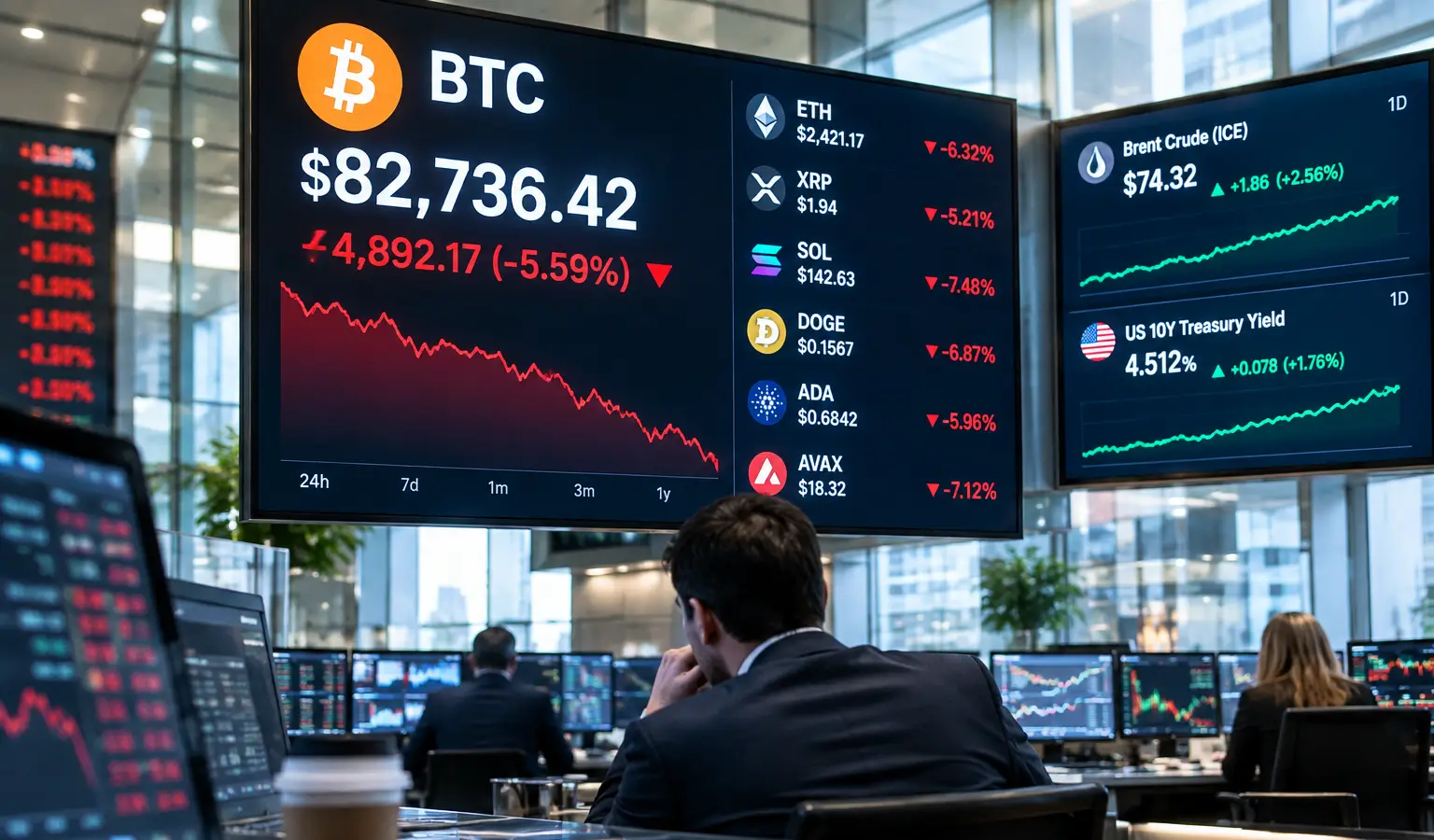
This year, things played out differently. The yen strengthened 3.7% over three sessions in early September, but Bitcoin stayed above $79,000 (€69,300). On Monday, Bitcoin traded around $82,873 (€72,700), down 2.3% on the day. That makes the yen and the Japanese bond market a macro indicator crypto traders should watch closely, especially now that the Fed, the ECB, and the Bank of Japan have all already tightened policy. Rising Japanese long-term yields also show how quickly higher financing costs can feed back into risk markets.