Jeonbuk Bank Launches Bitcoin Loans for Businesses in South Korea
Jeonbuk Bank uses outside custody and a court sale process in case of default. The pilot fits into South Korea’s new rules for digital assets and business financing.
Key Takeaways
- Jeonbuk Bank is the first bank in South Korea to offer bitcoin loans to business customers.
- The loan is paid out in South Korean won and may only be used for operating business expenses.
- If there is a default, the bank wants to recover Bitcoin through a court-ordered sale; an outside party holds the collateral BTC.
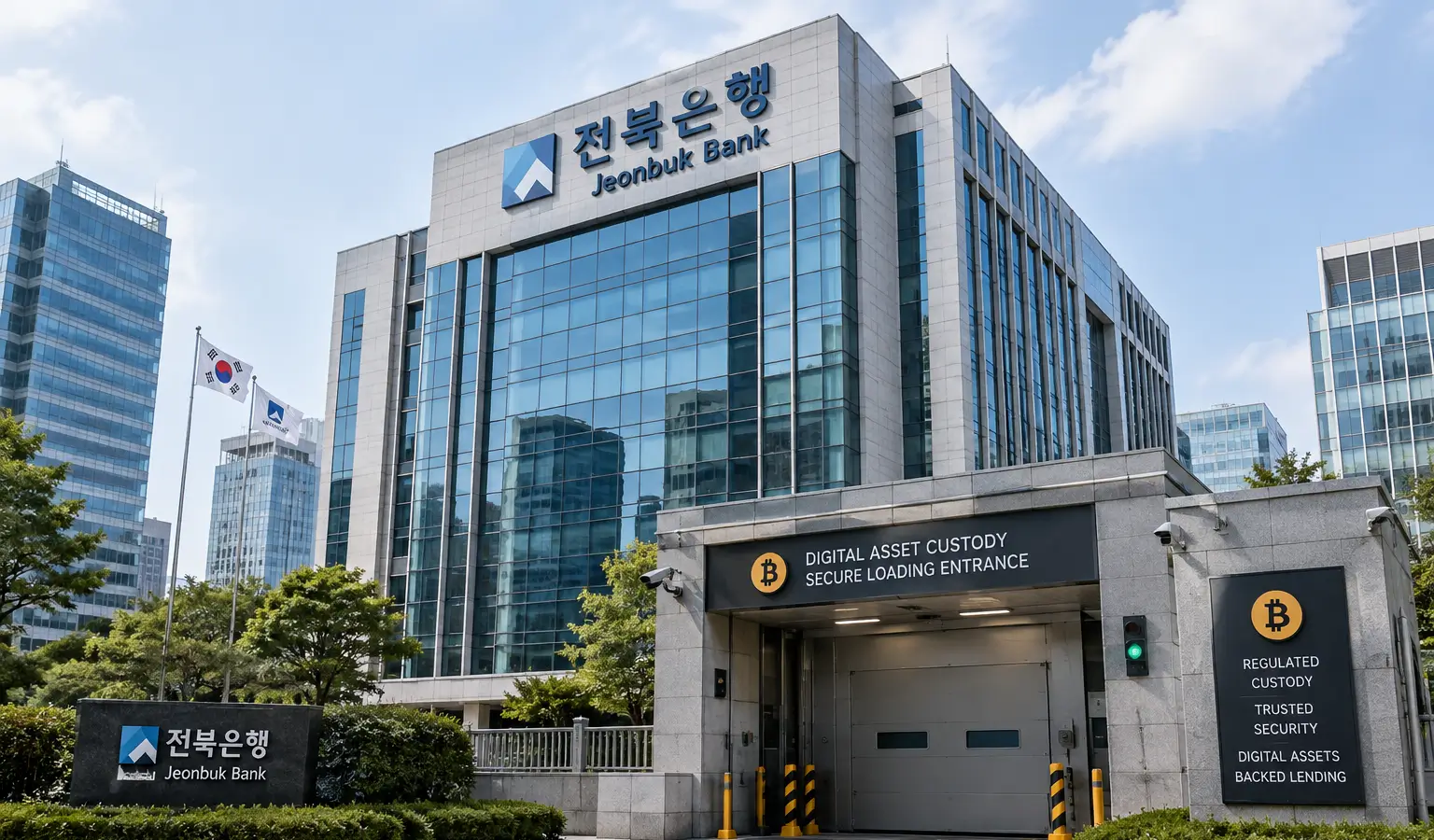
Jeonbuk Bank has started offering bitcoin loans to business customers, making it the first bank in South Korea to let companies borrow against their crypto. The loan is paid out in South Korean won and may only be used for the company’s operating expenses.
Bitcoin Only as Collateral
For now, only Bitcoin can be used as collateral. The bank does not hold the BTC itself. A registered crypto service provider keeps the coins in custody, while Jeonbuk Bank provides the loan. According to the bank, one loan has already been made, although it did not say who the borrower is.
Jeonbuk Bank says the product was tested during steep price drops. The choice of Bitcoin is tied to the coin’s deep liquidity, so the collateral can be sold quickly if needed.
Default Through the Courts
If a customer does not pay back the loan, the bank wants to recover the money through a court-ordered sale of the Bitcoin. That lines up with updated Civil Enforcement Rules that took effect on October 1 and set out the legal steps for seizing and selling rights to digital assets.
The bank did not disclose interest rates, loan limits, or exact collateral requirements. However, Jaekyung Ilbo reported that Jeonbuk Bank also looked at loan-to-value ratios and margin-call thresholds for major tokens, including Bitcoin and Ether, when designing the product.
Why This Matters
The move shows that bitcoin-backed lending in Asia is moving further toward mainstream banking services. For European crypto followers, the key point is that a traditional bank is working with outside custody and a legal process for forced sale here, instead of holding the BTC itself. That can help show how banks are trying to fit crypto collateral into existing rules. In South Korea, the broader market structure also plays a role, where the Kimchi Premium around Bitcoin has long shown how local rules and trading flows affect pricing.