Kalshi Drives Prediction Markets to a Record $188 Billion
Kalshi boosted quarterly volume mostly with sports contracts, while U.S. judges and the CFTC decide how far prediction markets can go.
Key Takeaways
- Prediction markets reached a record $188 billion in the third quarter of 2026, counted at full contract payout.
- Kalshi was the biggest driver, with about 40% of quarterly volume coming from sports contracts.
- In the U.S., a legal fight is underway over whether sports contracts fall under gambling laws.
Prediction markets reached a record $188 billion (€167 billion) in the third quarter of 2026. That number looks huge, but it counts contracts at their full payout instead of the price buyers actually paid. As a result, the real amount staked was much lower than the total suggests.
How the Record Is Counted
According to CryptoRank, the quarterly figure was nearly 70% higher than in the previous quarter. The way it is counted matters here: a $1 (€0.89) contract is counted in full once it trades, even if the buyer only pays 20 cents for it. Pew Research Center previously described this as the notional value of the contract, not the trading price.
That makes the market look bigger on paper than it is in users' wallets. On Kalshi, buyers paid according to DeFi Rate about $41 billion (€36.4 billion) for $142 billion (€126 billion) worth of contracts in the past quarter. That works out to roughly 29 cents per dollar of contract value.
Kalshi Is Leading the Charge
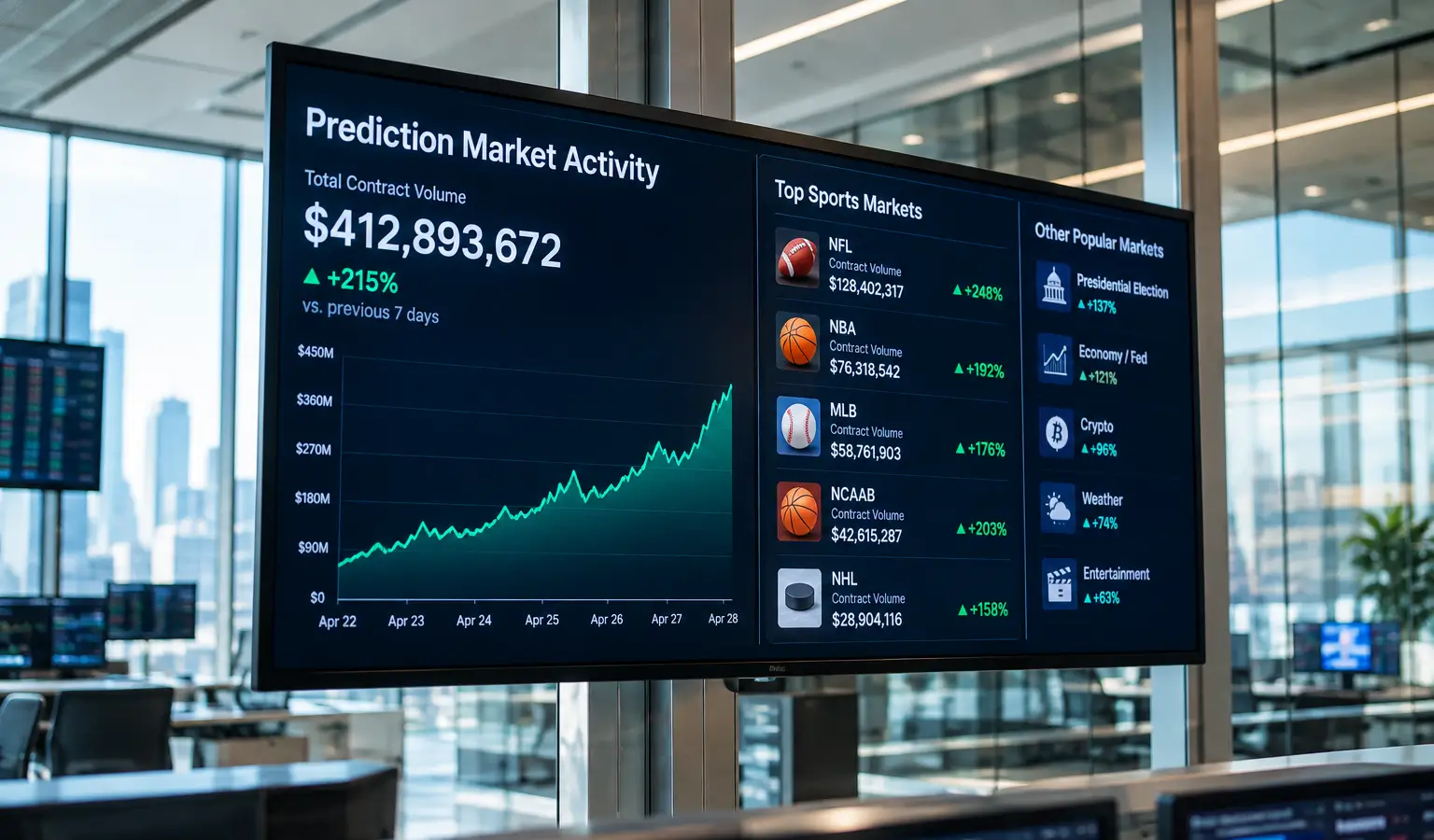
Kalshi was by far the biggest driver of the growth. The U.S. exchange is under oversight from the Commodity Futures Trading Commission and has seen more and more volume in recent months, especially in sports contracts. According to CryptoRank, about 40% of Kalshi's quarterly volume came from sports.
That sports focus is also legally sensitive. Ohio and Tennessee say those contracts fall under their gambling laws, and a federal appeals court sided with those states on September 25. Another court had previously backed Kalshi in New Jersey. The ruling means states can at least partly restrict Kalshi from selling sports contracts.
The broader legal debate around event contracts has been going on for a while. The CFTC wants to classify event contracts as swaps, specifically to give the federal government more control over prediction markets like Kalshi while states keep using their gambling laws.
Why This Matters for Europe
For European crypto followers, this shows how quickly prediction markets can scale when trading, liquidity, and a clear theme come together. At the same time, the U.S. legal fight makes it clear that the line between financial products and gambling is still being heavily debated. Polymarket is also under pressure in the U.S., with an ongoing case in New York over alleged illegal gambling.
So the broader market is not just about growth, but also about oversight and legal definitions. That makes prediction markets interesting for anyone watching how new crypto-like trading products develop outside the traditional exchanges.