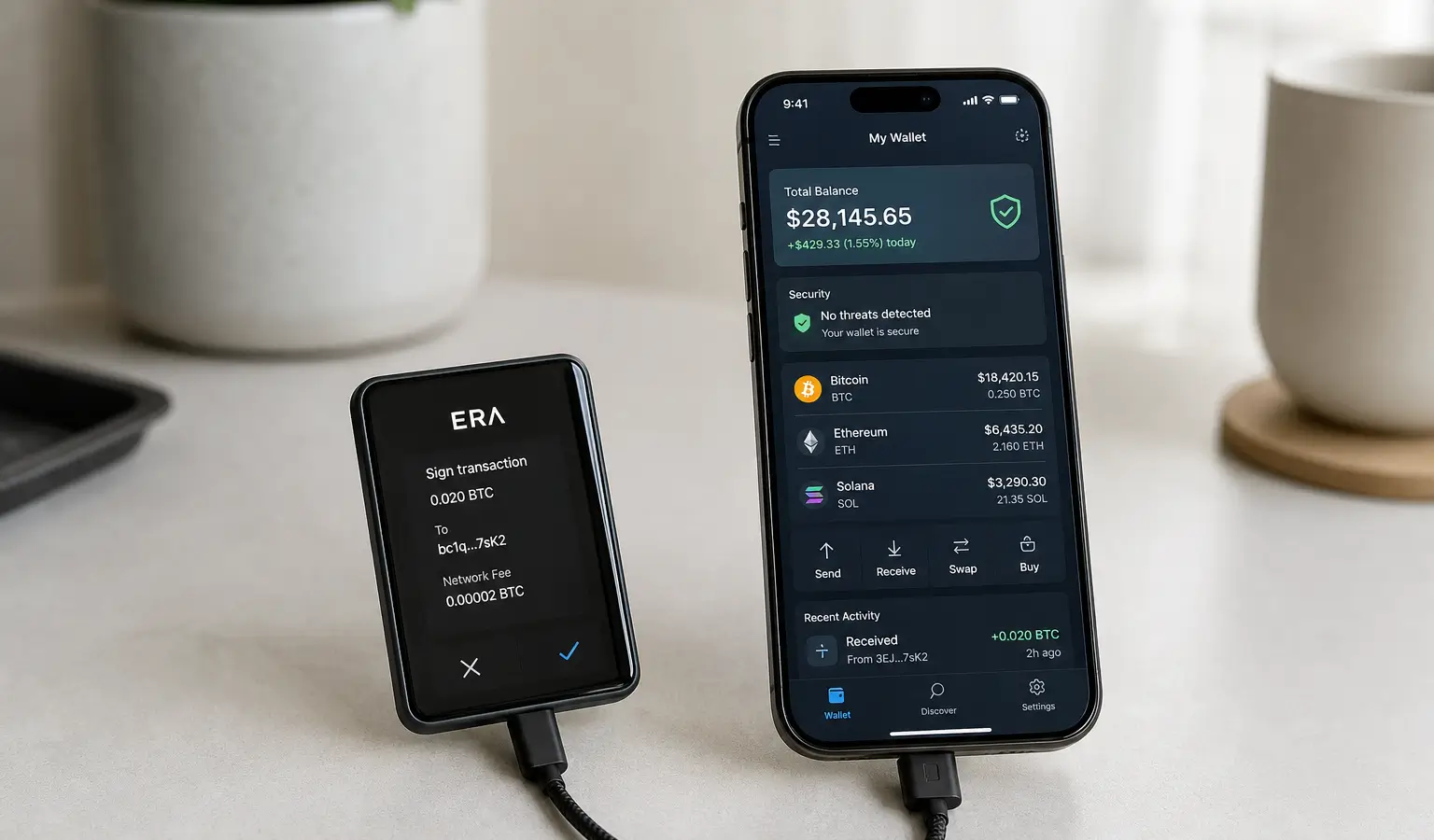
Ledger Launches Agent Stack for AI Agents and Crypto Wallets
The open-source toolkit lets AI prepare transactions, while approval on a Ledger hardware wallet is still required. The company also wants to expand its security tools more broadly for sensitive AI credentials and logins.
Key Takeaways
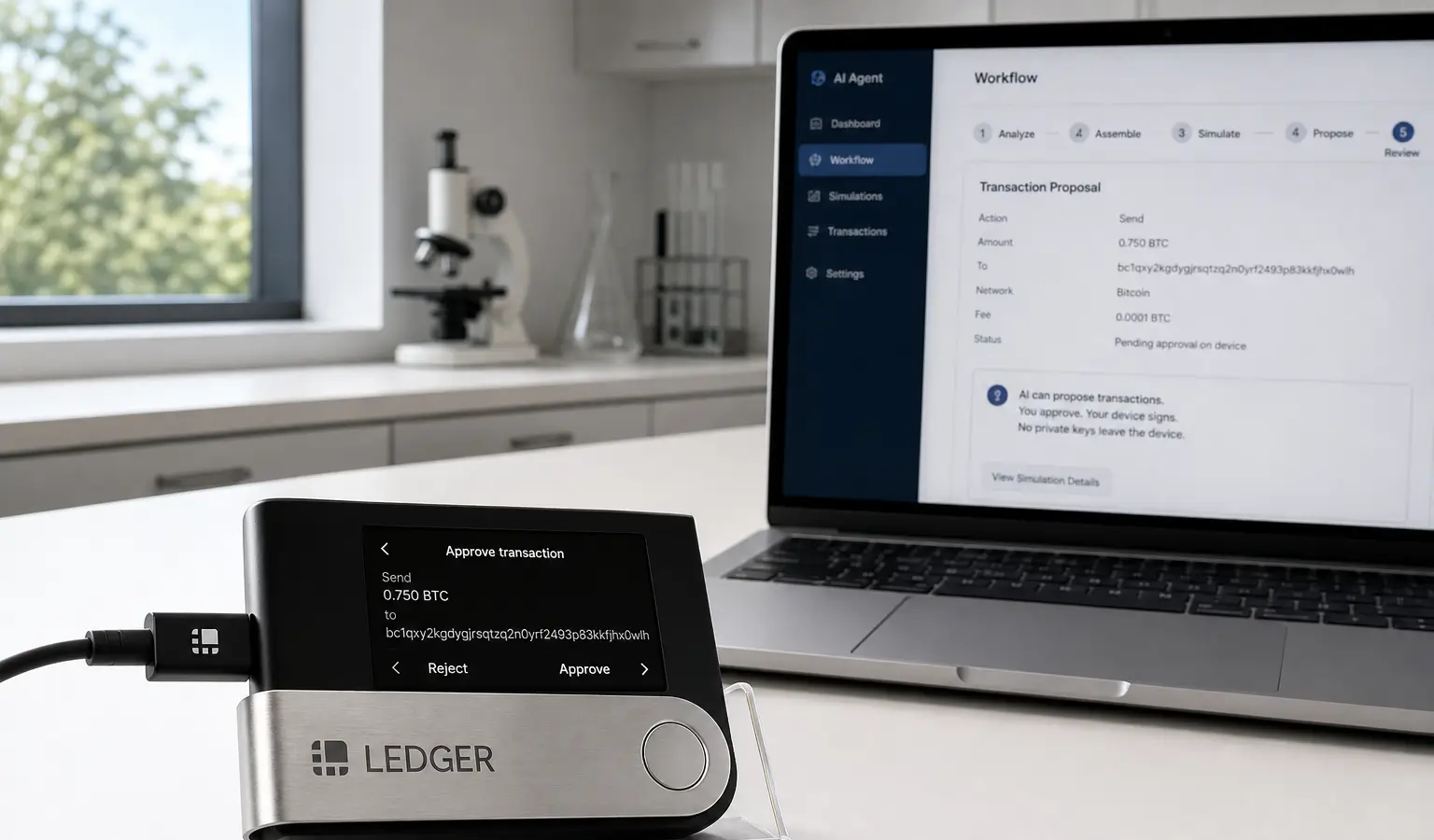
- Ledger is launching Agent Stack, an open-source toolkit that lets AI agents read crypto wallets, analyze them, and prepare transactions.
- Sensitive actions always have to be explicitly approved on a Ledger hardware device, so private keys stay outside the software.
- Ledger is expanding its hardware use to AI credentials and physical security keys for services like GitHub, Discord, and 1Password.
Ledger is extending its hardware security model to AI agents with Agent Stack, an open-source toolkit that lets autonomous software interact with crypto wallets without ever touching private keys. The company says the release is the first piece of its AI plan for 2026, and it is built around a simple idea: AI can do the prep work, but people still make the final call.
How the toolkit works
With Agent Stack, AI agents can check wallet balances, review portfolios, prepare transactions, and propose payments. But any action that could affect funds still needs direct approval on a Ledger hardware device before it goes through. In practice, that keeps key control locked to the physical device instead of the AI-driven software layer.
That approach matches Ledger's broader security model. The company relies on a Secure Element chip in its hardware wallets, a tamper-resistant component also used in passports and payment cards, to help protect private keys and cryptographic actions from online attacks. For developers, the toolkit should also make it easier to add Ledger support to AI apps without building the integration from the ground up.
More Than Just Crypto
Ledger is also pushing its hardware beyond crypto wallets. The company says developers can use it to securely store sensitive AI credentials and turn Ledger devices into physical security keys for logging into services such as GitHub, Discord, and 1Password.
That gives Ledger's hardware a wider role in digital security, but the basic principle stays the same: the user keeps the final say. The company argues that matters even more as AI agents take on more advanced financial tasks and become more exposed to hacks or manipulation.
Why This Matters
For European crypto users, the launch is another sign of how quickly AI tools and wallet management are starting to overlap. It also shows how companies like Ledger are trying to keep private keys out of software's reach, which becomes more important as more apps attempt to automate transactions without handing over final control. For developers and institutional players, that could become a useful template as AI agents show up more often in crypto workflows. That also fits broader concerns around key management in the industry, including the warning that private keys are behind a large share of losses in crypto attacks.