MiCA Leaves Poland on the Sidelines in Europe’s Crypto Market
Since July 1, Polish crypto providers have only been allowed to operate with MiCA authorization. With no national framework in place, trading and expertise are shifting to other EU countries.

Key Takeaways
- Since July 1, crypto services in Poland may only be offered by parties with valid MiCA authorization.
- Poland had more than 2,000 registered crypto providers, but it never got its own legal framework and is therefore losing teams, capital, and knowledge.
- In May 2026, only about 210 of more than 1,200 EU crypto companies had a MiCA license; Poland, Greece, Hungary, and Romania were at zero.
MiCA was supposed to bring more clarity to Europe’s crypto sector, but in Poland the shift to the new regime is happening alongside a sharp setback for one of the EU’s biggest crypto ecosystems. Since July 1, crypto services there may only be offered by parties with valid MiCA authorization, while the old national register no longer provides a basis to operate as a VASP or CASP.
Poland Loses Its Lead
According to the author, Poland could have been one of MiCA’s big winners. The country had more than 2,000 registered providers of crypto services, experienced entrepreneurs, and one of the EU’s largest economies. Still, it never got its own legal framework, while other member states got their licensing processes in order.
In practice, that difference is huge. Companies are not just disappearing from a register, they are also moving teams, capital, and compliance knowledge to other countries. Once that expertise settles in Amsterdam, Frankfurt, or elsewhere, it could take years before Warsaw rebuilds that ecosystem.
Licenses Are Splitting the Market
MiCA is the first broad European set of rules for crypto assets and was meant to make the market more even across all 27 member states. In reality, the rollout is showing just how uneven it is. In May 2026, according to the provided context, only about 210 of more than 1,200 registered crypto companies in the EU had secured the required MiCA licenses.
The author points out that Germany issued 57 licenses, France and the Netherlands 26 each, while Greece, Hungary, Poland, and Romania together came in at zero. That makes it clear why many companies had to file their applications elsewhere. For smaller firms, that is especially tough, because a full licensing process can cost up to €700,000 according to the text, and violations can lead to multimillion-euro fines.
What This Means for Europe
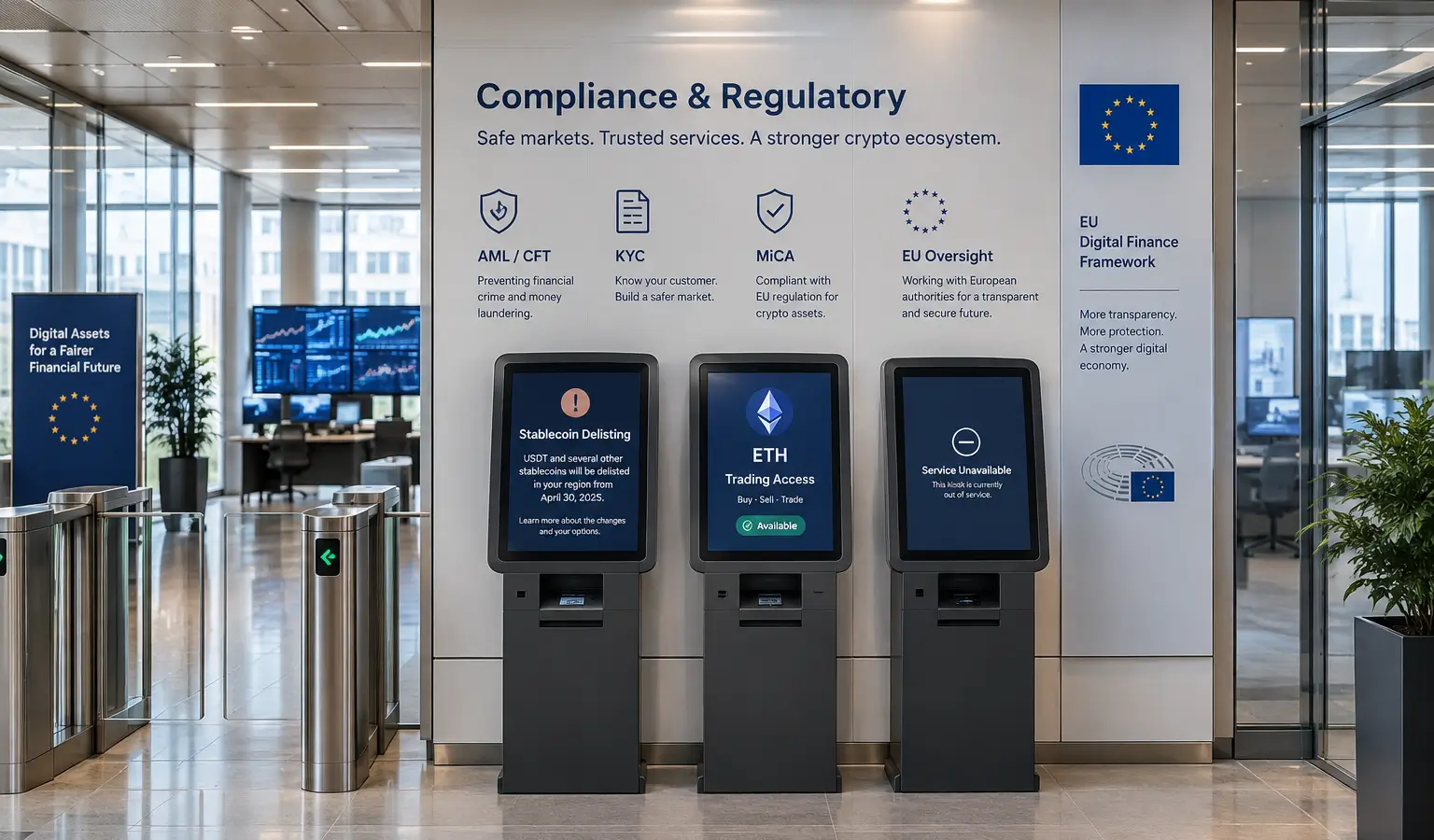
For European crypto users, MiCA could eventually bring more protection and a clearer playing field. The downside is that the market could become smaller and more concentrated, because mainly larger and better-capitalized companies can handle the new requirements. In practice, that could also mean that some products, such as certain stablecoins, disappear from European platforms if issuers do not seek MiCA authorization.
That makes Poland’s situation relevant beyond its borders. If a large ecosystem does not get its licenses in time, not only trading but also knowledge and influence shift within the European crypto market. For Central and Eastern Europe, that could mean it takes longer before the region regains a strong role in the regulated crypto sector.