Bitpanda Gets First Published MiCA Fine in Austria
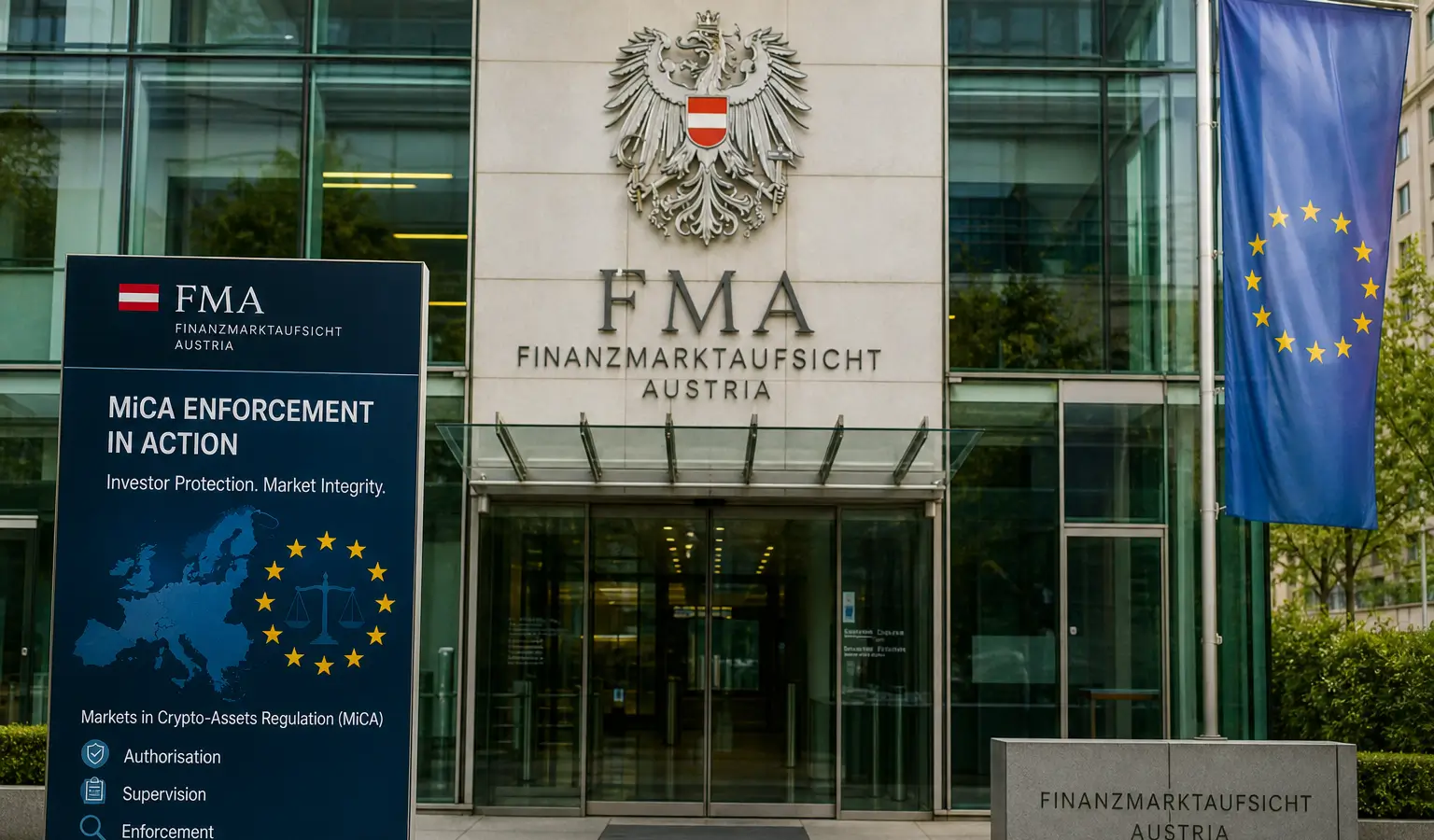
The FMA found violations involving a required white paper and marketing, and wrapped up the case through an expedited process. It highlights how MiCA is being enforced more strictly across the EU.
Key Takeaways
- Bitpanda was fined €70,000 in Austria, the first published MiCA enforcement case in the country.
- The FMA found that a required white paper was filed too late and that marketing materials did not include all required information.
- Bitpanda says it fixed the issues and handled the case through a fast, consensual process.
Bitpanda was fined €70,000 in Austria in what is the country’s first published MiCA enforcement case. The Austrian regulator FMA found that the crypto company did not file a required white paper on time and that marketing materials did not contain all required information. Bitpanda says it fixed the issues after the regulator pointed them out, and according to the company it chose a fast, consensual resolution of the case.
Fast Resolution
The FMA wrapped up the case through an expedited procedure under the Austrian Financial Market Authority Act. That makes the sanction final. For Bitpanda, that is a notable outcome because the company is one of the biggest names in the European crypto market and has long focused on regulated growth.
By the end of 2025, Bitpanda had 7.4 million registered users, 25 percent more than a year earlier. The company also reported 371 million euros in adjusted revenue. From Vienna, the broker is also expanding beyond Europe with trading, custody, and tokenization infrastructure for banks and fintech companies.
MiCA Is Being Applied More Strictly
The fine fits into a broader phase in which MiCA is becoming more visible as an enforcement framework in the EU. The regulation is seen as the first broad European regime for crypto assets and requires providers to get approval from national regulators. The transition period ended on July 1, 2026, which means parties that are not fully aligned yet could come under pressure faster.
According to recent market estimates, only a limited share of the thousands of crypto companies in the EU has full MiCA authorization so far. That points to a market where compliance and licenses are becoming more important for access to European customers. It also shows that regulators are not only looking at big names, but also at how products and marketing are checked against the rules.
What This Means for Europe
For European crypto readers, this case is especially relevant because Bitpanda already has a MiCA license from BaFin and also received approval in Austria in April 2025 for custody, exchange, order execution, and other crypto services. For companies that are already operating in a regulated way, a fine shows that licenses are not the finish line but part of ongoing compliance. That could matter for other providers that are still adjusting their European setup to MiCA.
The case also fits into a broader shift toward stricter, license-driven growth. In Europe, regulators are increasingly seeing that MiCA and FCA set crypto acquisition wave in motion are pushing the market to better align scale, compliance, and licensing.