OCC Tightens Stablecoin Rules and Puts Rewards Under Pressure
The OCC will now review stablecoin rewards on a case-by-case basis, with consequences for Coinbase, PayPal, and Kraken. Banks fear these programs could pull deposits away.
Key Takeaways
- The OCC has published the first final rules under the GENIUS Act and is putting stablecoin rewards under new pressure.
- Reward programs will be reviewed case by case; existing setups from Coinbase, PayPal, and Kraken, among others, must be checked by the regulator.
- The rules take effect on January 18, while other U.S. regulators are still working on further details of the law.
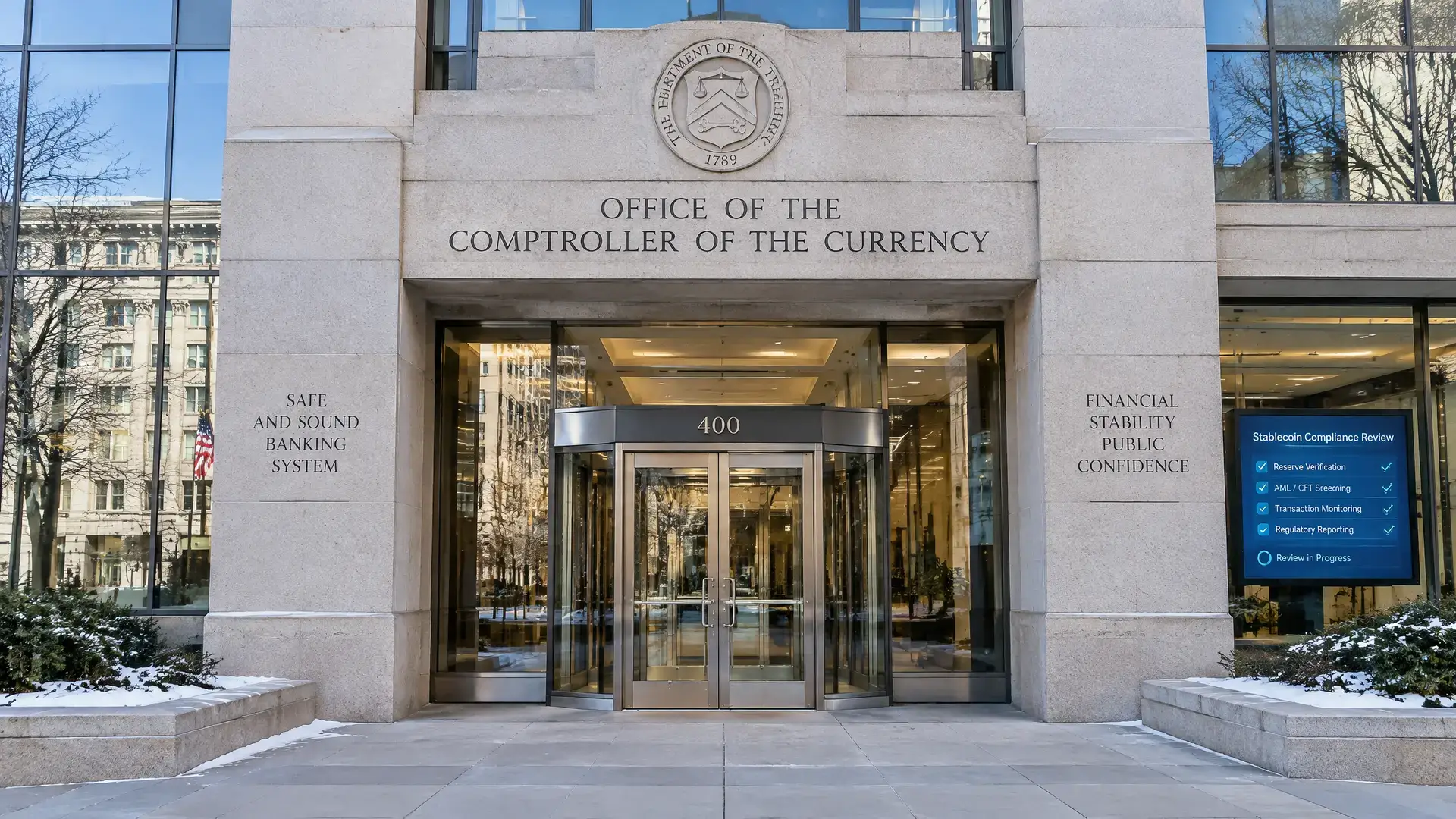
The U.S. Office of the Comptroller of the Currency has published the first final rules under the GENIUS Act. That is putting reward programs around stablecoins under renewed pressure. Crypto exchanges and other companies offering these programs will now have to have existing setups reviewed by the regulator.
New Test for Rewards
The OCC says it will judge on a case-by-case basis whether a reward program violates the law. The regulator did not give specific examples of what is or is not allowed, but it did stress that the word “solely” in the law carries a lot of weight. A reward that is not paid only for holding or using a payment stablecoin may fall outside the ban, according to the regulator.
That makes the new rules immediately relevant for companies like Coinbase, PayPal, and Kraken, which already offer rewards on stablecoins. The industry is not getting a safe transition period for existing programs, so it will have to wait and see how the OCC applies the rules in practice. The rules take effect on January 18.
Impact on Banks and Exchanges
Stablecoins are tokens tied to the dollar and meant to keep a stable value in a market where other crypto often moves sharply. The sector is now mainly driven by Tether's USDT and Circle's USDC, while new players keep entering.
The debate over yield has played a major role in the stablecoin market for some time. Banks have been warning for a while that rewards on stablecoins can compete with traditional deposits. That is an important point, because banks fear their deposit base could shift if customers get higher rewards through crypto platforms. At the same time, the new rule shows that regulators want to follow the letter of the law first before there is room for looser interpretations.
The broader stablecoin market is also under pressure from new competition. Circle recently defended the USDC business model after rivals and partners started passing more reserve income on to users.
Why This Matters in Europe
For European crypto followers, this is mainly relevant because the U.S. is now building a clearer framework for stablecoins and the role of exchanges in that market. That could also affect how international companies structure their products across multiple markets. The differences between countries remain large, which adds even more pressure for global coordination around stablecoins.
The OCC is not the only U.S. regulator still working on the details. The Treasury, the Federal Reserve, and the FDIC are also still working on their own rules. Because of that, it is still not certain that all parts of the GENIUS Act will be fully filled in by the planned January start date.