Optimism Approves $49.7 Million OP Fund After Decisive Vote
The vote shifts 546.9 million OP into a Strategic Ecosystem Fund managed by the Optimism Foundation. Critics warn of more centralized control and less transparency around enterprise deals.
Key Takeaways
- Optimism approved a plan to move about $49.7 million in OP tokens into a Strategic Ecosystem Fund.
- The deciding vote came late from delegate.testinprod-io.eth, pushing support to 61.84%.
- The proposal moves 546.9 million OP from the user airdrop allocation to a Foundation-managed fund, despite criticism over control and transparency.
Optimism has approved a plan to move about $49.7 million (€42.8 million) in OP tokens from the user airdrop allocation to a Foundation-managed Strategic Ecosystem Fund. The deciding vote came from 8.486 million OP cast by a core development team funded by Optimism, which flipped the balance in the final minutes.
Vote Flips at the Last Minute
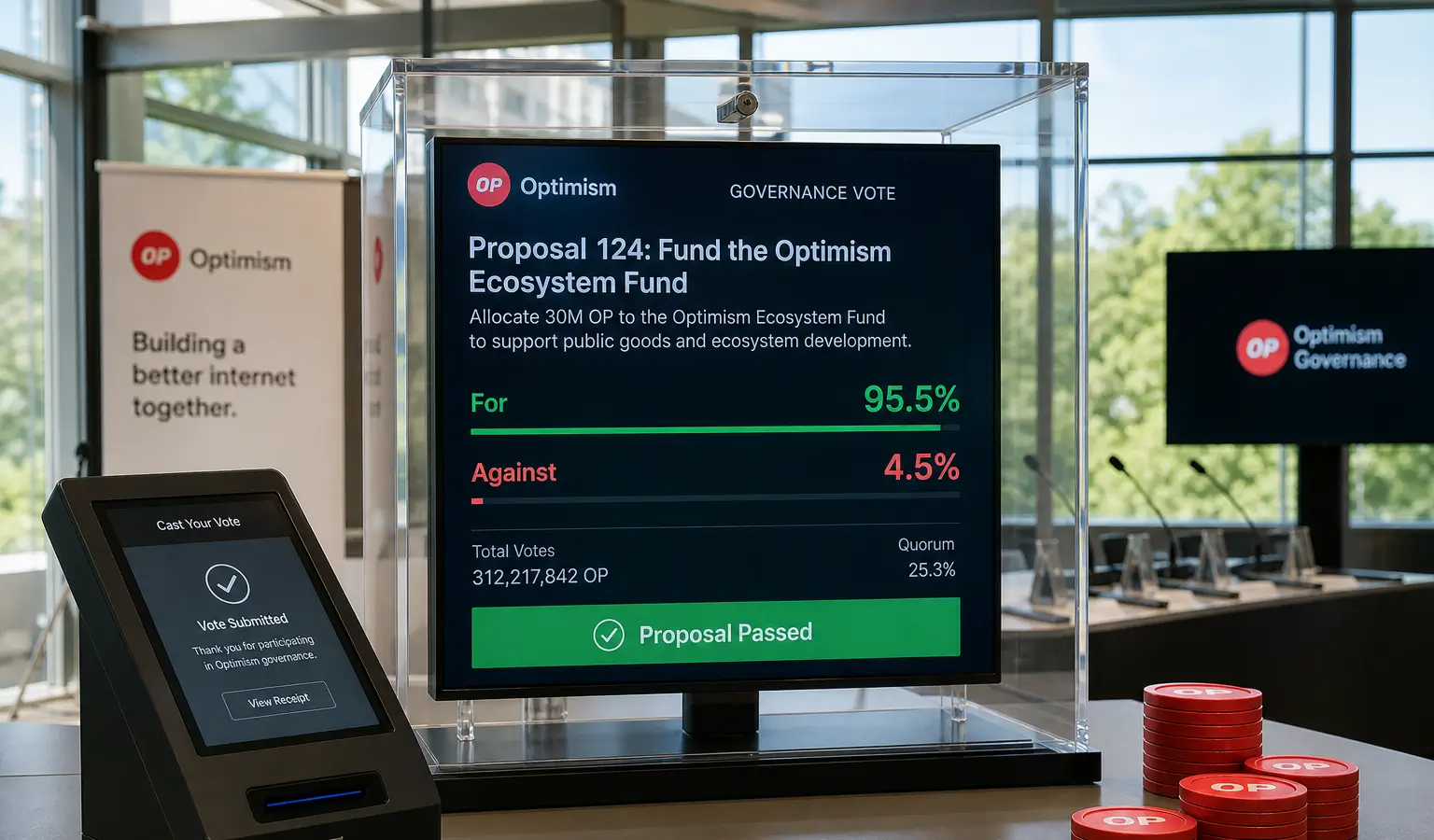
The vote ended with 17.974 million OP in favor and 10.931 million against. With 16 minutes and 52 seconds left, delegate.testinprod-io.eth, also known as Test in Prod, voted for the proposal. That pushed support up to 61.84% from 45.77%.
Without that block, support would have come in at 46.47%. The proposal would still have reached quorum, but the tokens would have stayed in the user allocation.
Test in Prod is described in its Agora profile as a core development team of the Optimism Collective. In a 2025 Security Council nomination, the team said it was fully funded by the Collective. In June, it also received a new 12-month term on the Optimism Security Council.
From Airdrops to an Ecosystem Fund
The proposal reassigns 546.9 million OP, or 12.7% of the total supply, from the user airdrop allocation to a Strategic Ecosystem Fund managed by the Optimism Foundation. According to the Foundation, broad distribution through airdrops no longer fits the strategy around institutional adoption. The freed-up tokens should then be available for partnerships, incentives, and enterprise deals.
The Foundation wants to include the fund's total deployment in the annual budget report going forward. That should give token holders more visibility later on into how the funds are used, even though the room for deployment remains broad.
Criticism of the New Approach
Ethereum scaling research platform L2BEAT objected to the open-ended authority, the unclear link to value for token holders, and the lack of an evaluation of earlier partner spending. Pseudonymous rollup researcher Polynya and others also said the proposal rewrote the user allocation without clear deal-by-deal oversight.
For European crypto followers, this matters because Optimism shows how governance around a major layer-2 is not just about tech, but also about who gets control over large token reserves. The outcome could also be interesting for other projects that want to replace their airdrop policy with a more centrally directed ecosystem fund.
That fits into a broader shift in the sector, where tokenization and onchain infrastructure are being used more and more for institutional applications. Big financial firms are moving in that direction too, as in Wall Street Makes Tokenization a Strategic Priority.
Test in Prod defended the proposal by saying enterprise deals require confidentiality and that Optimism needs a war chest to stay competitive. The team did ask the Foundation to share aggregated spending and results afterward. On social media, users also pointed to other Optimism Team address clusters, which they said could suggest more coordinated voting behavior.