Perpetual Futures Hit Wall Street as Banks Wait on the Sidelines
Kalshi and Coinbase are bringing perps to the U.S. under CFTC oversight, while big banks wait for more liquidity and clearer futures and swap rules.
Key Takeaways
- Perpetual futures are moving into regulated U.S. markets after Kalshi and Coinbase got CFTC approval.
- Kalshi topped $1 billion in trading volume for its perpetual futures within a week in June.
- Big banks are still waiting because of capital rules, compliance costs, clearing requirements, and legal uncertainty.
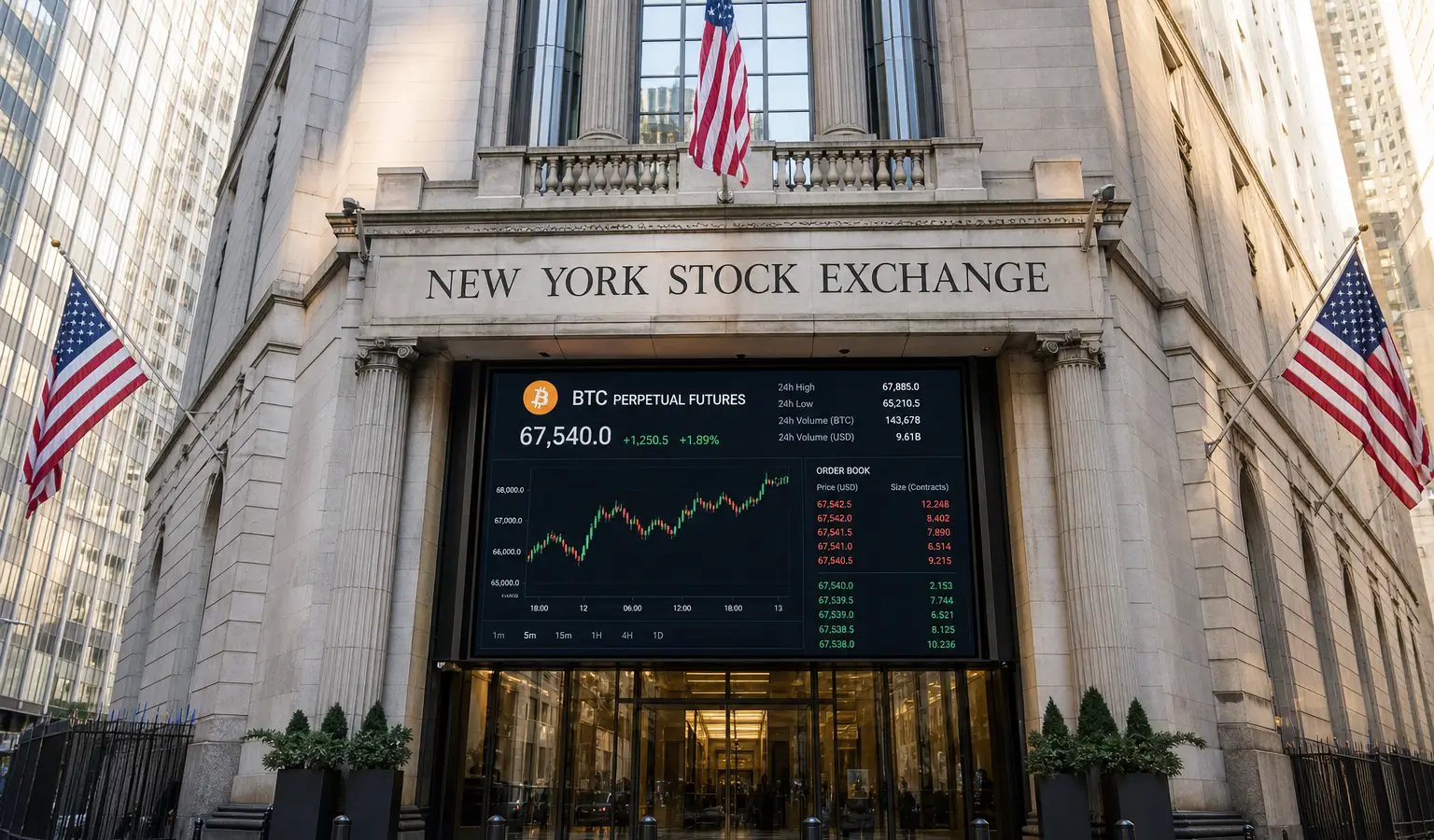
Perpetual futures are now entering regulated U.S. markets, but the biggest banks are not rushing in. These contracts have been a staple of crypto trading for years, and as Wall Street weighs whether they are a passing retail trend or a more permanent part of derivatives trading, the early momentum is coming mostly from trading firms and exchanges.
Quick Start in the U.S.
Kalshi said its perpetual futures passed $1 billion (€0.9 billion) in trading volume within a week in June, making it the company’s strongest product debut since prediction markets. The exchange has also asked for approval to list perpetual futures tied to gold and silver, a sign the product may eventually extend beyond just Bitcoin and other digital assets.
Perpetual futures, or perps, work similarly to standard futures, but they never expire. Instead of rolling from one monthly or quarterly contract into the next, traders use funding payments to keep the price aligned with the underlying asset. The CFTC approved Kalshi to offer the contracts on May 29, and Coinbase also received permission to list regulated perpetual futures in the U.S. The move reflects a broader shift as regulators bring markets that once lived offshore back onshore.
The structure itself is not new to crypto. BitMEX launched the first cryptocurrency perpetual futures in 2016, giving traders a way to keep positions open indefinitely without having to roll contracts. Bank of America estimates that annual perpetual futures trading volume now reaches about $90 trillion (€79 trillion).
Banks Are Still Watching
On Wall Street, more discussion does not necessarily mean immediate launches. People familiar with the talks say perps are coming up more often, in part because U.S. regulators are pulling markets that used to be offshore back onshore. Even so, most major financial institutions are still in the research phase rather than committing serious capital.
The first firms likely to move are proprietary trading shops, market makers, and newer clearing firms. They trade with their own money and can adapt faster when testing new venues and operational risks. Big banks, by contrast, have to deal with tighter capital rules, client obligations, and reputational concerns, which makes the cost of compliance, clearing, and risk management harder to justify in a market that is still developing.
That also helps explain the uneven pace across Wall Street. Retail traders and smaller firms usually arrive first, market makers step in once volume builds, and banks often wait for years of data before they put meaningful money behind a new product.
Why This Matters
For European crypto readers, the main point is that a product that grew largely offshore is now being tested under U.S. rules. The combination of regulated access, institutional caution, and a market that trades around the clock could also shape how derivatives fit into the wider crypto infrastructure. At the same time, the debate shows that liquidity and clear classification still matter just as much as popularity.
The legal questions are still open, too. One major issue is whether some perpetual contracts should be treated as futures or swaps, since that affects margin rules, registration requirements, and who can provide liquidity. The CFTC has already said perpetual futures can fall under its jurisdiction as futures contracts, but how that works in practice is still being debated as exchanges look to expand the product into commodities, stocks, and other markets. That discussion also connects to broader U.S. crypto policy, including the CFTC’s warning to prediction markets to submit contracts fully and carefully for each product variation.
For now, caution still dominates on Wall Street. Trading firms see a familiar product, regulators see a market moving onshore, and exchanges see a new source of volume. But the biggest banks are waiting until the rules, liquidity, and infrastructure are much clearer.