Robinhood Chain Goes Down After 14 Minutes Without Blocks
The Arbitrum-based chain ran on a single sequencer, leaving users with no fallback when the network stalled. L2BEAT still classifies Robinhood Chain as Stage 0.
Key Takeaways
- Robinhood Chain stopped producing new blocks on Friday, leaving transactions stuck for at least 14 minutes.
- Robinhood gave no cause or timeline for recovery and has no public status page for the chain.
- The chain runs on a single sequencer, making the network vulnerable to outages and centralization risks.
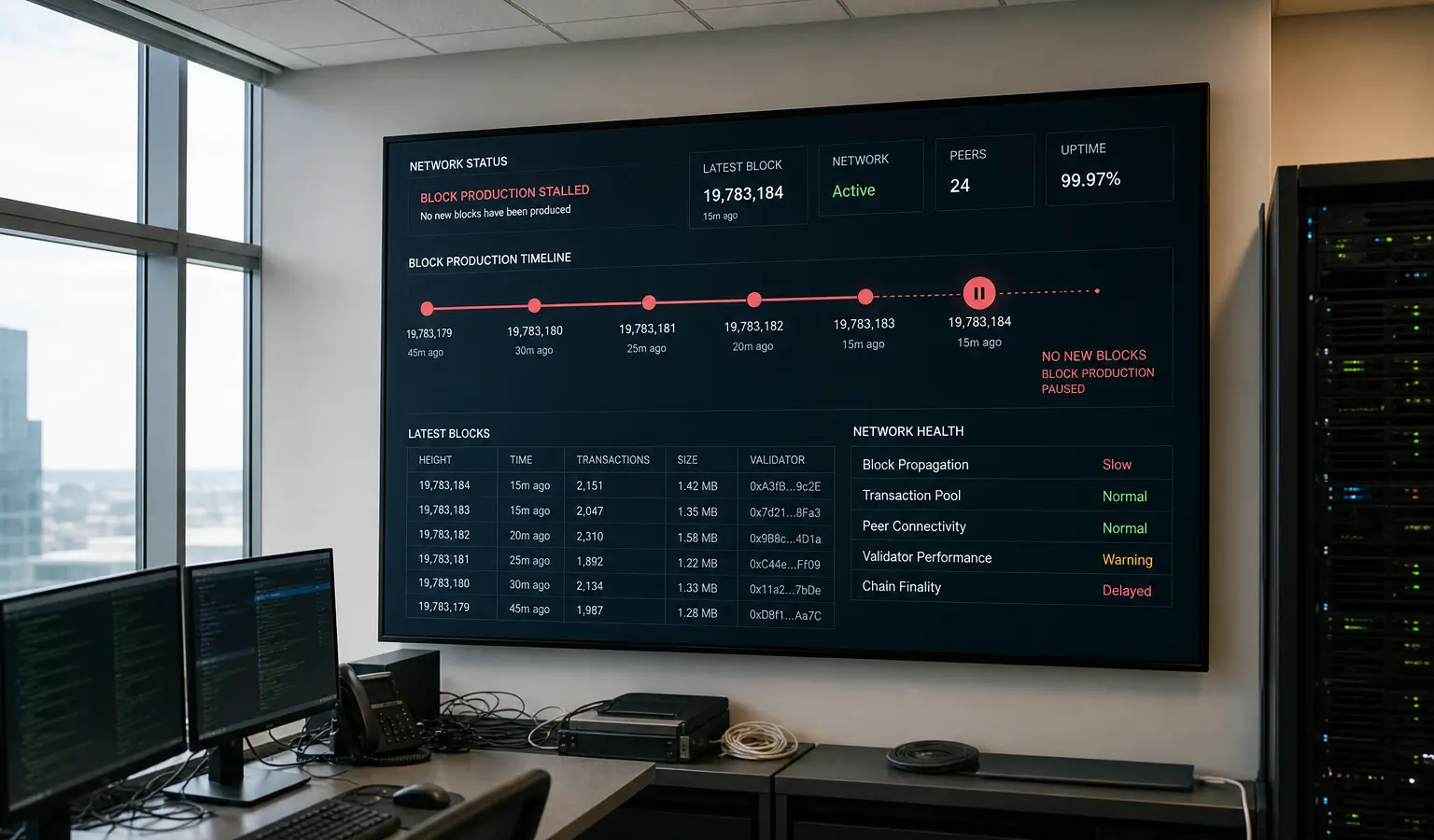
Robinhood Chain stopped producing new blocks on Friday, leaving transactions stuck for at least 14 minutes. Robinhood gave no cause and no estimate for when the network would return to normal.
Network Stalled
The chain normally processes a block every tenth of a second. So a 14-minute outage means roughly 8,400 blocks were not produced. On the block explorer, it was visible that the tip of the chain was already minutes old and that no pending transactions had been visible in the previous half hour.
That stall came after a busy period. Blockscout recorded 14.14 million transactions over the past 24 hours, with an average fee of $0.48 (€0.41). Robinhood Markets does not have a public status page for the chain, which means block explorers are the only live source for checking whether the network is still running.
One Sequencer as a Risk
Robinhood Chain runs on Arbitrum’s Nitro software and went live on mainnet on July 1. The network uses one poster address as the sequencer, which means one party orders all traffic. If that party stops, there is no second sequencer to fall back on and users cannot force their transactions through.
That makes the setup vulnerable to outages. A central sequencer can also reorder or exclude transactions, which raises questions about the network’s transparency and fairness. L2BEAT places Robinhood Chain in Stage 0, the lowest category in its Layer 2 decentralization rating. The tracker points to the single sequencer and to contract upgrades that can be rolled out directly.
Why This Matters for Users
For European crypto users, this incident shows how dependent some newer chains still are on a small technical core. On a network that is growing fast and handling a lot of traffic, even a short outage can be immediately noticeable for anyone trying to send transactions. The fact that Robinhood does not have a status page makes it harder for users to quickly see what is going on during an incident like this.
Robinhood’s own blockchain had already drawn a lot of activity earlier because of memecoin trading and tokenized stocks. That rapid growth makes the impact of an outage even more visible for users who mainly use the network for trading and settlement.