Senate Puts Tether Under Pressure Over Iran and USDT
Democrats say USDT was widely used to get around sanctions; Tether says it has already frozen hundreds of millions of dollars in Iran-linked wallets this year.
Key Takeaways
- Democrats in the U.S. Senate say Iran widely used Tether’s USDT to get around sanctions.
- Tether said the same day that it had frozen about $550 million in Iran-linked USDT.
- The case highlights that Tether can technically step in on wallets that are on sanctions lists.
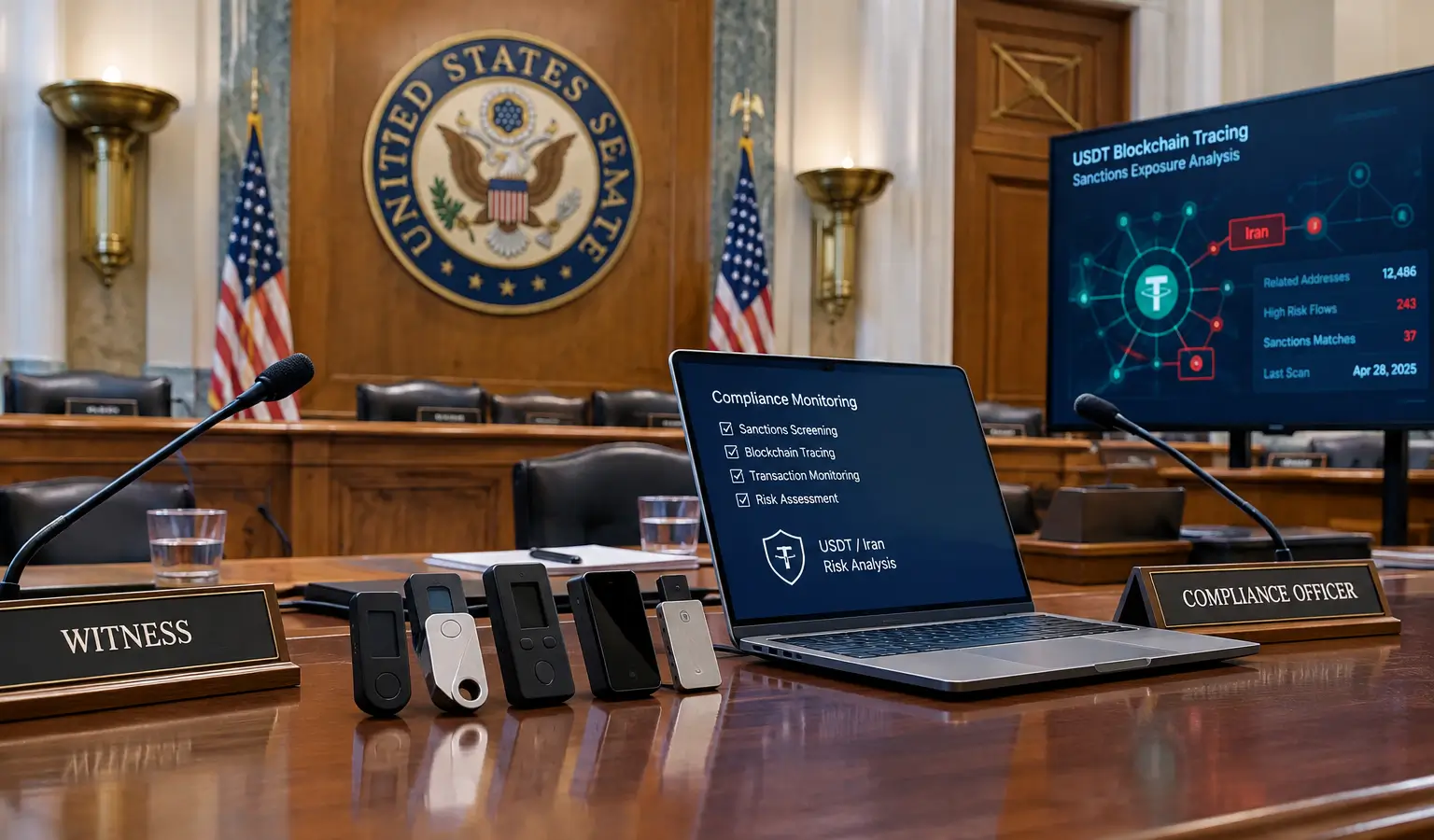
Democrats in the U.S. Senate say Iran widely used Tether’s USDT to get around sanctions. Tether responded the same day by saying it had frozen about $550 million in Iran-linked USDT this year. That puts the spotlight back on how far a stablecoin issuer can and should step in when wallets are tied to sanctions.
What the Senate Says
According to Democrats on the Senate Permanent Subcommittee on Investigations, led by Senator Richard Blumenthal, 84% of more than 800 sanctioned crypto wallets with a link to Iran used USDT exclusively or mostly. The Wall Street Journal first reported this. The researchers call USDT an important payment tool for Tehran and say the token also showed up in networks that sent money to Iran-backed groups, including Hezbollah.
Blumenthal already asked in June whether Tether had ever refused requests to block illegal wallets. The pressure fits into the broader U.S. sanctions policy. In August, the U.S. Treasury Department launched Operation Economic Outcast, which named digital assets as one of the five Iranian sectors under sanctions.
How Tether Responded
Tether says that in April it froze $344 million (€302 million) in two wallets that were later linked by OFAC, the U.S. sanctions office, to Iran’s central bank. In July, Tether says it also blocked more than $130 million (€114 million) in four wallets on Tron. The company says it can step in when it gets credible information from law enforcement.
That explanation lines up with how Tether has set up its freeze mechanism for the U.S. sanctions list, the Specially Designated Nationals list. That list includes people, companies, and addresses that are under sanctions. For USDT holders, that means a wallet can be frozen in practice once an address ends up on that list.
Why This Matters
For European crypto readers, this shows how closely stablecoins are now tied to enforcement and sanctions. USDT is not just a trading tool on crypto exchanges, but also a token where the issuer can technically step in on wallets. That makes Tether both an important part of the crypto market and a player that is directly tied to regulation and compliance.
The broader debate over Tether’s role in the market also plays a part: the U.S. rules for USDT are already putting pressure on the question of how the issuer should adapt to stricter requirements.