Senate Votes on Clarity Act as Bitcoin Tests Support
The procedural vote is an important step for the U.S. crypto bill, with implications for DeFi, stablecoins, and the division of roles between the SEC and CFTC.

Key Takeaways
- The U.S. Senate votes Tuesday on a cloture motion to move the Clarity Act forward, but the bill has not passed yet.
- Bitcoin is sitting near an important technical level; approval could trigger a move toward $88,000 to $90,000, while rejection could send it lower.
- Ethereum, Solana, and XRP could benefit, according to analysts, if the bill draws clearer lines between the SEC and CFTC.
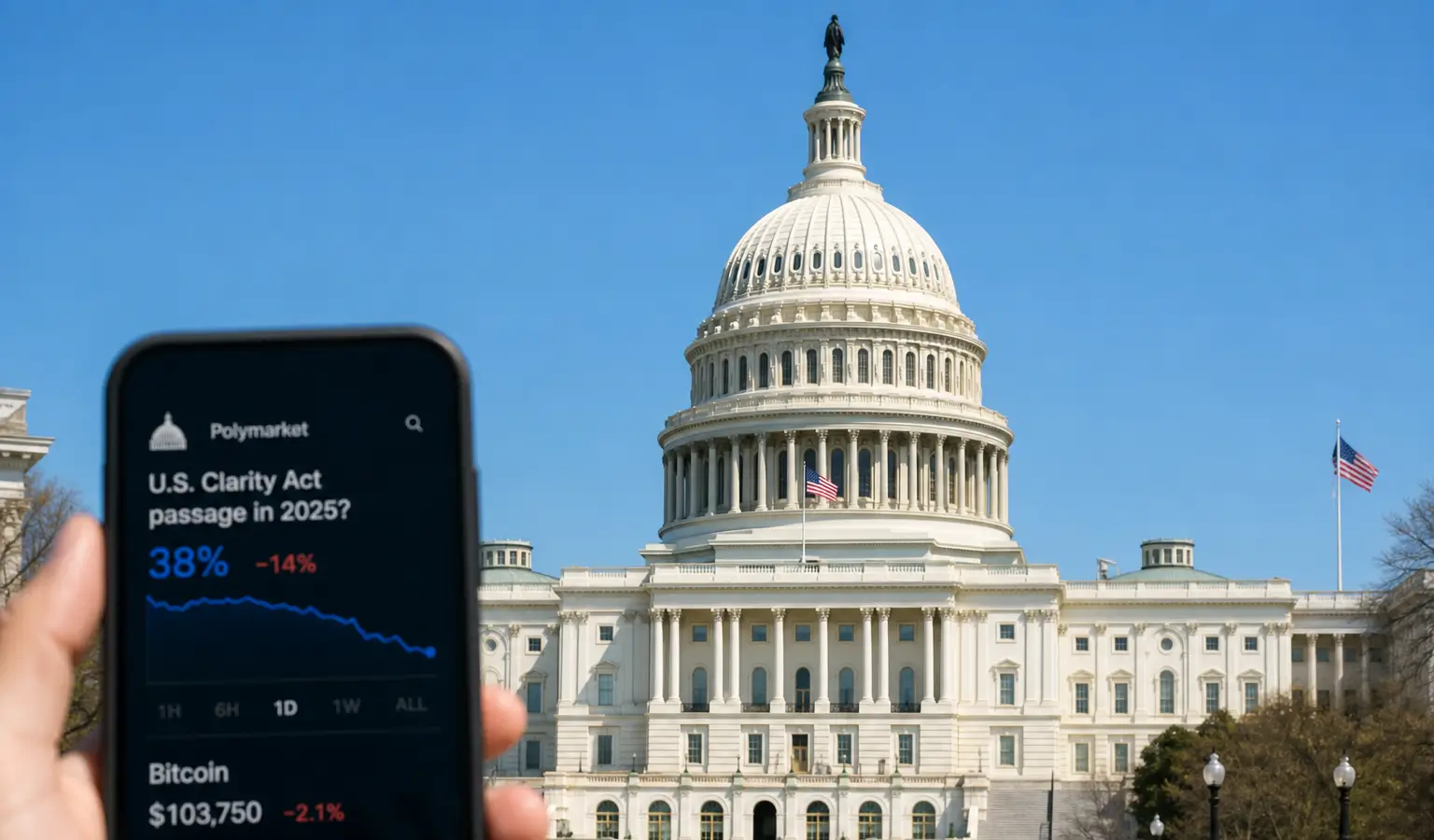
The U.S. Senate will vote later Tuesday on a cloture motion to move the Clarity Act forward. If that procedural vote passes, debate can continue and the bill will get closer to a final vote, but it still will not have passed yet. At the same time, Bitcoin is trading near an important technical level, which is making the market watch the outcome closely.
Procedural Step in the Senate
According to Tim Sun, senior researcher at HashKey Group, the odds of success are about fifty-fifty. He said the chance of the procedural vote passing is around 50%, while the chance of the bill actually becoming law this year remains below 20%, in his view. Lacie Zhang, research analyst at Bitget Wallet, also said traders do not seem to be pricing in a sure approval.
The Clarity Act is a broad crypto bill that has already faced delays. The Senate postponed the vote until after the summer recess, and the proposal has since been revised several times, including with provisions for DeFi protocols and prediction markets. That makes Tuesday's vote mainly an important step, not the finish line. The political buildup was already tense too: Democrats sent a counterproposal after opposing revised ethics rules and other parts of the bill.
Bitcoin and the Rest of the Market
TDX Strategies expects a strong reaction in Bitcoin if the cloture motion is approved. According to the firm, an unexpected yes vote could trigger a sharp rally, with a break above $82,000 (€71,000) and a move toward $88,000 (€76,200) to $90,000 (€77,900). If it is rejected, Bitcoin could instead fall back toward $73,000 (€63,200).
Sun and Zhang did point out that Bitcoin may benefit less than other coins, because its regulatory status, ETF access, and institutional infrastructure are already relatively advanced. Ethereum, Zhang said, could react more strongly instead, because there is still more regulatory uncertainty there and the coin plays a major role as a settlement layer for stablecoins, DeFi, and tokenized assets.
Solana and XRP could also benefit, according to Sun, if the bill draws clearer lines between the SEC and the CFTC. That could improve institutional access, product issuance, and capital inflows over the longer term. Zhang also said XRP could react sharply, although some of the good news already seems to be priced in.
Why This Matters
For European crypto followers, the key point is that this vote is not just about one bill, but about how the U.S. market will be organized going forward. If the rules around crypto, DeFi, and developers become clearer, that could also affect how major players outside the U.S. look at Bitcoin, Ethereum, Solana, and XRP. So this is not just about a short-term price move, but also about crypto's broader position in the U.S. market.