S&P Global Acquires OpenZeppelin for Onchain Security
With OpenZeppelin, S&P Global also wants to factor smart-contract risk into its assessment of stablecoins and tokenized funds. The acquisition fits into the ratings group’s broader digital asset strategy.
Key Takeaways
- S&P Global is acquiring OpenZeppelin, a specialist in smart-contract security for stablecoins and tokenized funds.
- With the deal, S&P also wants to assess the code that issues, moves, and manages tokens, alongside traditional credit risks.
- OpenZeppelin will remain an independent unit; the transaction still has to meet the usual closing conditions.
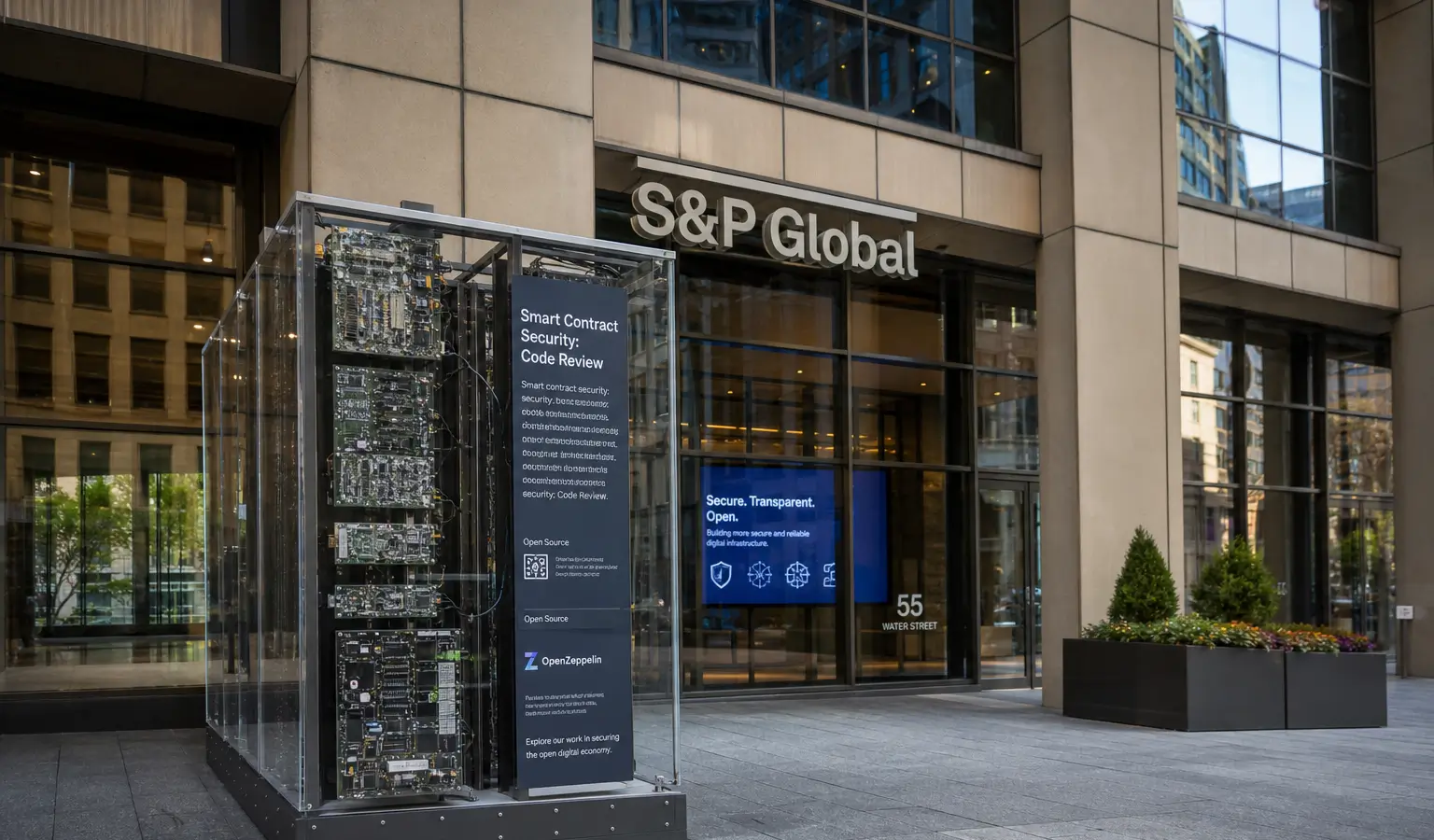
S&P Global has agreed to the acquisition of OpenZeppelin, a specialist in smart-contract security that is widely used in the stablecoin and tokenized-fund market. With the deal, the U.S. ratings group wants to look not only at the issuer or the fund, but also at the code that issues, moves, and manages tokens. Financial details were not disclosed.
Code Is Now a Risk Too
The core of the acquisition is that traditional credit ratings do not tell the whole story in onchain finance. A project may have strong reserves or a solid credit profile, but still get stuck because of a bug in its smart contracts. With this move, S&P Global is taking a step toward a broader view of technology risk, something the company says is becoming more important as banks and asset managers use more onchain products.
OpenZeppelin provides open-source code and security assessments for projects in DeFi, stablecoins, and tokenized assets. According to S&P, contracts built with that library have over time accounted for more than $37 trillion (€32.1 trillion) in value transfers. That figure refers to the total value moved through those contracts, not assets that OpenZeppelin itself manages.
What OpenZeppelin Adds
OpenZeppelin was founded in 2015 and says it has been a familiar name in the Ethereum world for years. The OpenZeppelin Contracts library has reportedly secured more than $31 trillion (€26.9 trillion) in onchain value, according to earlier data. The company has also carried out more than 900 security engagements and found more than 10,000 vulnerabilities before code went into production.
Co-founder and CEO Demian Brener will continue to lead the company as an independent unit under the OpenZeppelin name. That lets S&P keep the existing brand and expertise in place while gaining access to a part of the crypto market where code quality is directly tied to usage and trust.
Fits Into a Broader Digital Strategy
The acquisition fits into a broader digital asset strategy at S&P Global. The company already expanded its activities this year with a strategic investment in Kaiko and launched a digital asset index suite together with Kaiko. In July, it also added the S&P Pantera Digital Asset Index, designed as a benchmark for digital assets with real-world use and economic value.
For European crypto and institutional readers, the main takeaway is that major financial firms are increasingly treating onchain products as a mix of market data, compliance, and code security. That could mean security audits and benchmarks play a bigger role as tokenized funds, stablecoins, and other onchain products continue to roll out. The transaction still has to meet the usual closing conditions, and S&P says the deal will not have a material impact on financial results.