Standard Chartered Opens USDC Minting for Institutional Clients
Through the Dubai International Financial Centre, institutional clients can convert dollars directly into USDC without opening a separate Circle account. The move reflects a broader banking push into stablecoins and MiCA.
Key Takeaways
- Standard Chartered is the first globally systemically important bank to offer institutional clients direct USDC minting and redemption.
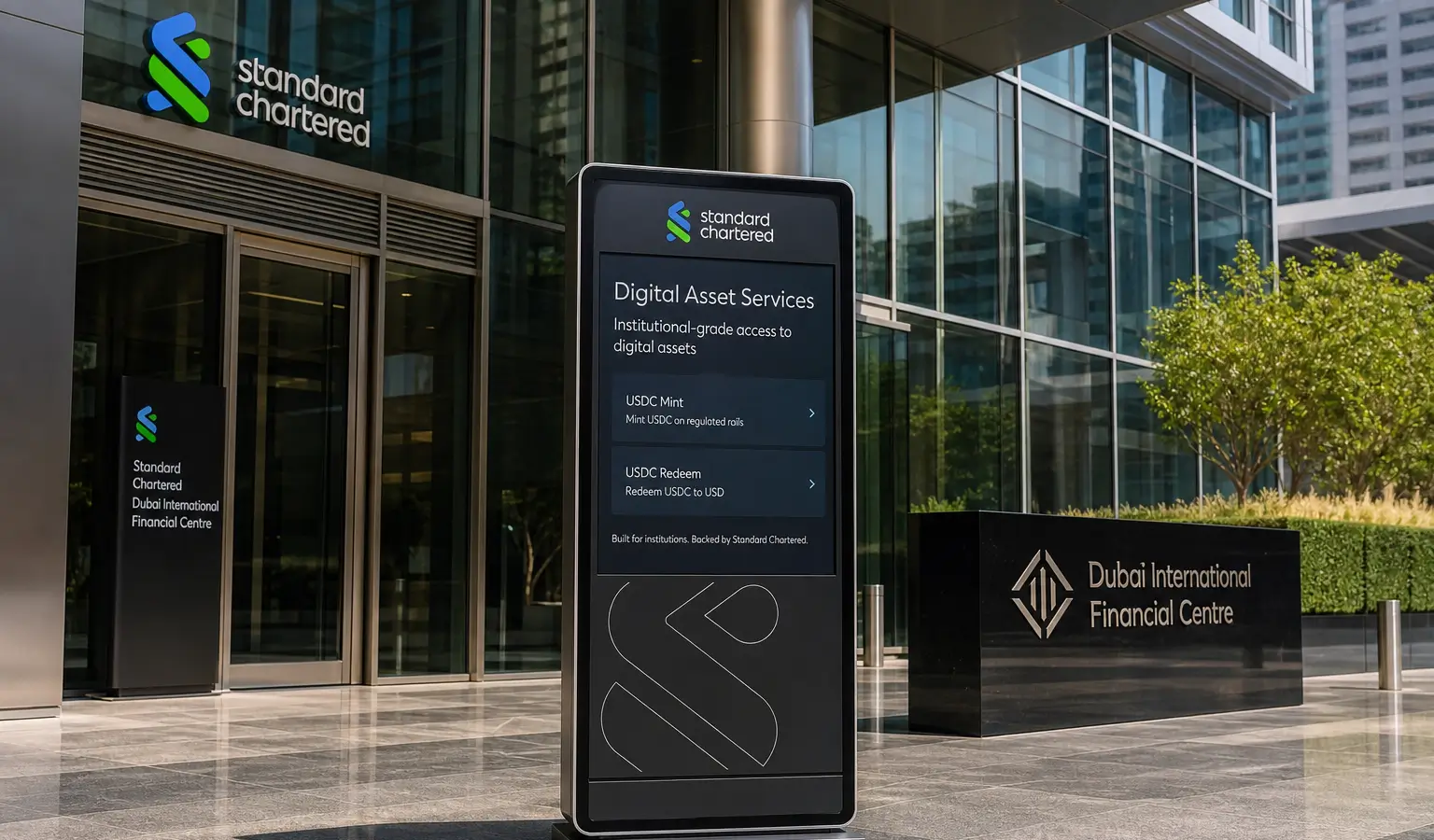
- The service launched this week through Standard Chartered in the Dubai International Financial Centre, and customers do not need a separate Circle account.
- The move fits into a broader trend where major banks are adding stablecoins, on-chain settlement, and liquidity management to their services.
Standard Chartered is the first globally systemically important bank to offer institutional clients direct access to USDC minting and redemption. Built with Circle, the service went live this week through the bank’s Dubai operations and adds to a growing push by major banks to bring stablecoins into their core offerings.
Direct Access Through Dubai
Institutional clients can now move dollars into USDC and redeem them back through their existing banking relationship, with no need to open a separate Circle account. For the moment, the rollout is limited to Dubai, specifically Standard Chartered’s presence in the Dubai International Financial Centre, which has increasingly marketed itself as a regulated hub for digital asset activity.
Standard Chartered says the service is designed to support on-chain settlement, treasury management, and liquidity operations. Payment use cases are expected to come later. The bank says the launch reflects demand from institutions for a familiar banking setup that can still handle stablecoin activity.
More Banks Are Choosing USDC
Standard Chartered is not moving alone. BNY announced three days earlier that clients can mint, redeem, and hold USDC through its Digital Asset Custody platform. That points to a broader shift among large banks, which are looking beyond custody and into direct stablecoin infrastructure for institutional users.
The Circle-Standard Chartered relationship also extends beyond this launch. Since April 2025, the bank has been involved in shaping the Circle Payments Network alongside Santander, Deutsche Bank, Société Générale, and others. Standard Chartered also began coverage of the DeFi lending protocol Morpho this week, another sign that the bank is paying closer attention to onchain infrastructure.
What This Means for Europe
For European crypto readers, the main point is that stablecoins are moving quickly from standalone crypto products into bank infrastructure. Circle continues to keep its European listings under MiCA, while Tether’s USDT has left the region, making the regulatory backdrop even more important for banks that want to expand internationally. At the same time, the European Commission is weighing whether MiCA needs to be tightened now that stablecoins are taking on a larger role in the financial system.
According to the bank, any wider rollout will depend on approvals in each market and on whether local regulators are ready to move ahead. For now, that makes Dubai a useful test case for how far regulated stablecoin services can go inside traditional banking.