Strong US dollar: the death blow for emerging markets and their Bitcoin ambitions?
The US dollar is currently performing well against most other currencies.

The US dollar is currently holding up well against most other currencies. What fatal consequences a strong dollar could have for the world economy and why it puts the Bitcoin establishment on the rise markets at risk.
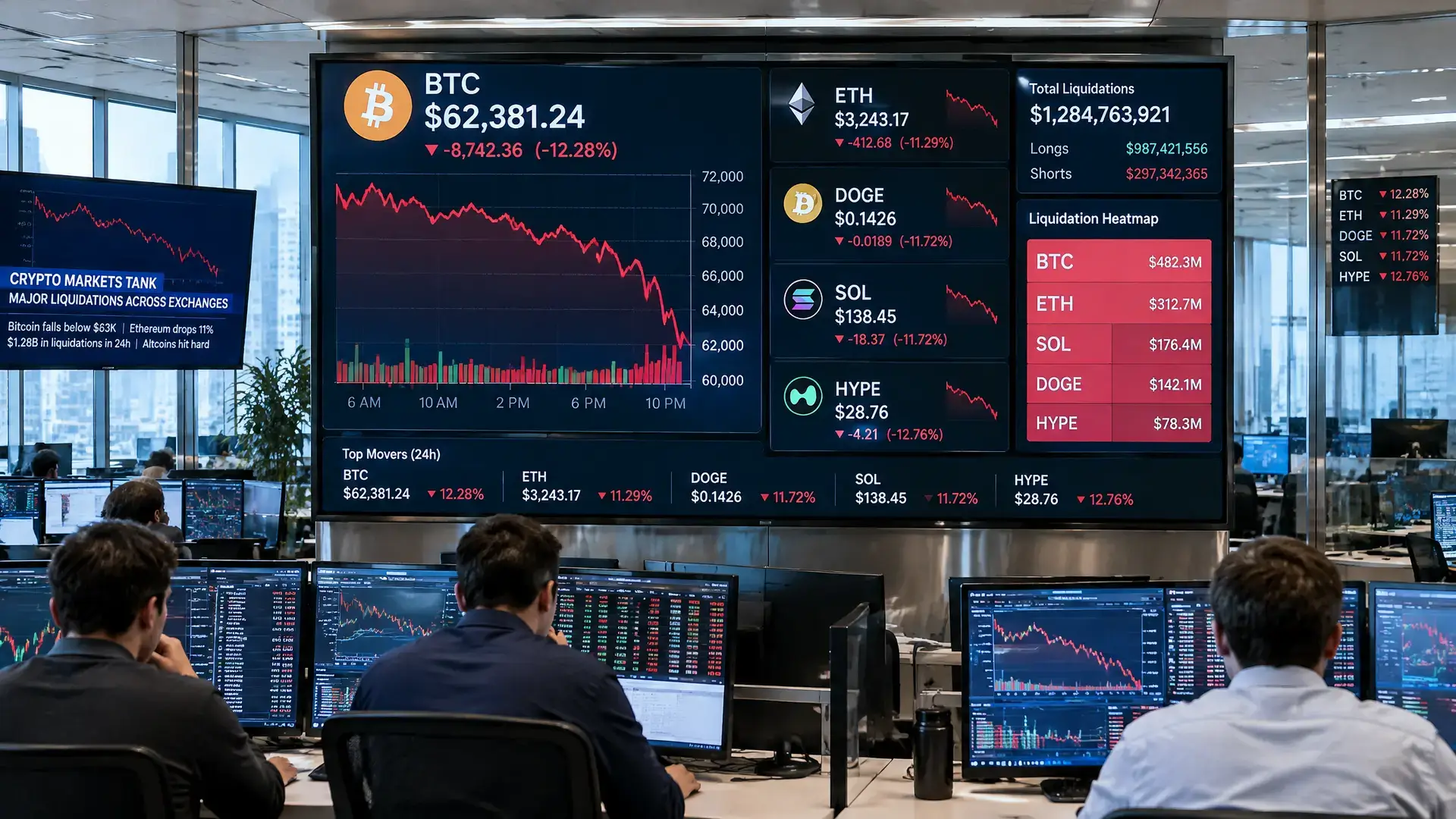
Last week, the world's main central banking gathering took place. In Jackson Hole, Wyoming, central bankers from around the globe gathered to discuss future monetary policy at the annual conference. U.S. Federal Reserve Chair Jerome Powell made it clear he would stay committed to fighting inflation. He noted he was aware of what that would mean for the US economy. After his remarks, financial markets moved. Stocks and cryptocurrencies corrected noticeably.
Dangers of a strong US dollar
One result of the intended restrictive monetary policy is not only that less money or credit will be available to the economy and thus to people, but also that nations with debt in US dollars will face big trouble as a result. An increase in key US rates fuels the strength of the dollar and therefore the weakness of all other currencies. Anyone with US dollar-denominated debt is now facing repayment challenges.
This is mainly due to two mechanisms that hit emerging countries particularly hard. Higher rates on US bonds make other countries' government bonds relatively less attractive to investors. As a result, other nations must raise their own rates on government bonds to attract investors willing to lend them money.
At the same time, repaying existing debt becomes more expensive. To repay debt equivalent to one US dollar, more units of the domestic currency must be issued. The share of GDP or the budget for debt service rises dangerously.
Latin America facing a domino effect?
This scenario is especially dramatic for many Latin American countries. They typically carry heavy US dollar debt. At the same time, debt levels in some countries are already very high. Countries like Argentina or El Salvador are already on the brink of insolvency. Each time the US Federal Reserve raises rates, these countries get one step closer to the abyss.
According to Statista, the external debt of all Latin American countries is about 2.6 trillion US dollars. A sizable portion of that is also denominated in US dollars.
Are the 1980s repeating?
When inflation surged across much of the Western world in the late 1970s, central banks responded with sharp rate hikes. Especially the US Federal Reserve under Paul Volcker undertook massive rate increases. The result was the scenario outlined above. The Latin American debt crisis unfolded, forcing countries like Mexico to default on their debts. The outcome was a severe economic crash, known as Latin America's lost decade.
A large portion of the US dollar debt came from the IMF. During the crisis, the IMF pushed Latin American countries toward strict austerity. This partly explains the anger many people in Latin America feel toward the IMF. Western countries, especially the US, became even more influential. Even though the last 40 years have changed, there are important parallels between today’s crisis and that time.
Bitcoin vs. the US dollar
The fact that Latin American countries have relatively high Bitcoin adoption can be historically and culturally explained by this desire to break free from the US dollar. El Salvador President Nayib Bukele has repeatedly stressed that he sees Bitcoin primarily as a way to reduce dependence on the US dollar. The result is well known: El Salvador was the first country to adopt Bitcoin as legal tender. Other Latin American countries, like Paraguay or Panama, have also shown interest.
IMF and Bitcoin
Like the World Bank or the Bank for International Settlements, the IMF is a thorn in the side of Latin America’s crypto establishment. These dollar-influenced institutions have warned against Bitcoin on several occasions. El Salvador has also been chastised for introducing Bitcoin and urged to drop its Bitcoin integration. US credit rating agencies reacted immediately to the Bitcoin introduction and downgraded El Salvador’s creditworthiness. The consequence: Bitcoin adoption raised the country’s financing costs.
If El Salvador were to become insolvent in the near future (risk is considered high), it could force the country to abandon its Bitcoin standard. Not only would that imply a power shift, potentially to a leader less of a Bitcoin fan than Bukele, but the IMF and other lenders could demand a deviation from the Bitcoin standard in exchange for new financing. In a default scenario, the chance of Bitcoin in El Salvador failing would be high.
A chilling effect
The sharply corrected Bitcoin price and the scenario above could deter some Latin American countries from adopting Bitcoin as a national currency. However, a distinction must be made between the state and central bank versus private households and businesses. While governments and central banks may move away from a Bitcoin standard, other actors could bite back and invest even more in Bitcoin.
The speed at which crypto adoption has surged in Latin American countries, especially in recent weeks, shows people aren’t ready to let go of Bitcoin and friends. In a Latin American payment crisis, a hybrid financial system could emerge that’s stronger than ever, built on state fiat money but also on private money in the form of cryptocurrencies.
Conclusion
The risk that emerging markets will default in the coming months is greater than it has been since the 2008 financial crisis. It’s not just the Latin American countries highlighted here, but many African nations that face similar situations. The problem is that a domino effect can quickly unfold. If one emerging market fails to meet its payment obligations, yields on other emerging market government bonds will likely rise even faster, amplifying the effect. Investors would then demand higher rates.
In this scenario, Bitcoin could be both a curse and a blessing. It’s impossible to predict how a debt crisis would affect Bitcoin’s role. People should be prepared for a range of scenarios. Ideally, there would be no default in the first place.
The fact that inflation in the US is falling quickly is not only a wish of Americans themselves, but also a relief for US-dollar-denominated debtors.