Circle CEO Puts Bitcoin Aside and Praises Digital Dollars
Allaire sees stablecoins as payment infrastructure, while the U.S. works on rules for dollar-pegged tokens under the GENIUS Act. Circle’s USD Coin and Arc are central to that effort.
Key Takeaways
- Circle CEO Jeremy Allaire says his focus is on digital dollars for payments, trading, lending, and investing, not Bitcoin.
- According to Allaire, stablecoins are meant to be a payment method with a stable value of $1, while Circle is building infrastructure for digital dollars.
- The U.S. GENIUS Act sets rules for dollar-pegged stablecoins and could affect Circle, exchanges, and European crypto firms.
Circle CEO Jeremy Allaire brushed off questions about his CNBC interview about Bitcoin's weak performance this year. He said his attention is on digital dollars that are not about speculation, but about payments, trading, lending, and investing in a world where AI software is handling more and more money movement.
Focus on Digital Dollars
Allaire said he is not concerned with the price of Bitcoin or other specific digital assets. In his view, stablecoins are meant to be a payment method with a stable value of $1 (€0.89), instead of a coin that moves with Bitcoin's swings.
He tied that view to Circle's broader role in the crypto market. The company is building infrastructure for digital dollars and pointing to growing activity on Arc, the chain Circle launched in September. According to Allaire, that fits a future where AI agents carry out tasks on their own and also need to be able to move money. The expansion of USDC into emerging markets also fits that strategy, with an emphasis on payments and financial services outside speculative crypto trading.
GENIUS Act Takes Shape
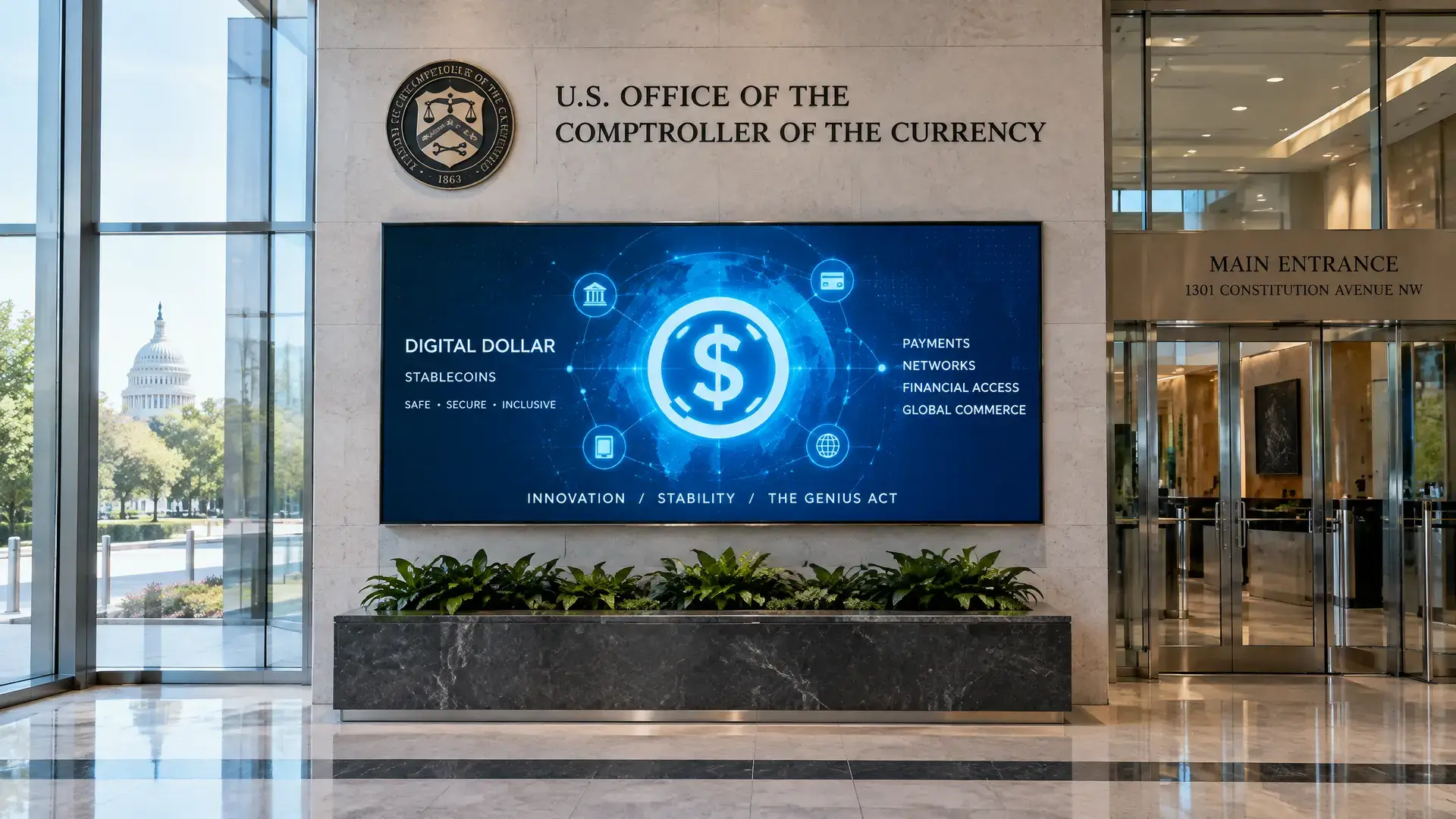
At the same time, the Office of the Comptroller of the Currency, the federal banking regulator in the U.S., is working on the rules for the GENIUS Act. The 2025 law sets a federal framework for dollar-pegged stablecoins and requires, among other things, that issuers keep enough reserves and be able to repay customers within two business days.
The rules directly affect Circle, since the company issues USD Coin. The ban on interest payments by the issuer itself is also relevant for competition between stablecoin providers and crypto exchanges that can pass rewards on to customers. That lines up with the final OCC rules, where exchange reward programs are reviewed case by case and do not get a safe harbor under the ban on payments tied only to holding or using stablecoins.
Why This Matters for Europe
For European crypto readers, this shows how quickly stablecoins are becoming a separate corner of the crypto market, apart from the debate over Bitcoin. If the U.S. rules become final, that could also affect how major financial firms approach digital dollars and how crypto exchanges structure their services. For firms already operating under stricter rules, such as MiCA-licensed platforms in Europe, this is an important development to watch.