Circle Expands USDC to 50 Emerging Markets
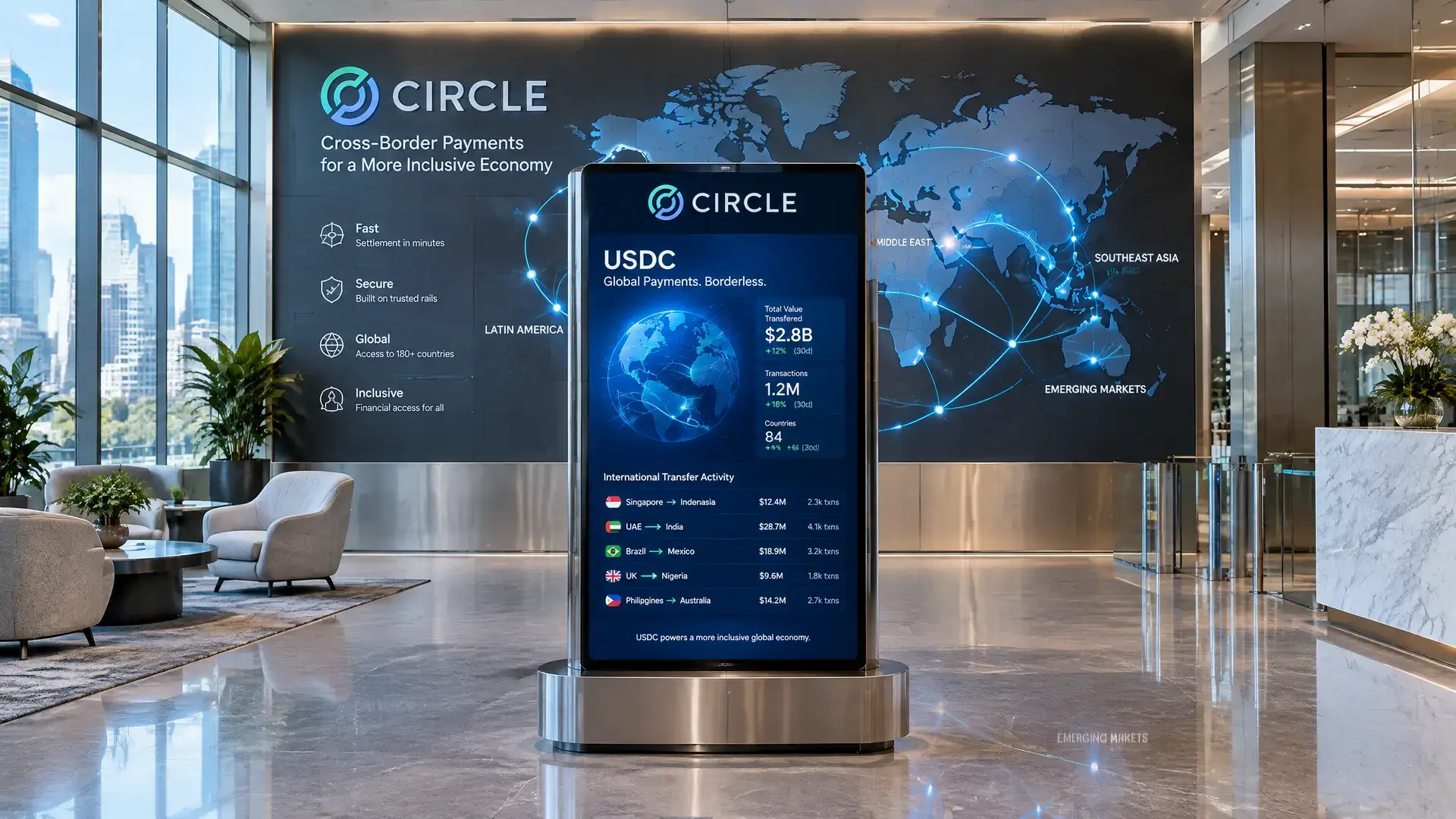
USDC is growing especially in Southeast Asia, Latin America, and the Middle East, where businesses and consumers are using stablecoins more and more for payments and transfers.
Key Takeaways
- Circle wants to expand USDC into about 50 emerging and developing markets because demand for digital dollars is growing.
- Jeremy Allaire sees stablecoins being used more and more for payments and financial services in Southeast Asia, Latin America, and the Middle East.
- Circle is strengthening its position with the acquisition of Tazapay, the launch of Arc, and approval as a U.S. federal trust bank.
Circle wants to expand USDC into about 50 emerging and developing markets as demand for digital dollars rises. CEO Jeremy Allaire told Reuters that companies and individuals in Southeast Asia, Latin America, and the Middle East are using stablecoins more and more for payments and other financial services.
Stablecoins Are Moving Up
Allaire called the current phase a turning point. In his view, blockchain is now moving from the early adoption stage into a broader mainstream phase. That fits the role stablecoins are increasingly taking on outside crypto trading, especially for payments and international money transfers.
According to CoinDesk data, USDC has about $72.6 billion (€64.8 billion) in circulation. That gives Circle around a quarter of the stablecoin market, while Tether controls nearly 60% with USDT. For Circle, expanding into new countries also means it will compete more directly with banks and payment companies in cross-border payments.
Circle's Strategic Moves
Circle has already agreed to acquire Singapore-based payments company Tazapay for $400 million (€357 million). That gives it access to local banking and payment networks in more than 100 markets. The company also launched its own blockchain, Arc, which is meant for payments and financial transactions, and received approval in July as a U.S. federal trust bank.
Meanwhile, the broader stablecoin market is growing fast. The IMF previously pointed to the strong rise of stablecoin use in emerging markets, with more than $30 trillion (€26.8 trillion) in transactions and $6.1 trillion (€5.4 trillion) in cross-border payments in 2025. That shows why major issuers like Circle are increasingly focusing on countries where digital dollars already play a practical role. Pressure is also growing in Europe for issuers to offer a local alternative, now that Qivalis received a DNB license for a euro stablecoin.
Why This Matters
For European crypto readers, this news matters because stablecoins are becoming part of global payments, not just the crypto market. The mix of stricter rules in some regions and rising demand in others could push competition between USDC, USDT, and new regional stablecoins even further. The rise of AI agents that can make small payments could also widen the use cases for USDC.