Perpetuals Wants to Trade Tokenized Stocks Under SEC Rule
Perpetuals.com wants to use an SEC pilot to trade U.S. stocks on the blockchain, with dividend and voting rights for token holders. The move follows an earlier attempt by OKX and ICE.
Key Takeaways
- Perpetuals.com wants to trade tokenized U.S. stocks via blockchain under a new SEC framework and is the second party with such a plan.
- The SEC pilot lasts five years and requires tokenized stocks to have the same rights as regular stocks, including dividends and voting rights.
- Perpetuals.com may start as soon as mid-November, after the 30-day waiting period and completion of market data, compliance, and smart-contract security.
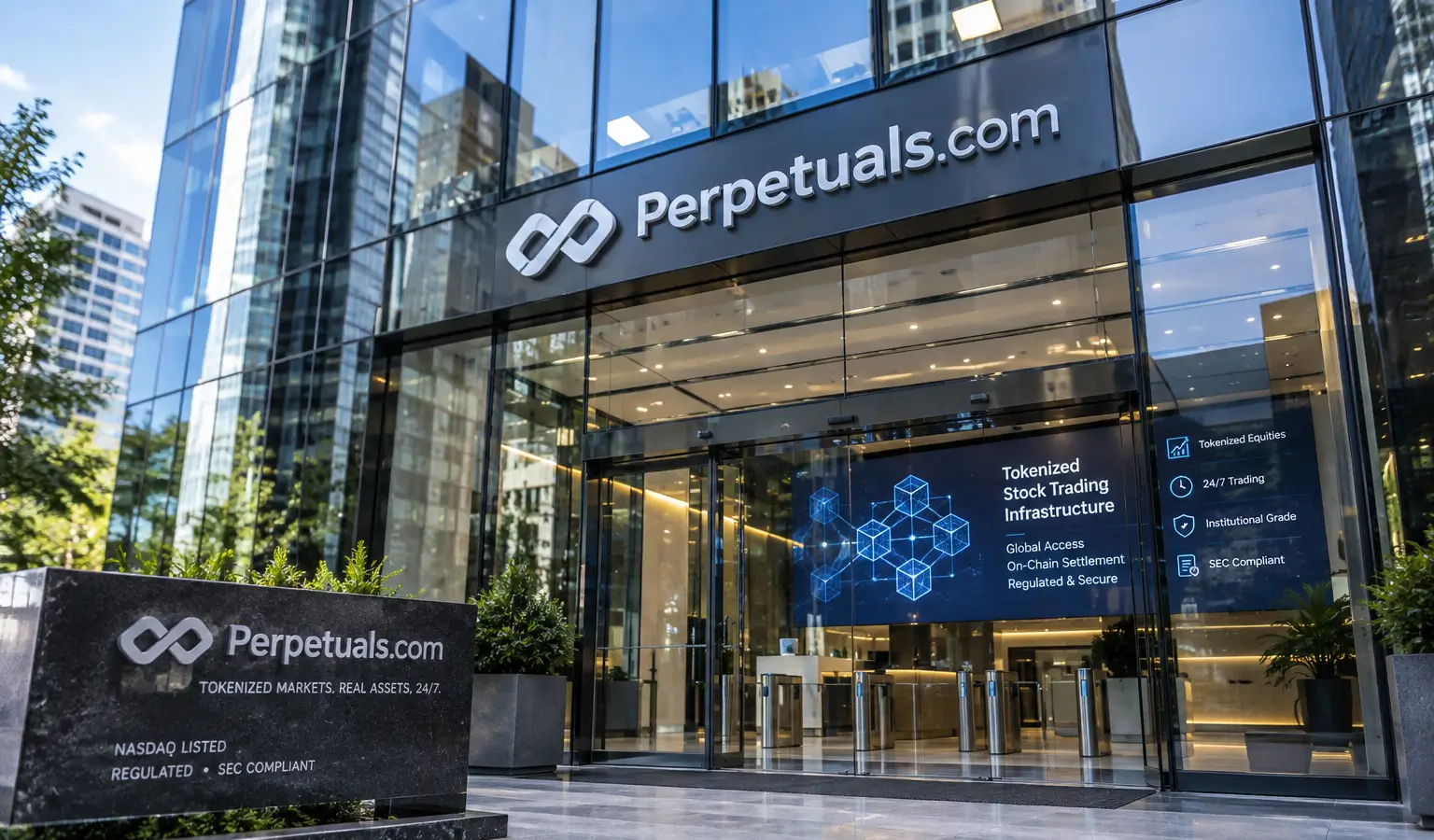
Perpetuals.com, the Nasdaq-listed fintech company led by former FTX Europe chief Patrick Gruhn, wants to trade tokenized U.S. stocks via blockchain under a new SEC framework. That makes the company the second party looking to set up such a market under the so-called innovation exemption, after a joint venture between OKX and ICE.
New SEC Route
The plan centers on a five-year pilot from the U.S. regulator. Under that setup, certain marketplaces can trade U.S. stocks on public blockchains without registering as a traditional stock exchange. There are clear requirements, though: tokenized stocks must offer the same rights as regular stocks, including dividends and voting rights.
The SEC also gives companies 30 days to object if their shares end up on such a tokenized venue. According to the filing, Perpetuals.com wants to run trading through a licensing process that fits within these new rules.
Back to Tokenized Stocks
For Gruhn and his team, this is not new territory. They were already working on early stock-linked tokens in 2021 at crypto exchanges like Binance and FTX. Those products mainly gave price exposure to stocks, but did not offer voting rights. Binance later ended that offering in 2021 after regulatory scrutiny from, among others, Germany's BaFin.
Perpetuals.com's history also runs through FTX Europe. The company grew out of Digital Assets AG, a Swiss tokenization company that worked with CM-Equity and was later acquired by FTX Group. Gruhn led FTX Europe until FTX collapsed in November 2022.
What the Market Structure Changes
The SEC's new approach is meant to modernize market infrastructure while still protecting investors. In practice, that means a move toward trading tokenized securities through permissioned automated market makers and liquidity pools, instead of only through traditional order books.
Perpetuals.com says the first trading could start as soon as mid-November, once the required 30-day waiting period has passed and market data, compliance, and smart-contract security are finished. Before launch, the company also wants to publish live smart-contract addresses.
For European crypto readers, the big point is that Perpetuals.com is already active with trading infrastructure in Europe. The company provides technology to Perpetual Markets MTF, a marketplace in Cyprus that falls under MiFID II and also received authorization under MiCA in August. That shows how tokenized stocks are increasingly landing at the intersection of traditional market rules and blockchain infrastructure. The broader U.S. path for tokenized stocks is also taking shape: the SEC previously opened a new licensing route for tokenized stocks on blockchain.