Qivalis Gets DNB License for Euro Stablecoin
The Amsterdam-based company can now move forward toward a MiCA-compliant euro token, backed by 37 European banks. Issuance can only start after additional requirements and a white paper.
Key Takeaways
- Qivalis has received an EMI license from De Nederlandsche Bank for issuing a euro-denominated stablecoin.
- The company still has to meet the remaining MiCA requirements, including publishing a white paper, before issuance can begin.
- Qivalis is backed by 37 European banks, including BBVA, BNP Paribas, ING, and DZ Bank.
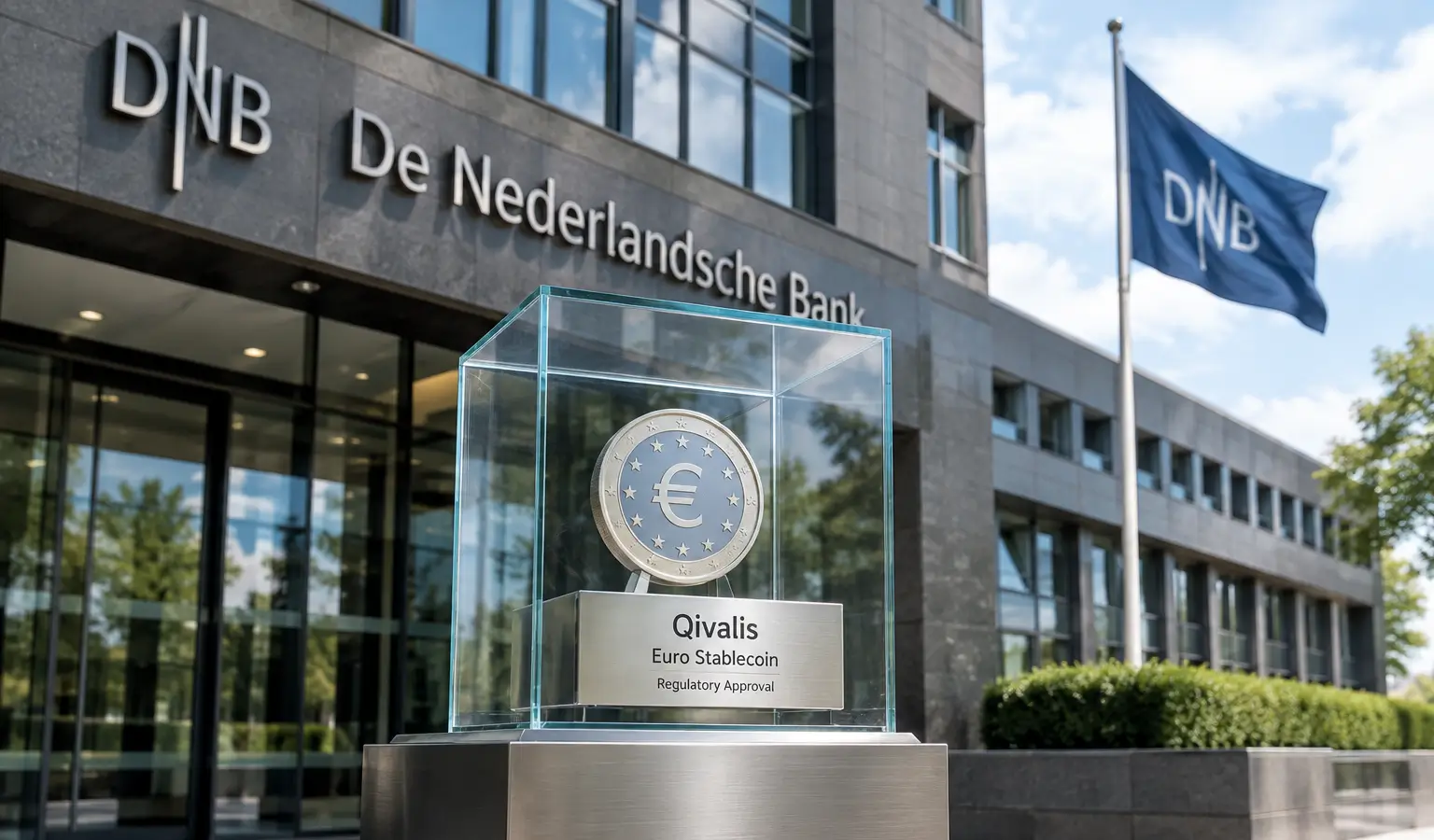
Qivalis has received an EMI license from De Nederlandsche Bank. That puts the Amsterdam-based crypto company one important step closer to issuing a euro-denominated stablecoin. The company wants to launch a regulated euro token for banks and payment companies, but it still has to meet the remaining MiCA requirements before issuance can begin.
License Opens the Door
The license allows Qivalis to keep working on an electronic money token, or EMT. Under MiCA, that is a type of stablecoin tied to one official currency, such as the euro or the dollar. Under the rules, these tokens must be issued by an authorized bank or electronic money institution, and holders then have the right to redeem them at face value.
Qivalis says the token will not be offered directly to consumers, but through banks, crypto exchanges, and payment providers. The company still has to publish a white paper before issuance can start. According to the current plan, the launch is set for the coming months.
Support From Major Banks
The company is backed by 37 major European banks, including BBVA, BNP Paribas, ING, and DZ Bank. That broad base matters because it gives Qivalis access to a large banking network. It is still not known which parties will actually use the token or how many euros will flow through it.
Qivalis previously said Europe needs its own rules for onchain settlement. CEO Jan-Oliver Sell called the goal a euro-denominated settlement asset under European law and under European supervisory standards.
Why This Matters for Europe
For European crypto and payment companies, this could be an important signal. A MiCA-compliant euro stablecoin from a banking consortium shows how traditional financial players and blockchain infrastructure are moving closer together. The combination of a Dutch license and broad bank backing could also matter for companies looking for a regulated alternative to existing stablecoins within the EU.
The broader market is moving in that direction too: Revolut rolls out a euro stablecoin in Europe, showing that regulated euro tokens are gaining more traction across the EU.