Coins.ph Faces License Risk After BSP Action
The BSP is tightening oversight further after reports of transactions with offshore gambling companies. Coins.ph handles a lot of peso-to-stablecoin trading and could lose its license.
Key Takeaways
- Coins.ph is under pressure from the Philippine central bank after reports of transactions with offshore gambling companies.
- According to sources, the regulator could revoke the exchange's license after recent restrictions and compliance departures.
- Coins.ph processes about $50 million per day and controls 75% to 80% of peso-to-stablecoin liquidity in the Philippines.
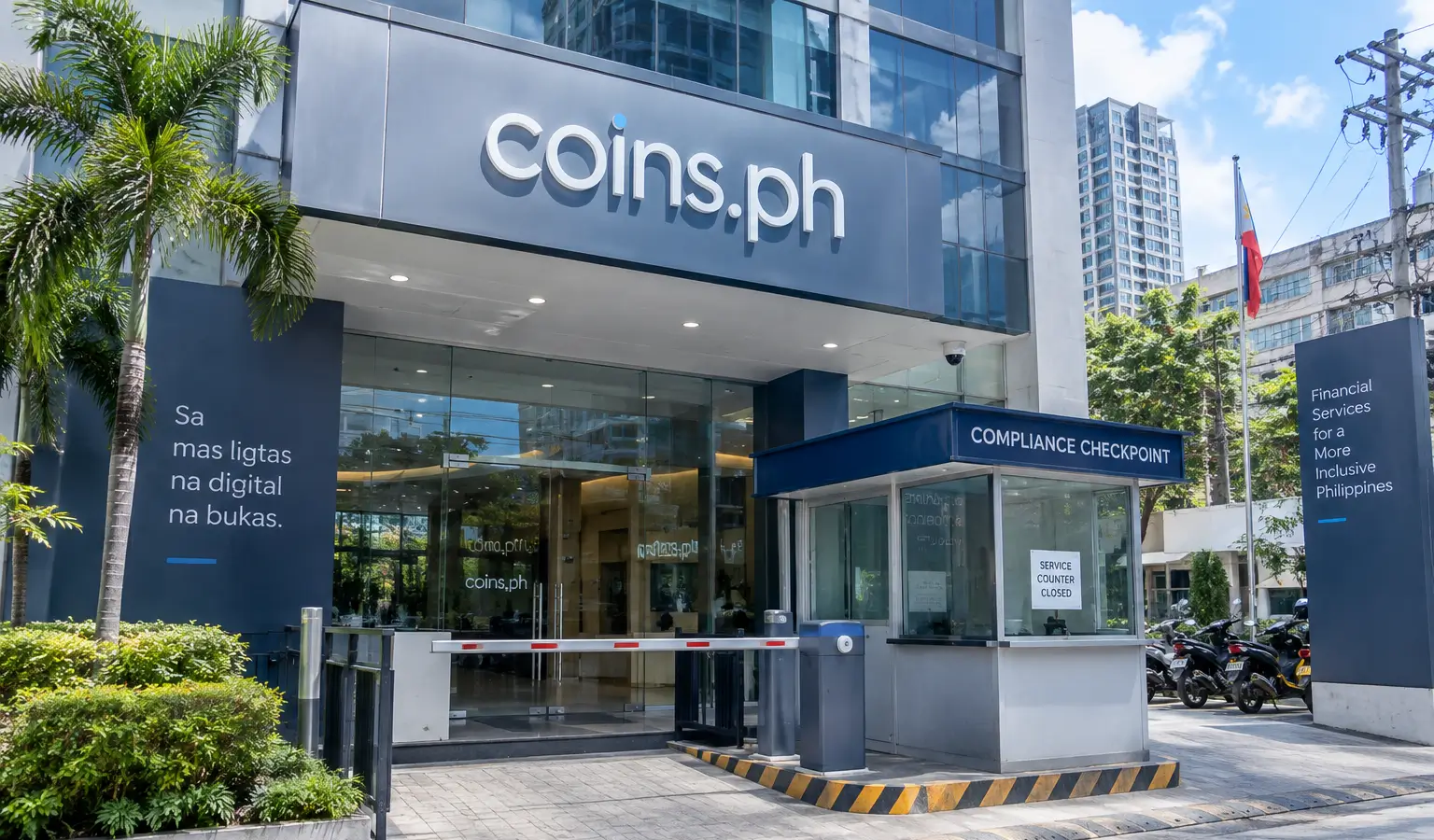
Coins.ph, the Philippines' largest crypto exchange, is under heavy pressure from the central bank after reports of transactions with offshore gambling companies. According to two people involved, the regulator could even move to revoke the 12-year-old company's license. That could have major consequences for a platform that serves more than 18 million customers and controls a major share of peso-to-stablecoin trading in the country.
Strict Line From the Regulator
The move fits into a broader tightening of Philippine crypto oversight. The Bangko Sentral ng Pilipinas, or BSP for short, has kept a moratorium on new VASP licenses in place since September 2025 because of the higher risks in the market. In June 2026, licensed providers were also barred from listing privacy coins and were required to do more extensive due diligence before listing a token.
According to the sources, Coins.ph was already hit with restrictions earlier this month on deposits through the main wallet of DCPay Philippines, the company behind the exchange's wallet infrastructure. The measure followed the departure of several compliance employees, including chief compliance officer Lexi Herrera, anti-money-laundering specialist Chris Beaño, and money laundering reporting officer Irish Calagui.
Importance for the Philippine Crypto Market
According to available figures, Coins.ph processes about $50 million in spot volume per day and is estimated to hold 75% to 80% of peso-to-stablecoin liquidity. That makes the platform important in a country where millions of people send money back from abroad. The Philippines is one of the world's biggest recipients of remittances, with about $43 billion (€38.4 billion) in transfers each year.
The case also shows how strict Philippine rules have become. In addition to the BSP, the Securities and Exchange Commission also oversees parts of the crypto sector through the CASP rules, which were introduced in 2025. For European readers, that matters because it shows how regulators are increasingly looking not just at trading volume, but also at licenses, compliance, and where transactions come from. Regulators are also tightening the screws elsewhere: in India, the FIU recently warned 15 crypto exchanges about AML rules, showing that stricter enforcement is not limited to one market.
Impact on Users
Coins.ph was one of the first crypto wallets and exchanges in the Philippines and later grew into a broader financial services provider. The company, like the BSP, did not respond to requests for comment. For now, it is not clear how far the measures will go, but revoking the license could seriously affect access to crypto and stablecoins across a major part of the Philippine market.