BNY and Citadel Test Tokenized Treasuries for Wall Street
The trial is meant to show whether tokenized government bonds can move collateral faster between settlement and financing. At the same time, BNY is expanding its digital infrastructure while the tokenized Treasuries market grows past $15 billion.
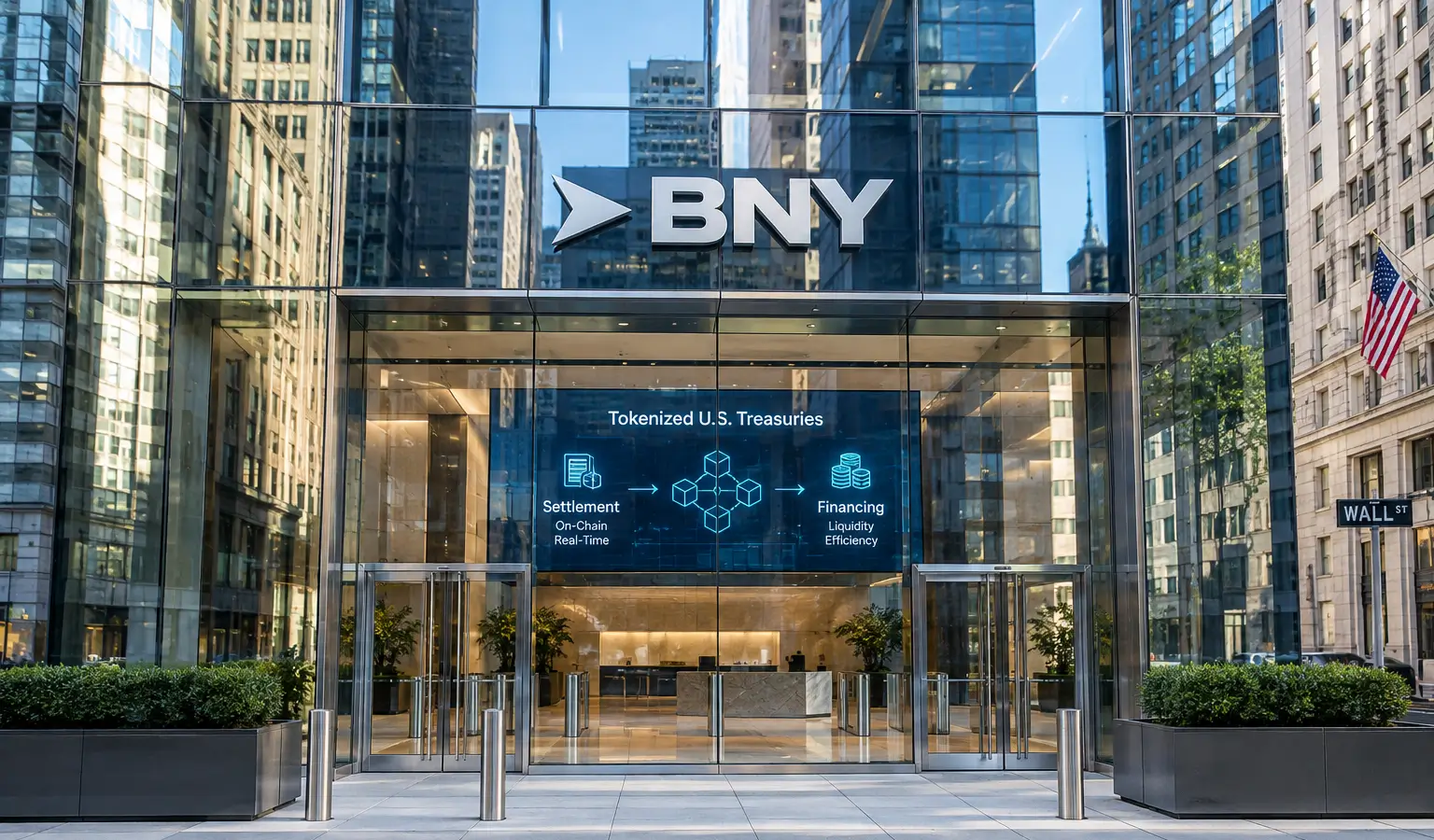
Key Takeaways
- BNY and Citadel Securities completed a transaction with tokenized U.S. Treasuries to move collateral faster between trading and financing.
- BNY wants to introduce more digital cash, tokenized deposits, and longer settlement hours for blockchain-based settlement and financing.
- The market for tokenized U.S. Treasuries has grown to more than $15 billion, while regulators and market participants are watching the sector more closely.
BNY and Citadel Securities completed a transaction on Tuesday involving tokenized U.S. Treasuries. In doing so, the two firms are showing how blockchain can help move collateral faster between trading and financing on Wall Street.
The trial focused on government bonds used as collateral. Banks and trading firms use those Treasuries to support short-term loans and finance trading activity. When those securities have to move between accounts and settlement systems, it takes time and keeps capital tied up longer.
Why This Matters Now
The move fits into a broader shift on Wall Street, where major firms are increasingly putting traditional assets on blockchains. BlackRock, Franklin Templeton, and JPMorgan have already embraced tokenized funds and securities, aiming for faster settlement and easier-to-move assets.
According to BNY, the test should show that tokenized government bonds can flow from settlement into financing more quickly. In theory, that could help collateral get reused sooner and free up cash for other transactions. Citadel Securities said that efficient movement of high-quality collateral is fundamental to well-functioning markets.
BNY Expands Digital Services
BNY also said it wants to introduce more digital cash and tokenized deposit capacity to support blockchain-based settlement and financing. In addition, the bank wants to extend the operating hours of its traditional settlement systems for Federal Reserve-eligible securities and U.S. triparty transactions, with the goal of reaching European and Asian trading hours next year as well.
That development matters for European crypto readers because the line between traditional markets and blockchain infrastructure is getting blurrier. The market for tokenized U.S. Treasuries has now grown to more than $15 billion (€13.4 billion) in total value, up from about $1.5 billion (€1.3 billion) at the start of 2024. That shows tokenization is no longer just a test, but is increasingly becoming part of real market infrastructure. Also, Wall Street Is Adopting the Best Crypto Ideas explains how traditional financial firms are increasingly using blockchain for settlement, tokenization, and collateral management.
More Pressure on Tokenization
The BNY and Citadel test also comes at a time when regulators and market participants are taking a closer look at tokenized assets. The IMF warned earlier this year about concentration, low liquidity, and high volatility in parts of that market. At the same time, the DTCC launched a pilot in July to tokenize Russell 1000 stocks, major ETFs, and U.S. Treasuries with more than 50 financial institutions.
That makes it clear that tokenization is not limited to crypto-native products. For the crypto market, it mainly means blockchain is increasingly being used as an infrastructure layer for traditional investment products, instead of just for standalone tokens.